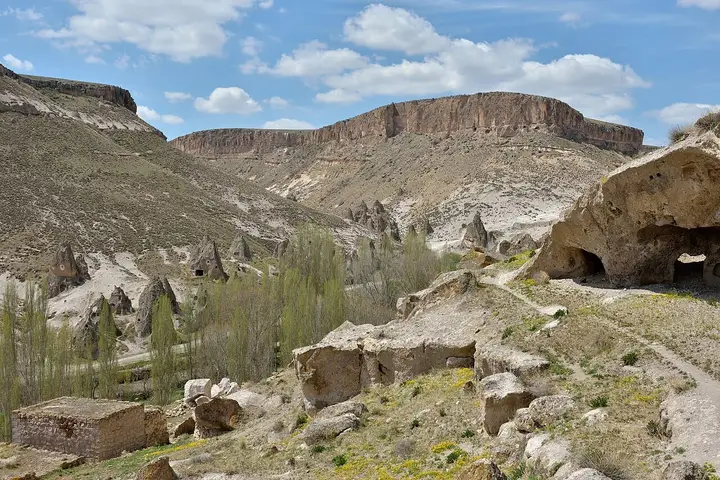
Soğanlı Valley
A valley with many rock churches from the Byzantine period, where Christian monks built a dense settlement between the 9th and 10th centuries.
View on map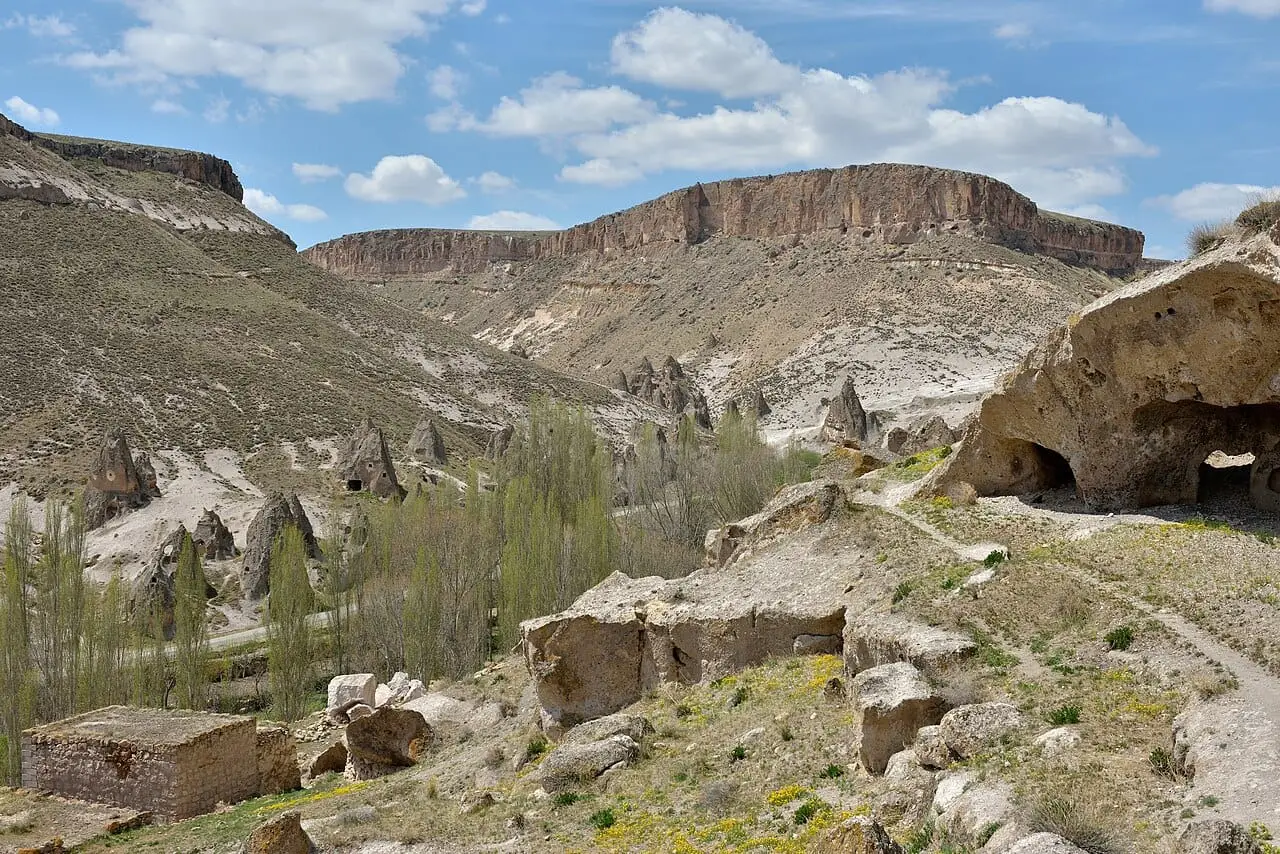
4 places to visit in the Yeşilhisar district of Kayseri: Soğanlı Valley, Yeşilhisar Castle and Yeşilhisar Yeraltı Şehri. Plan your trip to Yeşilhisar with local food, practical tips and transport information.
Yeşilhisar is a district 60 kilometres south of Kayseri province. The district covers 913 km² and lies at an average altitude of 1131 metres above sea level. Its population is 15409, and it gained district status in 1948.
In antiquity the area was known as Kbistra or Siyiera, one of the eight great cities of Cappadocia. The founding of the district is not known precisely, but Hittite remains suggest that the area was settled by the Hittites in the 2nd millennium BC at the latest. After 1071, like the Kayseri region, Yeşilhisar was gradually conquered by the Danishmendids. In 1178, in the time of Sultan Kılıçarslan II, it came under Seljuk rule. In 1398, during the unification of Anatolia under Sultan Yıldırım Bayezid, it was attached to the Ottomans. On 1 January 1948, the Karahisar subdistrict, attached to the district of İncesu, was upgraded to district status.
The district was founded on the western edge of the wide Develi Plain, on the eastern foothills of Karadağ. To the east of the district lies Develi, to the west Niğde and Ürgüp, and to the north İncesu. The district has a continental climate, with hot, dry summers and cold, snowy winters.
The district’s economy is mainly based on agriculture. Of the 500,000 decares of cultivated land, 60% is irrigated. In the irrigated areas, apples, apricots and other fruits are grown in particular.
Yeşilhisar’s former name was Karahisar. The region was settled by the Hittites in the 2nd millennium BC at the latest. Yeşilhisar became a district by Law No. 5071 dated 11 June 1947. The wall-painted structures in Erdemli Valley can be dated to between the 10th and 13th centuries. Soğanlı Archaeological Site has been one of the centres of Christianity since the 4th century AD.
Last updated:
A valley with many rock churches from the Byzantine period, where Christian monks built a dense settlement between the 9th and 10th centuries.
View on mapThe castle on the hill above the district centre dates from the Byzantine period. Its historic fabric sheds light on the region's past and offers visitors a distinctive experience.
View on mapYeşilhisar Underground City is one of the underground cities of the Cappadocia region, made up of rooms and tunnels carved into tuff rock.
View on mapWhile you are in Yeşilhisar, you can also see the highlights of Kayseri province. These places are in other districts.
Small pieces of dough filled with minced meat and boiled, served with yoghurt and garlic sauce. Being prepared with fresh, natural ingredients makes this dish a healthy choice.
Tarhana, prepared with yoghurt, wheat and vegetables, is the indispensable soup of winter tables. Every household has its own tarhana recipe; some are sourer, others spicier.
Yeşilhisar lies at the south-eastern end of the Cappadocia region. The rock churches and fairy chimneys of Soğanlı Valley are part of this heritage.
Yeşilhisar's economy is based on agriculture and tourism. Soğanlı Valley generates tourism income.
Yeşilhisar is 70 km from Kayseri. Minibus services run from Kayseri.
The highlights of Yeşilhisar are 4 sites: Soğanlı Valley, Yeşilhisar Castle, Yeşilhisar Underground City and Erdemli Valley.
Kayseri Mantısı and Tarhana Çorbası are the standout flavours on Yeşilhisar's tables.
Yeşilhisar is known for Yeşilhisar Grapes and Cappadocian Heritage. The grapes grown in the district's vineyards are used for eating fresh and for making pekmez.
Yeşilhisar is 70 km from Kayseri. Minibus services run from Kayseri.
Suggested visit length: 1 day. Best time to visit: spring and autumn.