Kayseri Covered Bazaar
An Ottoman-era covered bazaar, the commercial heart of Kayseri with its traditional shops and hans. Pastırma, sucuk (spiced sausage) and carpet shops are the most visited sections.
View on map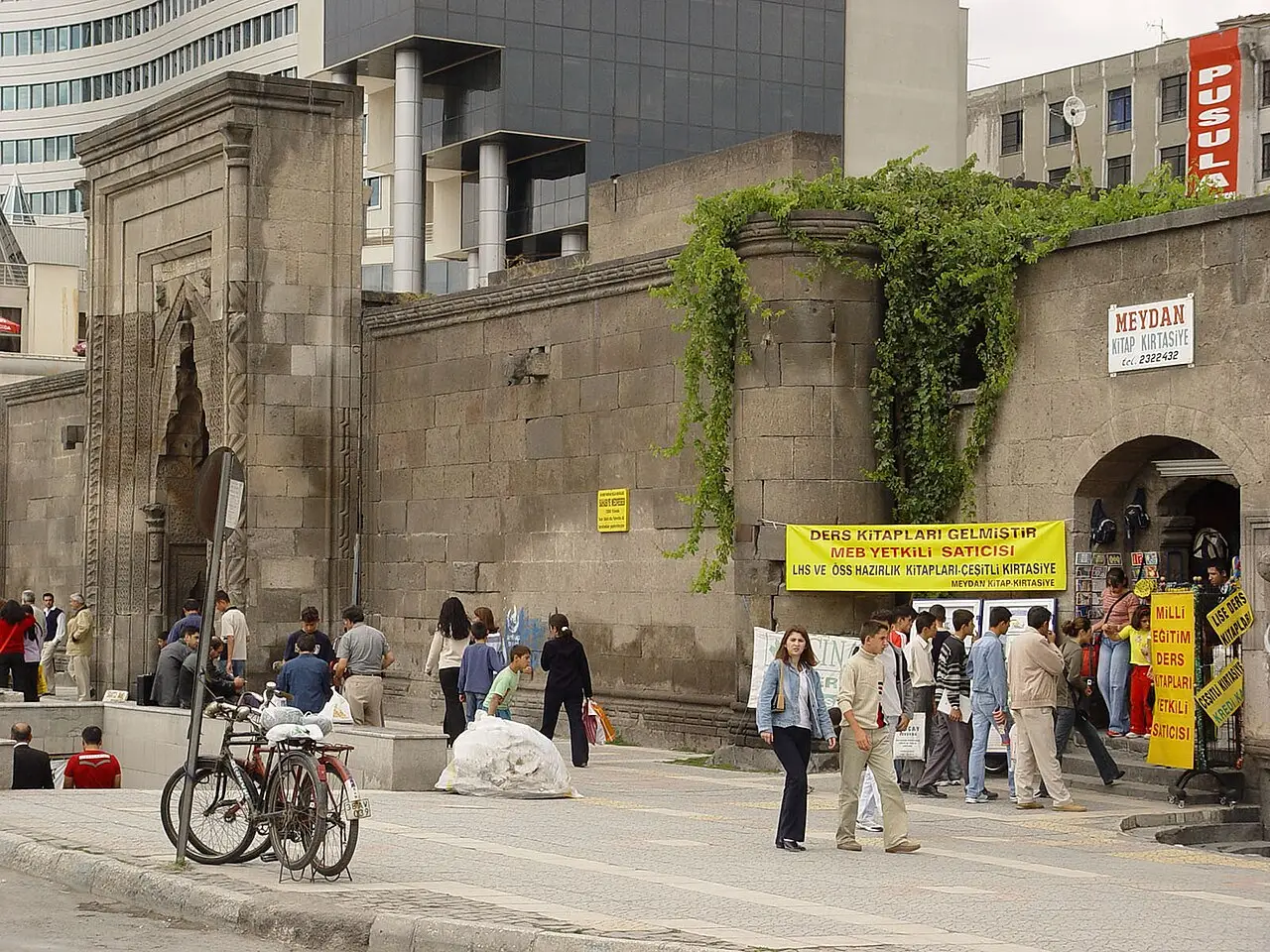 Photo: Dosseman (CC BY-SA 4.0) · Source
 7 places to visit in the Kocasinan district of Kayseri: Kayseri Covered Bazaar, Kocasinan Park and Sultan Sazlığı Bird Paradise. Plan your trip to Kocasinan with local food, practical tips and transport information.
The average elevation of Kocasinan town centre is 1,056 metres above sea level.
In classical times, the city of Kayseri was in the region called Cappadocia. Hittite city-states ruled the area between 2000 and 1750 BC, and the Late Hittite period followed from 1200 to 700 BC. From 600 to 500 BC, Median and Persian rule began. Later, Alexander and then the Diadochi held the region; after Alexander’s death, Anatolian lands were shared among the Diadochi. When Kayseri became the centre of the independent Kingdom of Cappadocia, the kingdom came under Roman rule. After the Roman Empire was divided in 395, the region within the borders of the Eastern Roman Empire retained its importance until today. While under Byzantine control, it was briefly seized by Arab commanders from the 7th century onwards. After the Battle of Malazgirt in 1071, the city was conquered by the Seljuks. In 1127 it passed from the Danishmendids to Emir Gazi. Kılıçarslan of the Anatolian Seljuks retook the city from the Danishmendids in 1176. In the time of Alaattin Keykubat it gained importance and became the second capital of the Seljuks after Konya. In 1244, the city, exposed to Ilkhanid attacks, was administered by Mongol-Ilkhanid governors. When Emir Eretna founded a large principality in Kayseri, it became the centre of the principality in 1343. In 1381 the Principality of Kadı Burhanettin appears; with the death of Kadı Burhanettin in 1398 the principality lost its importance, and the Ottoman Yıldırım Beyazıt took the city under his rule by agreement.
Kocasinan was established as a district in 1988 by Law no. 3508, separating it from the provincial centre. Kocasinan has no separate historical development of its own; its history lies within that of Kayseri city. In practice, the Kocasinan district was formed in 1989 from the division of Kayseri city.
Last updated:
An Ottoman-era covered bazaar, the commercial heart of Kayseri with its traditional shops and hans. Pastırma, sucuk (spiced sausage) and carpet shops are the most visited sections.
View on mapOne of Kayseri's largest parks, Kocasinan Park is a rest area for families, with its ponds, walking paths and sports areas.
View on mapSultan Sazlığı, near the boundaries of Kocasinan, is a wetland of international importance that hosts more than 300 bird species. Flamingos, pelicans and cranes are the most commonly seen species.
View on map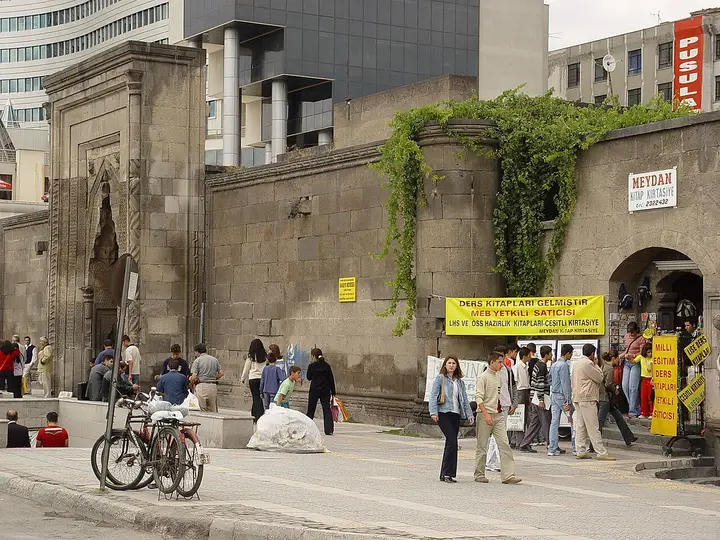 Photo: Dosseman (CC BY-SA 4.0) · Source
 Built in 1267 by Sahib Ali bin Hüseyin, the madrasa shows late Seljuk craftsmanship in the geometric carvings around its portal.
View on mapThe 1585 mosque, the work of Mimar Sinan in Kayseri, takes its name from its lead-covered dome.
View on mapThe complex, consisting of a mosque, madrasa, hammam and tomb, was commissioned in 1238 by Mahperi Hunat Hatun.
View on mapIn the museum within Fuar Kültür Parkı, the history and culture of Kayseri are presented with screens and headphones; models of Mimar Sinan's works are also on display.
View on mapWhile you are in Kocasinan, you can also see the highlights of Kayseri province. These places are in other districts.
Small pieces of dough filled with minced meat, boiled and served with yoghurt and garlic sauce. An important part of the district's gastronomic identity, this dish is a favourite with visitors.
Prepared by frying Kayseri pastırma with eggs in a pan. An indispensable part of breakfast tables.
Kocasinan is the industrial and trade centre of Kayseri. Organised industrial zones and trade centres define the district's economic identity.
Kocasinan is the industrial and trade centre of Kayseri. Kayseri Organised Industrial Zone lies within the district boundaries. Furniture, textiles and food industries are the main sectors.
Kocasinan is Kayseri's central district. Kayseri Erkilet Airport lies within the district boundaries. Access is by tram and bus routes.
The highlights of Kocasinan are 7 places: Kayseri Covered Bazaar, Kocasinan Park, Sultan Sazlığı Bird Paradise, Sahabiye Madrasa, Kurşunlu Mosque (Mimarsinan Mosque), Hunat Hatun Complex and Kadir Has City and Mimar Sinan Museum.
Kayseri Mantısı and Pastırmalı Yumurta are the standout dishes on Kocasinan's tables.
Kocasinan is known for Kayseri Carpet and its trade and industry culture. Kayseri's traditional hand-woven carpets are known for their geometric patterns and vivid colours.
Kocasinan is Kayseri's central district. Kayseri Erkilet Airport lies within its boundaries. Access is by tram and bus routes.
Suggested visit length: 1 day. Best time to visit: spring and autumn.