Değirmen
A 500-year-old mill in Gökçeli Neighbourhood. Its cut-stone arch still stands today, and it continues to operate as a flour mill.
View on map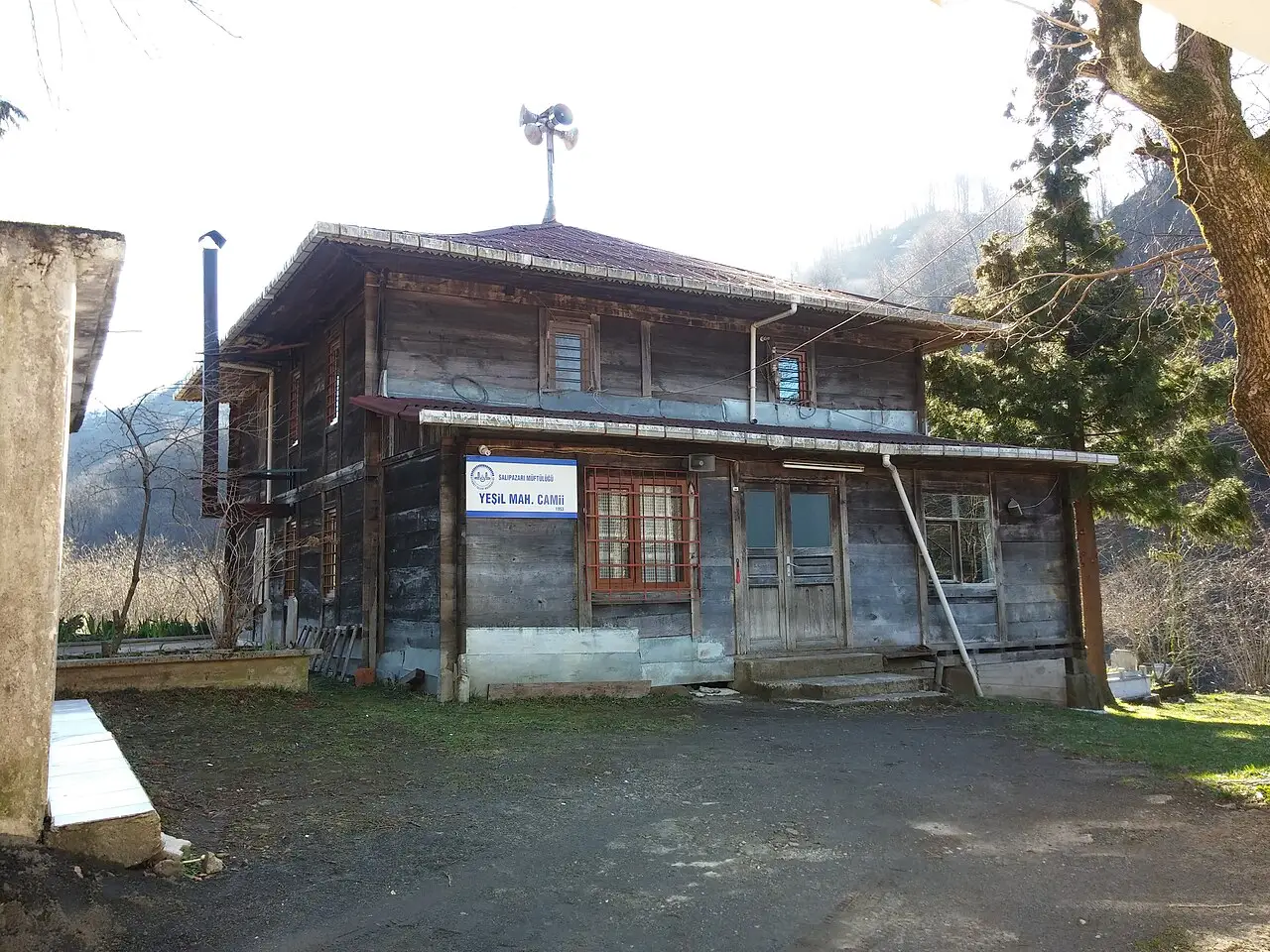 Photo: Cobija (CC BY-SA 4.0) · Source
 6 places to visit in the Salıpazarı district of Samsun: Değirmen, Yeşil Mosque and Karaman Mosque. Plan your trip to Salıpazarı with local food, practical tips and transport information.
Salıpazarı is a hilly district of Samsun that gained district status in 1987. It takes its name from the market held in the centre every Tuesday (salı). It covers an area of 356 km², has an average elevation of 81 metres above sea level and a population of 19,406.
Before the First World War, the region was home to Turks as well as Greek, Armenian and Georgian populations. During the war, clashes took place with Armenian gangs, and Durmuşoğlu Ali Ağa seized an arsenal and distributed it to the people. Runic Turkic inscriptions and rock tombs of the Oghuz tribes (Pechenegs and Kipchaks) have been found in the hazelnut orchards of the district.
Salıpazarı is bordered by Çarşamba to the north, Terme to the east, Ayvacık to the west and the districts of Erbaa and Akkuş to the south; it has no coastline. The north of the district is flat and the south is mountainous. The Yeşilçay and the Terme Stream meet in the central area. Important bridges across these rivers include the Kurt Bridge and the Maviren Bridge. A large pond was created where the rivers meet, and trout facilities were built along its banks.
The climate of Salıpazarı can be considered in two parts. In the flat area the Central Black Sea climate prevails, with cool summers and mild winters. As one climbs to higher areas the climate becomes harsher, and snowfall of more than two metres is recorded in winter. 80% of the district’s land is rugged and mountainous, with forested areas where oak, alder, chestnut and hazelnut are widespread. The region’s chestnuts and chestnut honey are famous; many herb species (kaldırık, kırçan, sirken) are used by local people in various dishes.
Every year on 5, 6 and 7 May, Hıdrellez festivals are held in Tahnal, Esatçiftliği and Avut neighbourhoods. The festivals feature wrestling competitions and horse races; strawberry festivals are also held in the district during May.
The district’s economy is based on agriculture, and hazelnut farming is the most common. Alongside hazelnuts, rice, maize and sugar beet are grown, and some households are involved in livestock farming.
Salıpazarı takes its name from the market held every Tuesday. Salıpazarı was attached to Samsun in 1987, when a district organisation was established.
Salıpazarı has been settled since the Bronze Age (3000 BC), as shown by archaeological evidence. The Terme Stream and the Bolas River enrich Salıpazarı’s tourism potential. Runic Turkic inscriptions and emblems used by the Pechenegs and Kipchaks have been found in Yeşilköy.
Last updated:
A 500-year-old mill in Gökçeli Neighbourhood. Its cut-stone arch still stands today, and it continues to operate as a flour mill.
View on map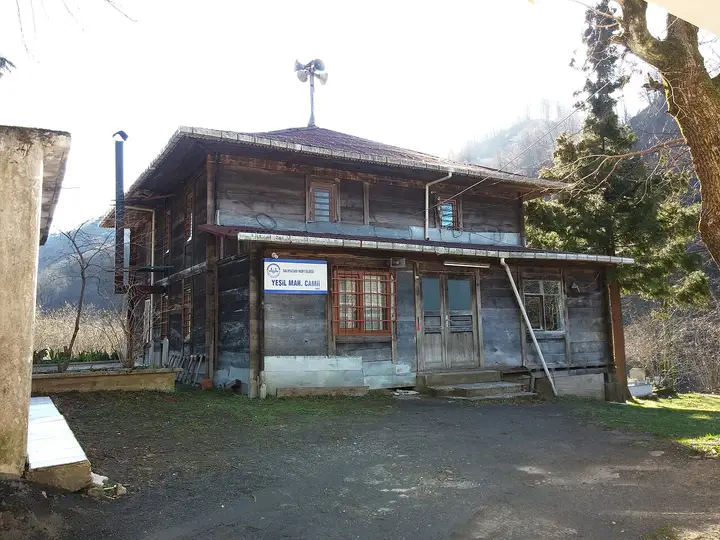 Photo: Cobija (CC BY-SA 4.0) · Source
 A historic mosque in Yeşil neighbourhood, built from timber around 300 years ago.
View on mapAn old mosque in Karaman neighbourhood, built from timber around 300 years ago.
View on mapA castle between Cevizli and Konakören villages, with its entrance carved into rock.
View on mapÇağlayan, a neighbourhood in a stream bed with numerous waterfalls.
View on mapWhile you are in Salıpazarı, you can also see the highlights of Samsun province. These places are in other districts; Salıpazarı is about 55 km from the provincial centre.
Salıpazarı Kestane Balı was registered as a protected designation of origin on 11 October 2023 (TÜRKPATENT registration no. 1468). Product group: honey. Registered by: Samsun Metropolitan Municipality.
Known as kapalı pide (closed pide), Samsun pide is also served in Salıpazarı using the traditional recipe.
Cabbage leaves are stuffed with rice and minced meat and rolled. It is the staple dish of the winter months.
A well-known honey made from the chestnut trees of the region.
Salıpazarı is a district that maintains its traditional rural way of life. This tradition is passed from generation to generation as an important element of the local people's cultural identity.
The economy of Salıpazarı is based on hazelnut farming and livestock farming. Small-scale trade activities complement the district's economy.
Salıpazarı is 55 km from Samsun city centre. The district is reached by road via Terme.
The 6 highlights of Salıpazarı are: Değirmen, Yeşil Mosque, Karaman Mosque, Garpu Castle, Hasan Tekke Hill and Çağlayan Köyü Şelaleleri.
Salıpazarı Kestane Balı, Samsun Pidesi, Karalahana Sarması and Kestane balı are the standout delicacies on Salıpazarı tables.
Salıpazarı is known for Hazelnut and its Rural Way of Life Tradition. Hazelnut farming is an important source of livelihood in Salıpazarı.
Salıpazarı is 55 km from Samsun city centre. The district is reached by road via Terme.
Suggested visit length: half a day. Best time to visit: spring and summer.