Monument of Honour
A bronze monument in Atatürk Park, commissioned from the Austrian sculptor Heinrich Krippel in memory of Atatürk's landing at Samsun; it was officially opened on 15 January 1932.
View on map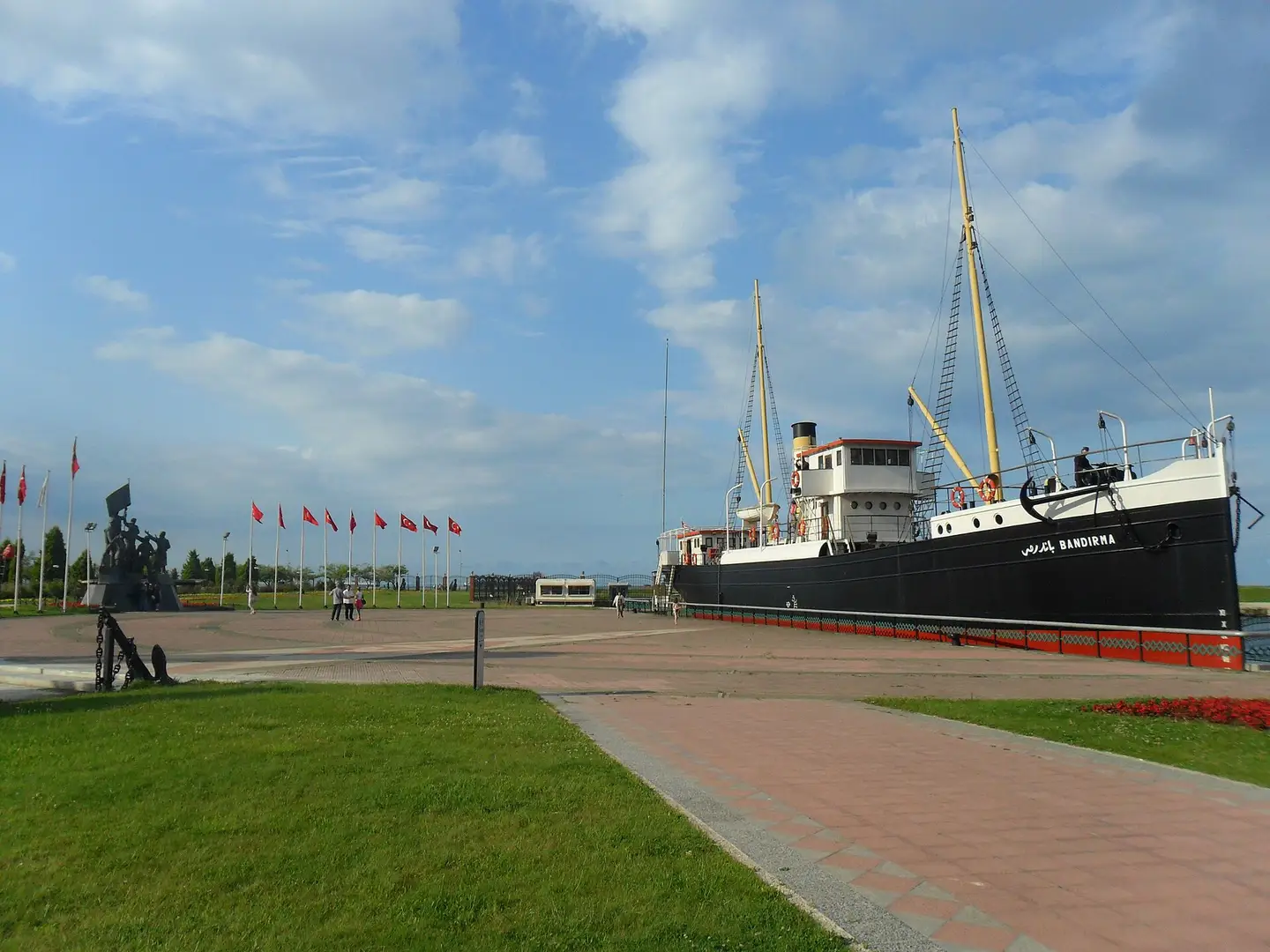
Samsun is one of the largest cities on the Black Sea, where Atatürk set out on the Bandırma Steamship on 19 May 1919 to begin the War of Independence. Besides the Bandırma Steamship Museum, the Gazi Museum and the Monument of Honour, Amisos Hill, Terme (the legendary homeland of the Amazons), the Ramsar wetland of the Kızılırmak Delta, Şahinkaya Canyon and the Havza hot springs stand out. Bafra pidesi, Samsun simidi and Çarşamba keşkeği are registered.
Last updated:
10 places worth seeing in Samsun, from historic monuments to natural wonders, grouped by type. Open any of them on the map with a single click.
A bronze monument in Atatürk Park, commissioned from the Austrian sculptor Heinrich Krippel in memory of Atatürk's landing at Samsun; it was officially opened on 15 January 1932.
View on map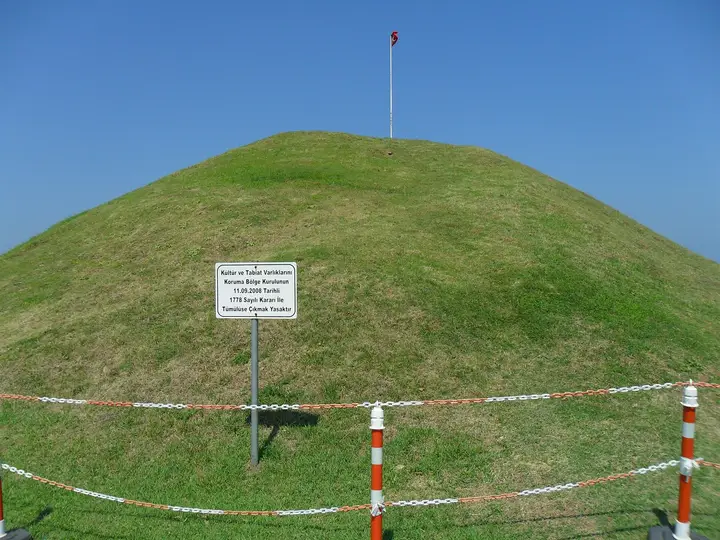 Photo: Cobija (CC BY-SA 3.0) · Source
 Tumulus tombs dating from the 3rd century BC, 4 km outside the city centre and thought to belong to one of the ruling families of the Kingdom of Pontus; they were discovered in 1995 and opened to visitors in 2008.
View on mapA settlement mound measuring 350 x 250 metres in the Kavak district, about 40 km south of the centre of Samsun.
View on map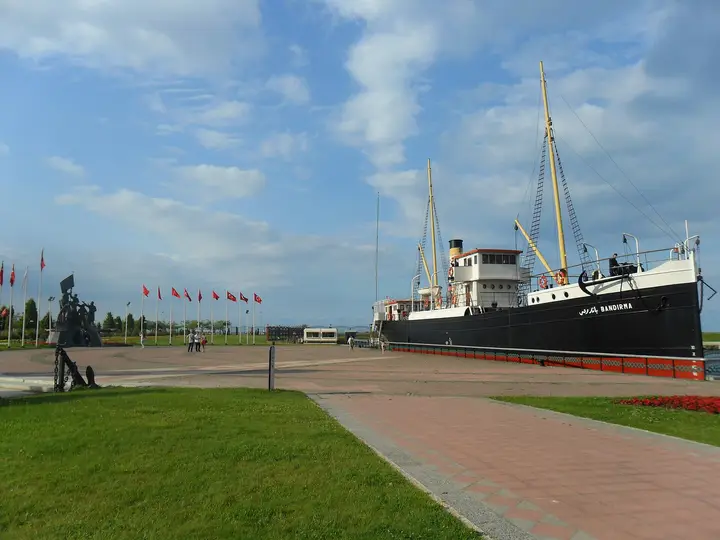
A faithful reconstruction of the passenger steamship built in Glasgow in 1878 that brought Atatürk to Samsun on 19 May 1919, open to visitors as a museum in the National Struggle Park.
View on mapA two-storey building, built in 1902 as a hotel, the Mantika Palas, where Atatürk stayed in Samsun on 19 May 1919; it was opened as a museum in 1940.
View on mapOpened on 19 May 1981, the museum displays archaeological objects from the Chalcolithic to the Roman period, as well as ethnographic collections.
View on map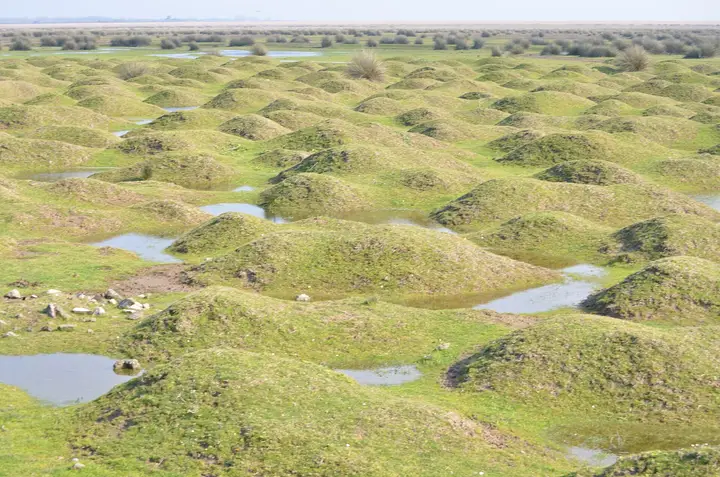 Photo: Sami Yılmaz (CC BY 3.0) · Source
 One of the largest deltas in Türkiye at 56,000 hectares, within the boundaries of Ondokuzmayıs, Bafra and Alaçam; 22,000 hectares were declared a Ramsar site in 1998.
View on map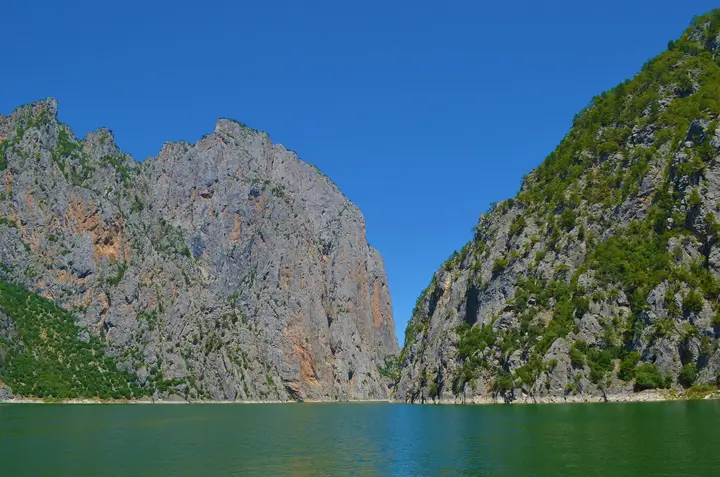 Photo: Sami Yılmaz (CC BY 3.0) · Source
 In Vezirköprü, a canyon about 1,500 metres long and 324 metres high that forms the deepest point of the Altınkaya Dam; it was made a nature park in 2015.
View on map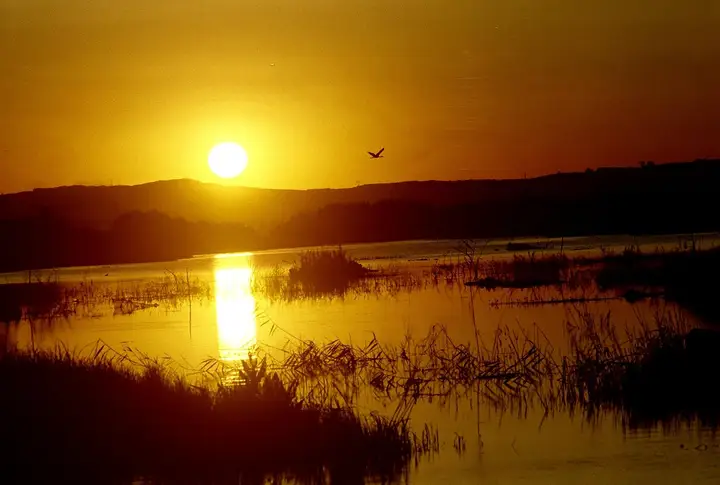
East of the centre of the Ladik district, a lake of 870 hectares known for its floating islets; with fish such as pike and carp, it hosts angling tourism.
View on mapKnown since antiquity, the hot springs that Strabo mentions as the Phazemonitis hot waters are in the Havza district.
View on mapSamsun lies on the central Black Sea coast, between the Bafra and Çarşamba plains, which were formed by the alluvium carried by the Kızılırmak and the Yeşilırmak. Traces of settlement found in the Tekkeköy caves, going back to about 60,000 BC, are the oldest settlement identified to date in the Black Sea region. In antiquity the city was called Amisos; one of the important ports of the Kingdom of Pontus, its burial tumuli can be visited today on Amisos Hill.
Samsun’s place in Turkish history rests on 19 May 1919: Mustafa Kemal came from Istanbul to Samsun on the Bandırma Steamship as Inspector of the Ninth Army and took the first step of the War of Independence. The Monument of Honour, opened in 1932 in memory of this event, is the symbol of the city. The Mantika Palas Hotel, where Atatürk spent his first nights, is now the Gazi Museum. Havza, a district in the south of the province, was also one of the first stops of this process.
Today Samsun is one of the most populous cities on the Black Sea, and has developed through agriculture (rice from the Çarşamba and Bafra plains, hazelnuts, tobacco), port trade and industry. Terme, one of the eastern districts, is Themiscyra, which Greek sources describe as the homeland of the Amazons.
Samsun has a Black Sea climate: summers are warm and humid, and winters are mild and rainy. Averages for 1929–2025 from the Turkish State Meteorological Service:
| Month | Avg. high | Avg. low | Rainfall | Rainy days |
|---|---|---|---|---|
| January | 10.8 °C | 4.2 °C | 72 mm | 14 |
| February | 11.1 °C | 4.0 °C | 59 mm | 14 |
| March | 12.1 °C | 4.7 °C | 67 mm | 15 |
| April | 15.3 °C | 7.9 °C | 57 mm | 14 |
| May | 19.2 °C | 12.1 °C | 49 mm | 13 |
| June | 23.7 °C | 16.3 °C | 47 mm | 9 |
| July | 26.6 °C | 19.2 °C | 35 mm | 6 |
| August | 27.2 °C | 19.8 °C | 37 mm | 6 |
| September | 24.1 °C | 16.6 °C | 56 mm | 10 |
| October | 20.4 °C | 13.0 °C | 80 mm | 12 |
| November | 16.9 °C | 9.4 °C | 83 mm | 12 |
| December | 13.2 °C | 6.4 °C | 81 mm | 13 |
The best period is May–September. Large ceremonies are held in the city on 19 May. For birdwatching in the Kızılırmak Delta, the spring and autumn migration periods are the most rewarding.
By air: Samsun-Çarşamba Airport is in the Çarşamba district and is connected to the city centre by buses and shuttles.
By road: Samsun lies at the junction of the Black Sea coastal road and the Amasya–Çorum road that descends to Central Anatolia. The bus station is close to the city centre.
By sea: Samsun Port is one of the important commercial ports of the Black Sea.
Day 1 – In the footsteps of 19 May: The Monument of Honour, the Gazi Museum and the Bandırma Steamship Museum; then the Samsun Museum and sunset on Amisos Hill.
Day 2 – Bafra: Birdwatching in the Kızılırmak Delta, with Bafra pidesi and nokul for lunch.
Day 3 – Vezirköprü: A boat tour of Şahinkaya Canyon; on the way back, the Havza hot springs.
Samsun cuisine stands out for its pide and simit culture. Delicacies with registered geographical indications: Bafra pidesi, Çarşamba pidesi, Terme pidesi, Samsun simidi, Bafra nokulu, Bafra kaymaklı lokumu (Bafra lokum with clotted cream), Çarşamba keşkeği (wheat and meat porridge), Çarşamba kıvratması, Yakakent mantısı (Yakakent dumplings) and Samsun kaz tiridi (goose dish). Products: Bafra pirinci (Bafra rice) and Salıpazarı kestane balı (Salıpazarı chestnut honey).
The Vezirköprü semaveri (samovar), Vezirköprü susuz bezi (Vezirköprü susuz cloth), Vezirköprü Tahtaköprü kilimi (Tahtaköprü kilim), Bafra zembili (Bafra basket), Çarşamba sekiz köşe kasketi (eight-panel flat cap) and Çarşamba ayakkabısı (Çarşamba shoes, “egg heel”) have registered geographical indications.
Samsun province has 17 districts. Explore the places to visit, local dishes and transport in each one.
A pide with a registered geographical indication.
A simit with a registered geographical indication.
Nokul with a registered geographical indication.
Keşkek with a registered geographical indication.
A pide with a registered geographical indication.
A pide with a registered geographical indication.
The Bandırma Steamship Museum, the Monument of Honour, the Gazi Museum, Amisos Hill, the Kızılırmak Delta, Şahinkaya Canyon, Ladik Lake and the Havza hot springs are the main stops.
Bafra pidesi, Samsun simidi, Çarşamba keşkeği, Bafra rice and the Vezirköprü samovar.
On 19 May 1919 he came to Samsun on the Bandırma Steamship as Inspector of the Ninth Army; this event is regarded as the start of the War of Independence.
No, Gökgöl Cave is in Zonguldak.
May–September is the best period; large ceremonies are held in the city on 19 May.
The information in this guide has been compiled from and checked against the sources below (last checked: 8 October 2026). If you spot an error, please let us know.