 Photo: BSRF (CC BY-SA 4.0) · Source
 Zilkale
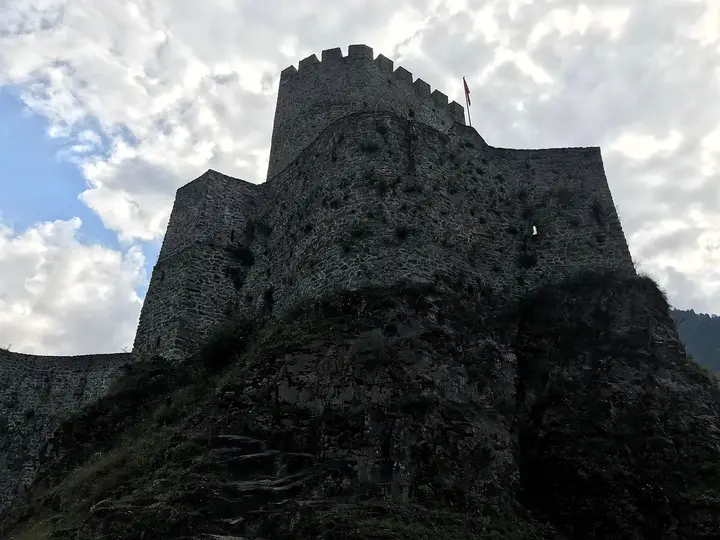
A medieval castle with eight towers in Çamlıhemşin, on a steep rock above the Fırtına Valley, thought to have been built in the 14th–15th centuries.
View on map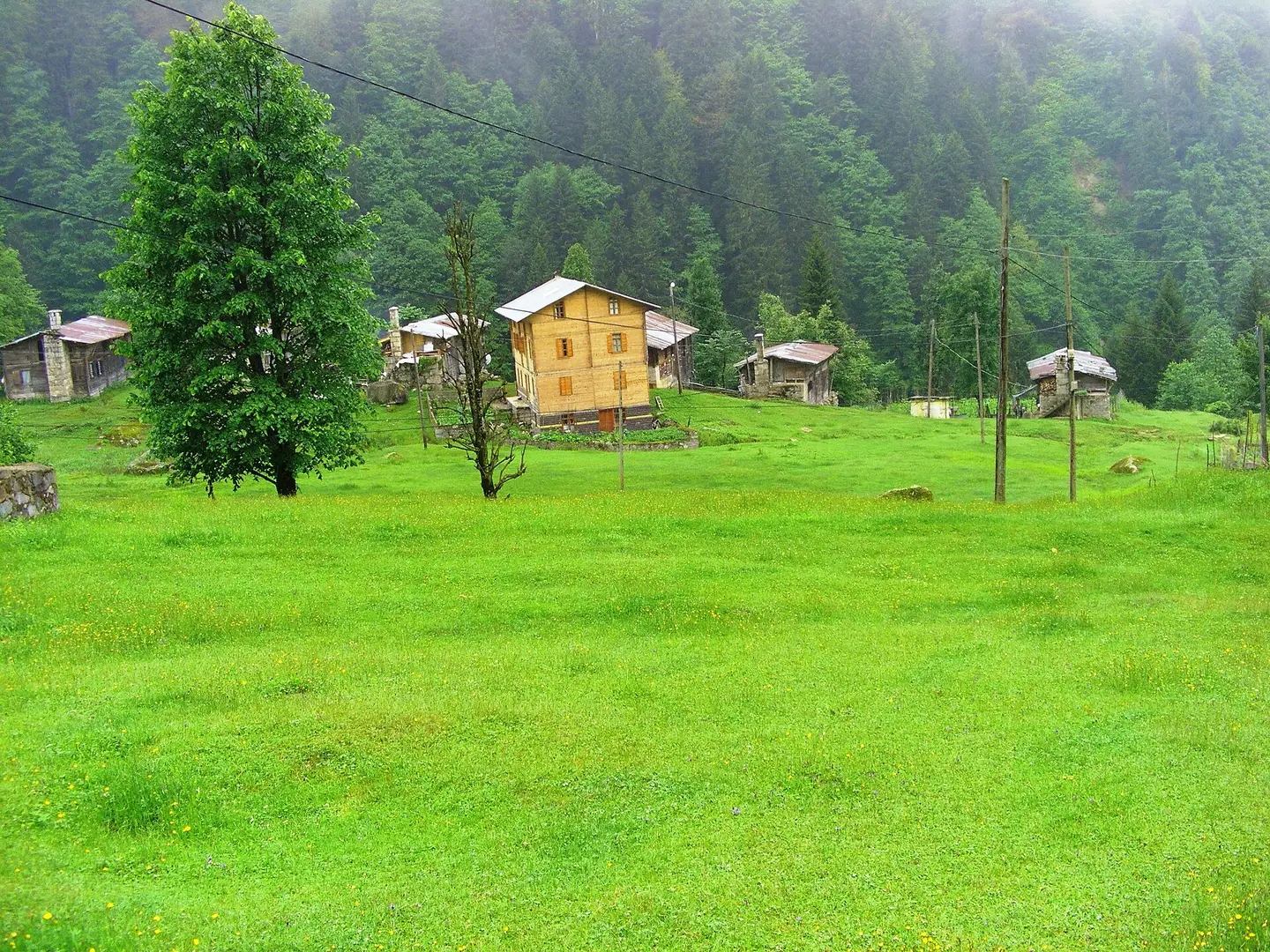 Photo: Zeynel Cebeci (CC BY-SA 3.0) · Source
 Rize is the tea capital of Türkiye, with tea gardens covering its slopes, and the most spectacular nature province on the Black Sea, with highland pastures rising above a sea of clouds on the northern foothills of the Kaçkar Mountains. The stone arch bridges of the Fırtına Stream, Zilkale, the Ayder, Pokut, Huser and Anzer plateaus, Palovit Waterfall and Kaçkar Mountains National Park stand out. Rize tea, Anzer honey and Rize cloth (feretiko) carry registered geographical indications.
Last updated:
10 places worth seeing in Rize, from historic monuments to natural wonders, grouped by type. Open any of them on the map with a single click.
Photo: BSRF (CC BY-SA 4.0) · Source A medieval castle with eight towers in Çamlıhemşin, on a steep rock above the Fırtına Valley, thought to have been built in the 14th–15th centuries.
View on mapA castle south-west of the city whose inner citadel was rebuilt in the reign of the Byzantine emperor Justinian I; its surroundings have been landscaped with tea gardens and a viewing terrace.
View on map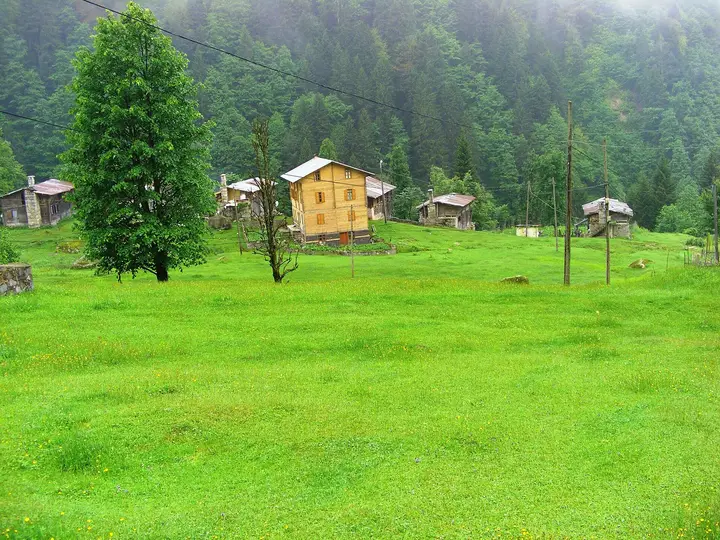 Photo: Zeynel Cebeci (CC BY-SA 3.0) · Source
 A highland pasture 19 km south-east of Çamlıhemşin, at 1,350 metres, surrounded by spruce and beech forests; with its hot spring, waterfalls and wooden houses it is the best-known tourist centre in the Kaçkars.
View on map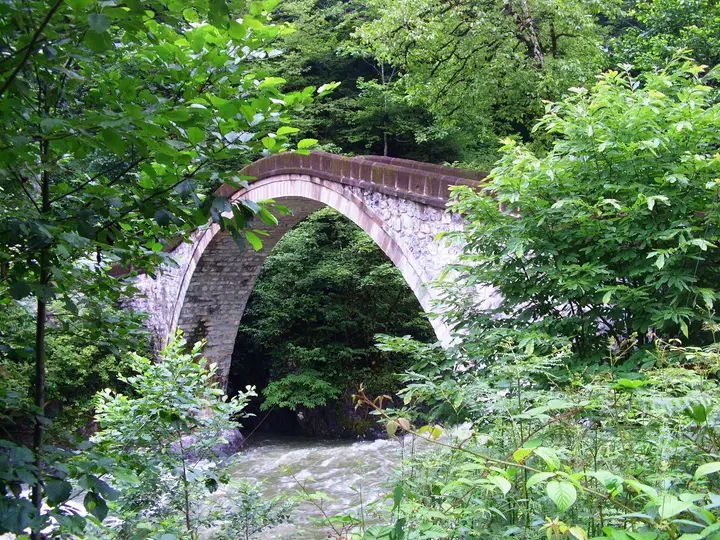 Photo: Zeynel Cebeci (CC BY-SA 3.0) · Source
 A 68 km stream that rises in the Kaçkar Mountains and flows into the Black Sea near Ardeşen; it is known for the historic stone arch bridges strung along the valley and for its rafting course.
View on map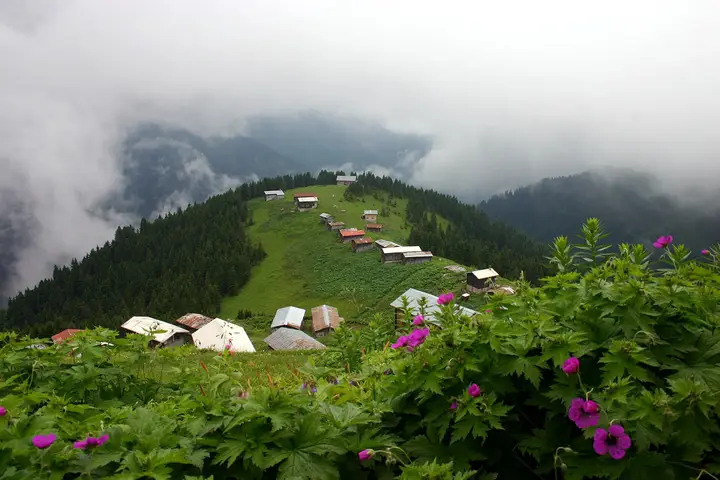 Photo: Marenbel (CC BY-SA 4.0) · Source
 A highland pasture at 2,032 metres, 15 km from the district centre in Çamlıhemşin; with its wooden houses and views over a sea of clouds it is a favourite of photographers.
View on mapA national park of 51,550 hectares, most of it in Çamlıhemşin, known for its glacial lakes, alpine meadows and hikes up to the Kaçkar summit (3,937 m).
View on mapA waterfall in Çamlıhemşin, within the boundaries of Kaçkar Mountains National Park, dropping 15 metres amid forests.
View on mapA highland pasture in İkizdere, about 54 km from the centre of Rize, where Anzer honey, famous for its high-altitude flowers, is produced.
View on mapA high pasture above Ayder with views of the Kaçkars; it is one of the best places to watch the sea of clouds at sunset.
View on map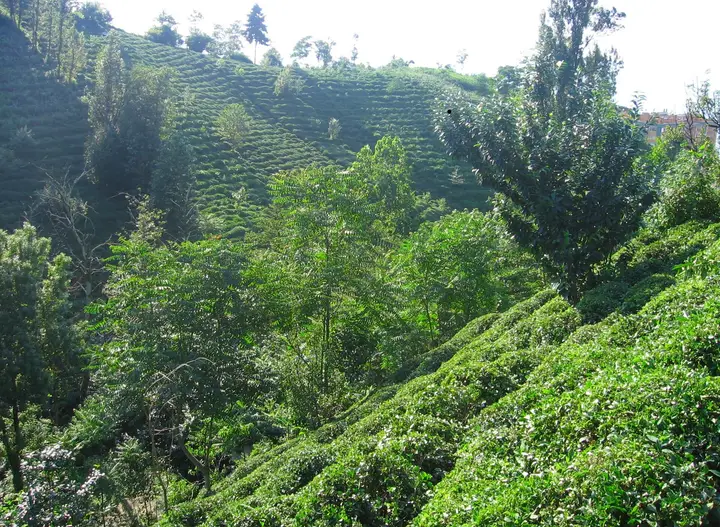 Photo: Wikimol (CC BY-SA 2.5) · Source
 Tea plantations covering the slopes from the coast to the highland pastures; at the Ziraat Botanical Tea Garden in the city centre you can drink freshly brewed Rize tea with a view.
View on mapRize is set on the eastern Black Sea coast, on the northern slopes of the Kaçkar Mountains, which rise above 3,000 metres only a few kilometres inland from the sea. As moist air masses hit these high mountains, Rize is the province with the highest rainfall in Türkiye; annual rainfall exceeds 2,000 mm. This climate makes possible the dense forests that cover the slopes and Türkiye’s tea cultivation.
Known in ancient sources as Rhizus, the city came under the Empire of Trebizond in 1204; it was conquered by Fatih Sultan Mehmet in 1470 and in Ottoman times was part of the Lazistan Sanjak. The inner part of Rize Castle above the city dates from the Byzantine period. Zilkale in Çamlıhemşin is an impressive medieval castle that guards the Fırtına Valley. The province is known for Laz culture on the coast and Hemşin culture inland; the migration to the highland pastures, the tulum and the horon are important parts of these cultures.
Tea cultivation was given legal footing in 1924 by Law no. 407 passed by the Grand National Assembly (TBMM); through the work of the agricultural inspector Zihni Derin, gardens were established with seeds brought from Batumi in 1937 and 1940, the first crop was harvested in 1938 and the first tea factory opened in 1947. Today Rize supplies most of Türkiye’s fresh tea production, and Rize tea has a registered geographical indication. Rize-Artvin Airport, opened in 2022 on land reclaimed from the sea at Pazar, is the second airport in Türkiye built on the sea.
Rize has a mild Black Sea climate with heavy rain in every season. Averages for 1927–2025 from the Turkish State Meteorological Service:
| Month | Avg. high | Avg. low | Rainfall | Rainy days |
|---|---|---|---|---|
| January | 10.7 °C | 3.9 °C | 231 mm | 15 |
| February | 10.8 °C | 3.7 °C | 186 mm | 14 |
| March | 12.0 °C | 5.0 °C | 160 mm | 16 |
| April | 15.5 °C | 8.4 °C | 98 mm | 15 |
| May | 19.4 °C | 12.7 °C | 97 mm | 14 |
| June | 23.6 °C | 16.8 °C | 134 mm | 14 |
| July | 26.0 °C | 19.7 °C | 151 mm | 14 |
| August | 26.6 °C | 20.1 °C | 193 mm | 14 |
| September | 24.1 °C | 17.0 °C | 257 mm | 15 |
| October | 20.5 °C | 13.2 °C | 294 mm | 15 |
| November | 16.6 °C | 9.2 °C | 250 mm | 13 |
| December | 12.9 °C | 5.8 °C | 242 mm | 14 |
June to September is the best period. Ayder, Pokut, Huser and the other highland pastures are accessible in these months, and the highland festivals are held in July and August. The tea harvest takes place in three rounds from late May to October. September to January is the wettest period; take a raincoat with you in every season.
By air: Rize-Artvin Airport (RZV) is in the Pazar district, about 35 km from the centre of Rize. Trabzon Airport is also about 75 km to the west.
By road: Rize lies on the Trabzon–Hopa coastal road, about 75 km from Trabzon. Ayder is reached from Ardeşen via Çamlıhemşin in about 1 hour. The Ovit Tunnel via İkizdere links the province with Erzurum. There is no railway in the province.
Day 1 – Rize centre: Views of the city and the tea gardens from Rize Castle, tea at the Ziraat Botanical Tea Garden; in the afternoon, watch production at a tea factory. Muhlama and black cabbage rolls in the evening.
Day 2 – The Fırtına Valley: From Ardeşen to Çamlıhemşin along the arch bridges; Zilkale and Palovit Waterfall, and a night in Ayder.
Day 3 – The highland pastures: From Ayder to the Huser and Pokut plateaus; sunset above the sea of clouds.
Day 4 – İkizdere and Anzer: Honey producers and highland flowers on Anzer Plateau.
Rize cuisine is shaped by corn, black cabbage, anchovies and highland milk. The delicacies with a registered geographical indication are Rize muhlama, made with cornmeal and butter, Rize etli karalahana sarması (meat-stuffed black cabbage rolls), Rize kavurması, Rize pepeçurası (a dessert with grapes), Rize baston ekmek (baton bread), Rize simidi, Rize enişte lokumu (enişte Turkish delight), Derepazarı pidesi, Çayeli kuru fasulye yemeği (Çayeli dried bean dish) and Çayeli koloti peyniri. The products are Rize tea, Anzer honey, produced from the flowers of the Kaçkar highland pastures and counted among the most expensive honeys in the world, Ayder honey and Rize kokulu üzümü (Rize fragrant grapes).
Rize cloth (feretiko), woven from linen or cotton, Hemşin socks with local patterns, Cimil socks and the İyidere pileki stone (pileki taşı) all have registered geographical indications.
Rize province has 12 districts. Explore the places to visit, local dishes and transport in each one.
A dish made with cornmeal, butter and cheese, with a registered geographical indication.
Stuffed cabbage rolls with a registered geographical indication.
A dessert made with grapes and cornmeal, with a registered geographical indication.
A pide with a registered geographical indication.
A kavurma with a registered geographical indication.
The main stops are the Ayder, Pokut, Huser and Anzer plateaus, Zilkale, the Fırtına Stream and its arch bridges, Palovit Waterfall, Kaçkar Mountains National Park, Rize Castle and the tea gardens.
Tea, Anzer honey, muhlama, black cabbage rolls, Rize cloth and the Kaçkar highland pastures.
It is 19 km south-east of Çamlıhemşin, at an altitude of 1,350 metres.
Rize-Artvin Airport, which opened in 2022, or Trabzon Airport.
June to September is the best period; the highland pastures are open in these months.
The information in this guide has been compiled from and checked against the sources below (last checked: 8 October 2026). If you spot an error, please let us know.