Kangal Castle
Castle ruins on the hill above the district centre, dating from the Seljuk period. Excavations at the foot of the castle have found pottery fragments from various periods.
View on map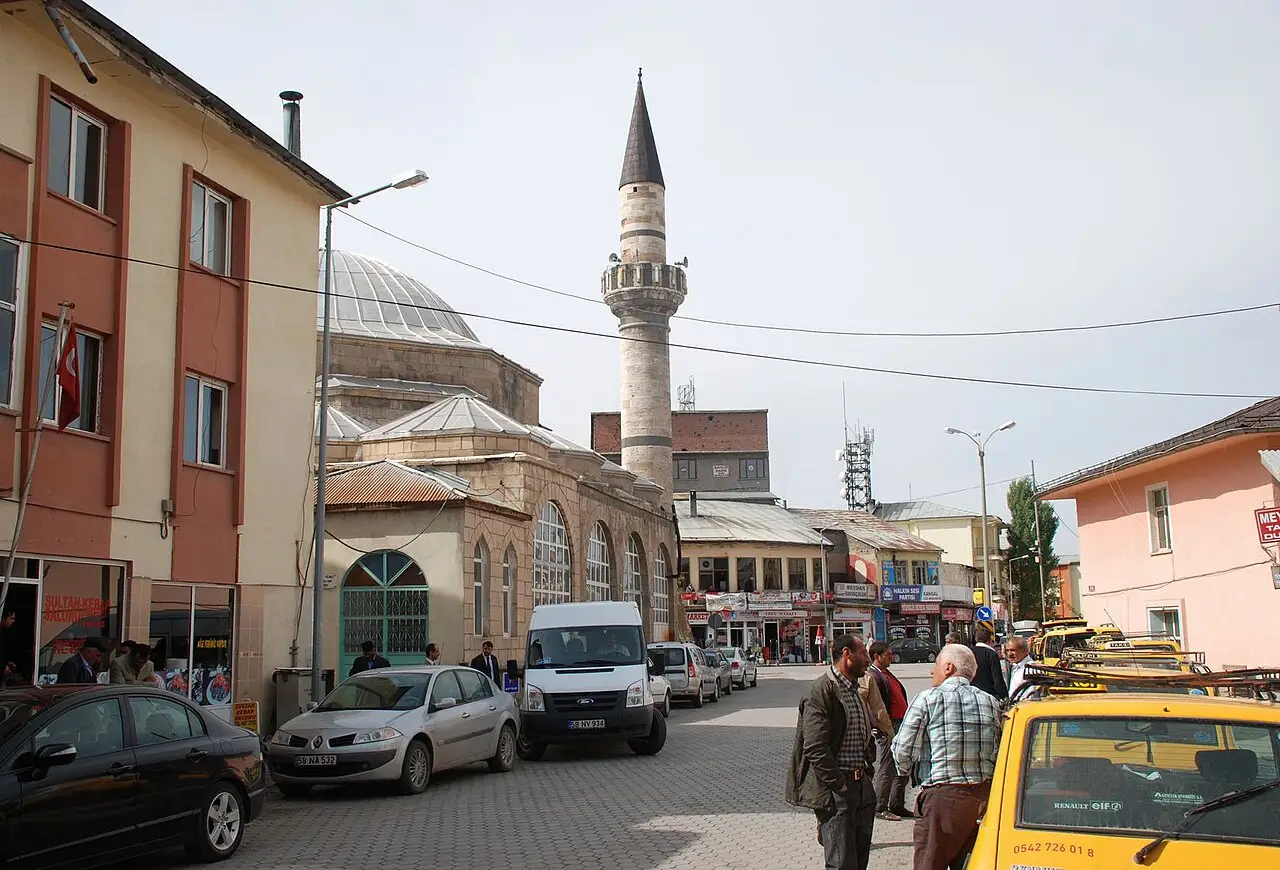 Photo: Bertramz (CC BY-SA 3.0) · Source
 11 places to visit in the Kangal district of Sivas: Kangal Balıklı Hot Springs, Kangal Dog Farm and Kangal Castle. Plan your trip to Kangal with local food, practical tips and transport information.
Kangal is a district of Sivas province with an area of 3,342 km² and an elevation of 1,524 m. To the north are the Sivas Merkez, Hafik, Zara and Ulaş districts; to the south, Gürün and the Kuluncak and Hekimhan districts of Malatya; to the east, Divriği; and to the west, Altınyayla and the Pınarbaşı district of Kayseri.
Remains and settlements from a Hittite city have been identified at Karaseki and Akçakale village. Kangal appears as a subdistrict (kaza) in the 1302 Sivas Salname and became a district in 1902.
Also known as Balıklı Hot Springs, the site lies 13 km from the Kangal district centre. It has a rare feature among thermal springs in Türkiye and the world: fish and, in small numbers, water snakes live in the water. The water temperature is 36–37 °C, and the total flow of the pools is 130 l/s. The hot spring is used as an alternative method in treating skin diseases, especially psoriasis.
Along the fault line that runs beside Kalkım Creek near Kalkım village, two natural pools have formed at water outlets in alluvium. The fish living here are of the same species as those in Kangal Balıklı Hot Springs, and the water is said to be similar to the water of Kangal Balıklı Hot Springs.
Remains and settlements from the Hittite period have been found in Kangal. Kangal became a district in 1902, and its first district governor was Ahmet Muammer Bey. The Kangal Shepherd Dog was registered in 2002 at the request of the Kangal District Governorship. The women’s association branch in Kangal served behind the front in the War of Independence. The district’s population stayed between 12,000 and 14,000, and the district has continuously lost people through emigration.
The Kangal district lies where the Central Anatolian plateau meets the Eastern Anatolian highlands. After the Battle of Malazgirt (Manzikert) in 1071, the first Turkish tribes to arrive in Anatolia seized settlements of the Eastern Roman Empire and settled in Humarlı village, which lies close to the district centre. Kangal Dog: its homeland is Türkiye, and it originates from Central Anatolia. It is found mainly in Sivas province, especially in Kangal district, and varieties of the Kangal dog can be seen both in provinces near Sivas and across the region from Thrace to Kars.
Last updated:
Castle ruins on the hill above the district centre, dating from the Seljuk period. Excavations at the foot of the castle have found pottery fragments from various periods.
View on mapA covered winter caravanserai on the historic Silk Road, located in Alacahan town.
View on mapA stone bridge with cross-arched spans over a stream, in the Kötünün Hanı hamlet of Yeşilkale village.
View on mapA mosque to the west of the caravanserai, on the left of the entrance to the castle wall. Its minaret is dated by an inscription of 1757.
View on mapA domed mosque with squinch transitions, built between 1865 and 1870 by Kangal Ağası Abdurrahman Paşa.
View on mapA thermal hot spring 13 km from Kangal district centre, with water at 36–37 °C. It is famous for the fish living in its water and for its use in treating psoriasis.
View on mapA thermal hot spring with fish living in its water, 13 km from the district centre. It is said to be used as an alternative treatment for psoriasis.
View on mapTwo natural pools formed at water outlets along the fault line near Kalkım village. No facilities have been built.
View on mapA farm where the world-famous Kangal shepherd dog is bred, giving visitors the chance to get to know this special breed up close.
View on mapThe house in Deliktaş village where Âşık Ruhsati was born and grew up. Restored in 2020, it was turned into a memorial house.
View on mapA farm set up to protect the Kangal shepherd dog breed and to ensure that dogs change hands in line with standards.
View on mapWhile you are in Kangal, you can also see the highlights of Sivas province. These places are in other districts; Kangal is about 80 km from the provincial centre.
Kangal Balıklı Hot Springs was registered as a protected designation of origin on 7 April 2003 (TÜRKPATENT registration no. 46). Product group: other products. Registered by: Kangal District Governorship.
Made with minced meat and spices, Sivas köftesi is also served in the traditional way in Kangal.
Made with local madımak herb, bulgur and yoghurt, this soup is a traditional flavour of Kangal.
The Kangal dog is a symbol of the district and of Sivas. The protection and breeding of this special breed is an important part of the district's cultural identity.
Kangal Balıklı Hot Springs is a unique thermal treatment centre in the world. The tradition of treatment with doctor fish has brought the district international recognition.
Kangal's economy rests on livestock farming, agriculture and thermal tourism. Kangal Balıklı Hot Springs provides significant tourism income. Wheat and barley are grown.
Kangal is 80 km from Sivas city centre. The D-300 highway passes through the district.
The 11 highlights in Kangal: Kangal Balıklı Hot Springs, Kangal Dog Farm, Kangal Castle, Balıklı Hot Springs, Kalkım Creek Natural Pools, Alacahan Caravanserai, Alacahan Mosque, Halil Rıfat Paşa Bridge, Aşık Ruhsati Memorial House, Kangal Central Mosque and Kangal Dog Breeding Farm.
Kangal Balıklı Hot Springs, Sivas Köftesi and Madımak Çorbası are the standout dishes on Kangal's tables.
Kangal is known for the Kangal sheep and Kangal dog culture. It is a product registered with TÜRKPATENT as a protected designation of origin.
Kangal is 80 km from Sivas city centre. The D-300 highway passes through the district.
Suggested visit length: 1 day. Best time to visit: year-round (spa), spring–summer (nature).