The district covers an area of 37 km² and lies 6 km from the mainland; according to 2025 data, its population is 3,384.
Ancient Times and Strategic Importance
Bozcaada is mentioned in both the Iliad and the Aeneid; in the Aeneid, it is named as the place where the Greek fleet hid towards the end of the Trojan War. Despite its small size, the island was important throughout classical antiquity because of its strategic position at the entrance to the Dardanelles.
Ottoman Period and After
The island was conquered together with Gökçeada in 1455 during the reign of Mehmed the Conqueror, and it became the first island in the Aegean to be governed by the Ottoman Empire. During Ottoman rule the island was resettled with tax exemptions, and in his Kitab-i-Bahriye, completed in 1521, Piri Reis showed Bozcaada under its present name. In the battle known as the Battle of Bozcaada, Mezomorto Hüseyin Paşa, commander of the Ottoman navy, won an important victory against the Venetian fleet under Molino.
Economy and Industry
The island’s main industries are tourism, wine production and fishing; for centuries it has been famous for its grapes, its wine and its red poppies.
History and Culture
During the Ottoman period the island was resettled with tax exemptions. It was conquered in 1455 during the reign of Mehmed the Conqueror and became the first island under Ottoman rule in the Aegean. Piri Reis showed Bozcaada under its current name in the Kitab-i-Bahriye he completed in 1521. In 1807 the island was occupied by Russia, set on fire, and its castle was completely destroyed. Konstantinos Kanaris led an attack off Bozcaada against the Ottoman Navy and sank an Ottoman ship. Mezomorto Hüseyin Paşa won an important victory against the Venetian fleet in the Battle of Bozcaada.
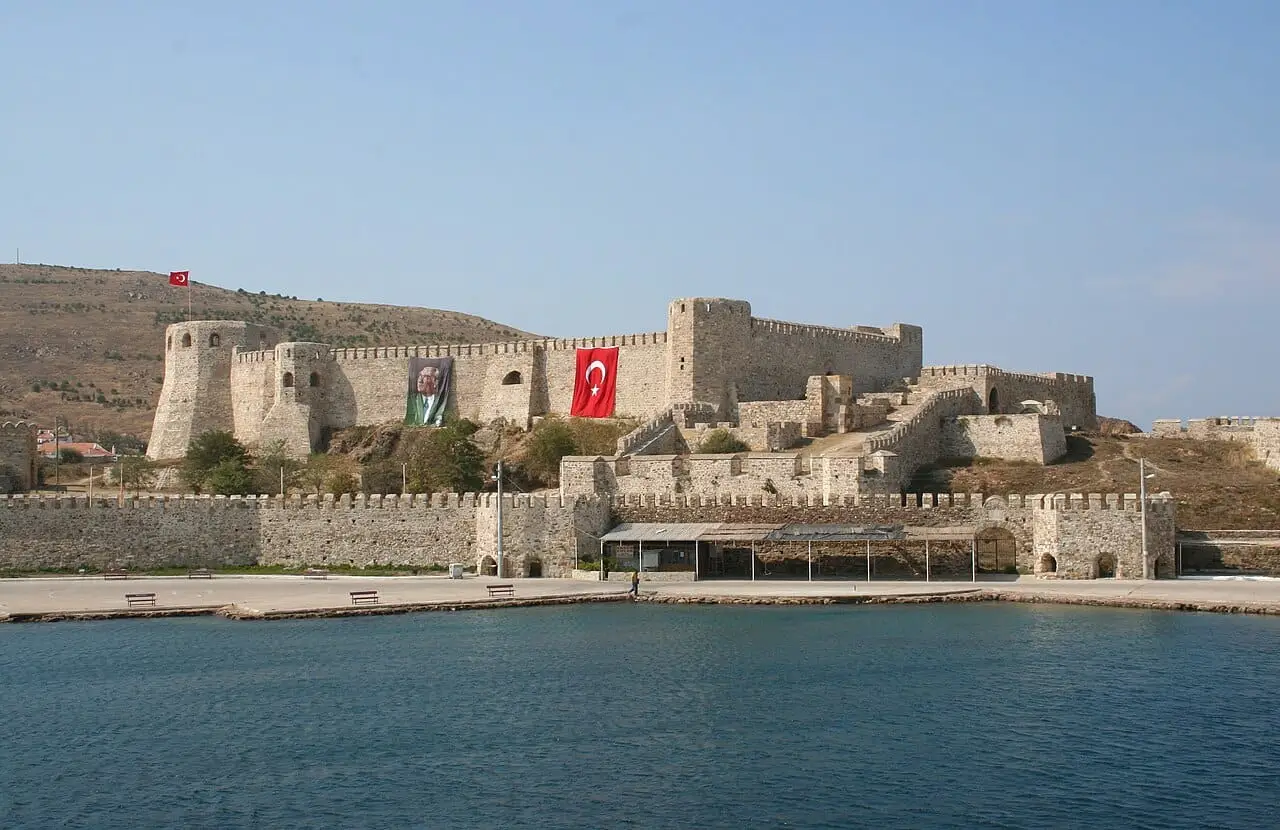
 Photo: Filanca (CC BY-SA 3.0) · Source