 Photo: Julian Nyča (CC BY-SA 4.0) · Source
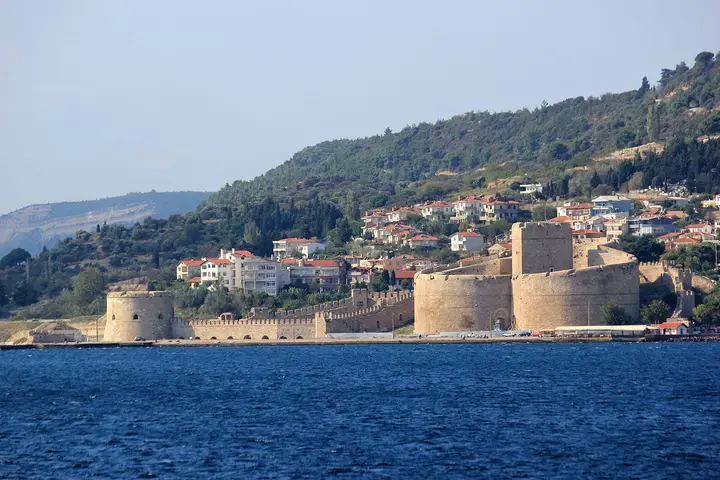
 Kilitbahir Castle
Located in the ancient Kynossema settlement founded by the Thracians, this monumental castle dates from the Ottoman period.
View on map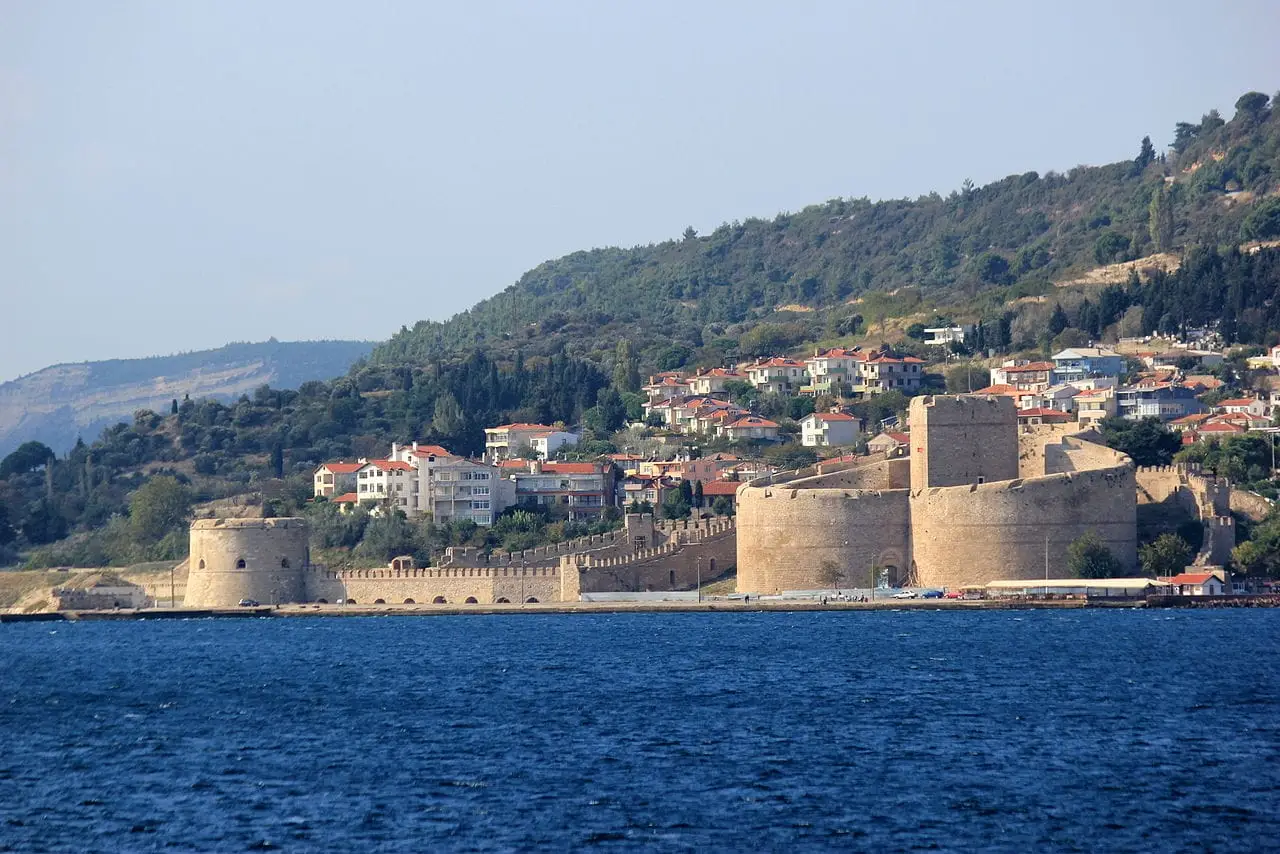 Photo: Julian Nyča (CC BY-SA 4.0) · Source
 6 places to visit in the Eceabat district of Çanakkale: Kilitbahir Castle, Çanakkale Martyrs' Memorial and Conkbayırı. Plan your trip to Eceabat with local food, practical tips and transport information.
Eceabat is a district of Çanakkale Province, on the shore of the Dardanelles; its former name was Maydos. The district covers 430 km² and has an average elevation of 10 metres above sea level. The Çanakkale battles took place within the boundaries of Eceabat, and the district is of great historical importance.
Within today’s Eceabat district there are many ancient settlements founded by the Thracians, a branch of the peoples who came from the Balkans. The district centre Eceabat (Madytus), Sestos (Akbaş), Kynossema (Kilitbahir) and Idaion (Bigalı Castle) are important settlements founded by the Thracians. In the 2nd century BC the region was under Iranian rule, and in the 5th century it witnessed the Persian Wars.
In 1354, during the conquests in Rumelia of Süleyman Paşa, son of Orhan Gazi, Eceabat was joined to Ottoman territory. The region conquered under the leadership of Ece Bey was given the name Eceabat (meaning the place built and founded by Ece) by Süleyman Bey.
The region hosted the cultures of various civilisations, including the Luwians, Trojans, Dardanians, Thracians, Hellenes and Romans, and after the Battle of Malazgirt, Turkish-Islamic culture became dominant. The city of Troy was founded between 6000 and 2500 BC, spanning the Copper and Stone Ages.
The name of the district comes from Ece Yakup Bey, who distinguished himself in the conquest of the region. In the Republic period, Eceabat was attached to Çanakkale Province and became a municipality in 1926. Eceabat is the site of the Çanakkale battles and has had the status of a Historical National Park since 1973.
The fountain at the exit of Eceabat, at the end of the road, was built in 1195. Ayvacık, Bayramiç, Biga, Bozcaada, Çan, Ezine, Eceabat, Gelibolu, Gökçeada, Lapseki and Yenice are all districts of Çanakkale Province.
Last updated:
Photo: Julian Nyča (CC BY-SA 4.0) · Source Located in the ancient Kynossema settlement founded by the Thracians, this monumental castle dates from the Ottoman period.
View on map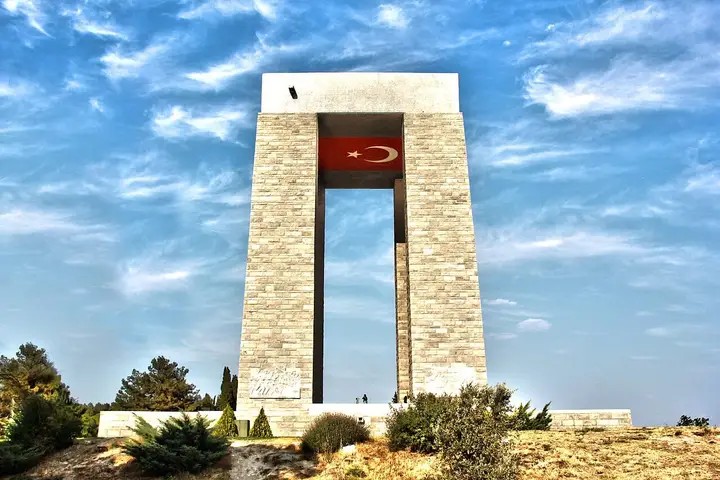 Photo: RIFAT AĞAR (CC BY-SA 4.0) · Source
 The 41.7 metre tall monument, located near Morto Bay on the Gallipoli Peninsula, was erected in memory of the Turkish soldiers who died in the Çanakkale battles of 1915. With four legs representing the four directions, the monument is one of Türkiye's most important national monuments.
View on mapConkbayırı, the scene of some of the bloodiest fighting in the Çanakkale campaign, went down in history with Mustafa Kemal's order to the 57th Regiment: 'I am not ordering you to attack, I am ordering you to die.' On the summit stand a statue of Atatürk and the New Zealand Memorial.
View on map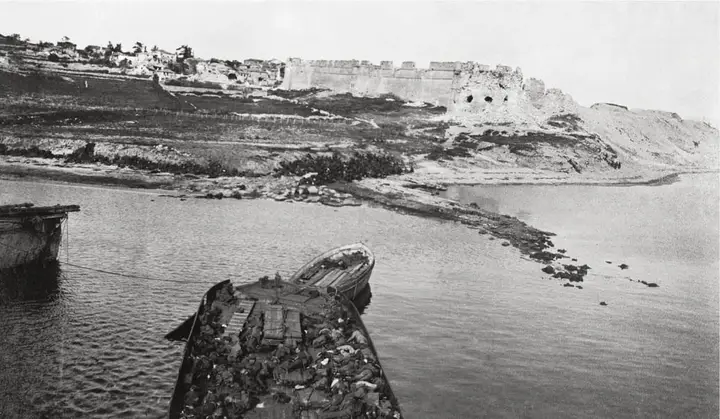
Built on the European shore of the Dardanelles during the reign of Fatih Sultan Mehmed, the castle was the scene of the British landing in 1915. The castle and its surroundings are protected as a battlefield.
View on map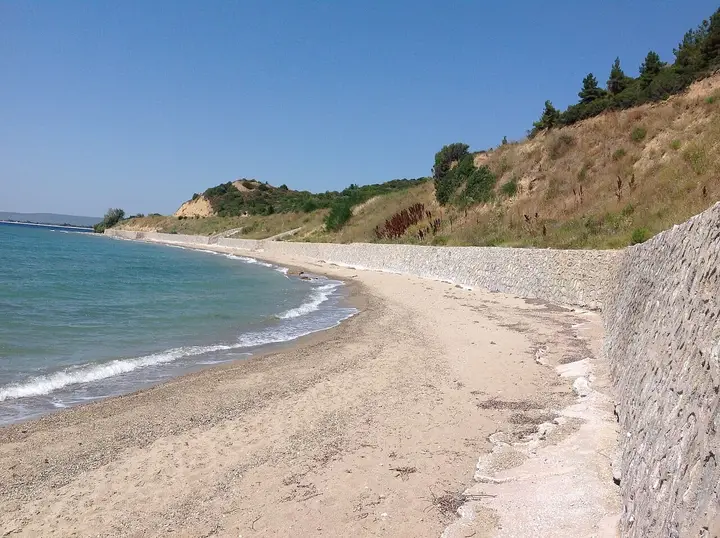 Photo: Basriemin (CC BY-SA 4.0) · Source
 The cove where Australian and New Zealand (ANZAC) troops landed on 25 April 1915 is today an international memorial site. A dawn ceremony is held there every year on 25 April.
View on mapThe lands where the Çanakkale battles were most intense lie within the boundaries of Eceabat district on the peninsula.
View on mapWhile you are in Eceabat, you can also see the highlights of Çanakkale province. These places are in other districts.
Fresh sardines caught in the Dardanelles are coated in cornmeal and fried. They are served fresh in restaurants on the Eceabat shore.
Prepared by mixing fresh cheese with flour and sugar and cooking it in a pan. One of the best-known desserts of the Çanakkale region. Being prepared with fresh, natural ingredients makes it a healthy option.
Prepared by cooking fresh artichokes with olive oil, carrots and peas. One of the classic dishes of Aegean cuisine.
Eceabat lies at the heart of the Gallipoli Peninsula, where the most intense fighting of the 1915 Çanakkale battles took place. The battlefields, cemeteries and memorials are of national and international importance.
The dawn ceremony held every year on 25 April at Anzac Cove attracts thousands of visitors from Australia and New Zealand. The ceremony symbolises the international dimension of the war.
Eceabat's economy is based on tourism and farming. The Çanakkale battlefields and memorial cemeteries attract hundreds of thousands of domestic and foreign tourists every year. Olive growing and small livestock farming are traditional sources of livelihood. Ferry transport also contributes to the district's economy.
Eceabat is a 25-minute ferry ride from Çanakkale city centre. Ferry services between Çanakkale and Eceabat run regularly throughout the day. There is also a road connection via the 1915 Çanakkale Bridge.
The 6 standout places in Eceabat: Kilitbahir Castle, Çanakkale Martyrs' Memorial, Conkbayırı, Seddülbahir Castle, Anzac Cove and Gallipoli Peninsula Historical Area.
Sardalya Tava, Peynir Helvası and Zeytinyağlı Enginar are standout dishes on tables in Eceabat.
Eceabat is known for Olive Oil and the Legacy of the Çanakkale Battles. Olive oil obtained from the olive groves of the Gallipoli Peninsula is known for its light, fruity taste.
Eceabat is a 25-minute ferry ride from Çanakkale city centre. Ferry services between Çanakkale and Eceabat run regularly throughout the day. There is also a road connection via the 1915 Çanakkale Bridge.
Recommended visit length: 1–2 days. Best time to visit: spring (March–April).