History
Şebinkarahisar’s ancient name was Koloneia. It was captured and named by the Roman general Pompey in 65 BC. A Greek inscription from the 9th or 10th century, found in the castle, confirms that Şebinkarahisar is the ancient city of Koloneia. In 1473 Fatih Sultan Mehmed stopped at Şebinkarahisar for three days after the Battle of Otlukbeli. On 12 October 1924 Gazi Mustafa Kemal Paşa proposed that the district’s name be corrected to Şebinkarahisar, and gave the name himself.
Geography
The district of Şebinkarahisar covers 1,396 km², and the average elevation of the district centre is 1,371 metres above sea level. Culturally, the district shares the culture of southern Giresun and northern Sivas.
Historical Monuments
Meryem Ana Monastery is carved out of a single rock in Sarıyer Village, 11 km east of the district centre. It has 4 storeys and 32 rooms. İstiklal Fountain was built in front of the former municipal building in 1927 and moved to the district square in 1985.
History and Culture
Şebinkarahisar’s ancient name was Koloneia, which was definitively confirmed by a Greek inscription written in the 9th or 10th century. After the Battle of Malazgirt (Manzikert) in 1071, Şebinkarahisar passed into Turkish hands, never to return.
History and Culture
The district became a province in 1923 and was attached to Giresun province in 1933. Around 70 houses and a mosque inside the castle were burned and destroyed during and after the Armenian uprising of 1915.
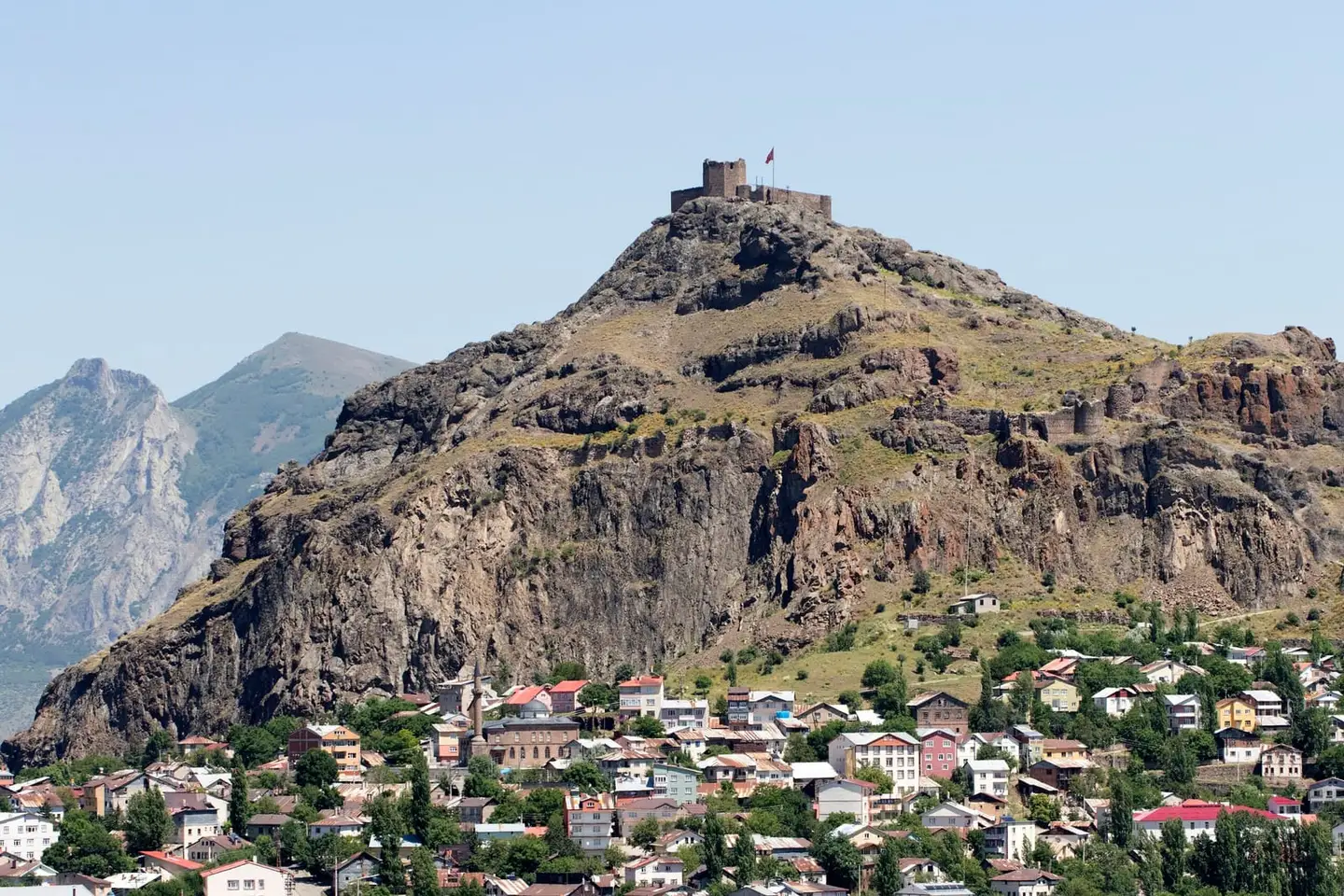
 Photo: Wikipedia (CC BY-SA) · Source