Buca Levantine Houses
Settlements of the Levantine Group of British, French, Italian and Dutch origin from the late Ottoman period. Historic houses with distinctive architecture.
View on map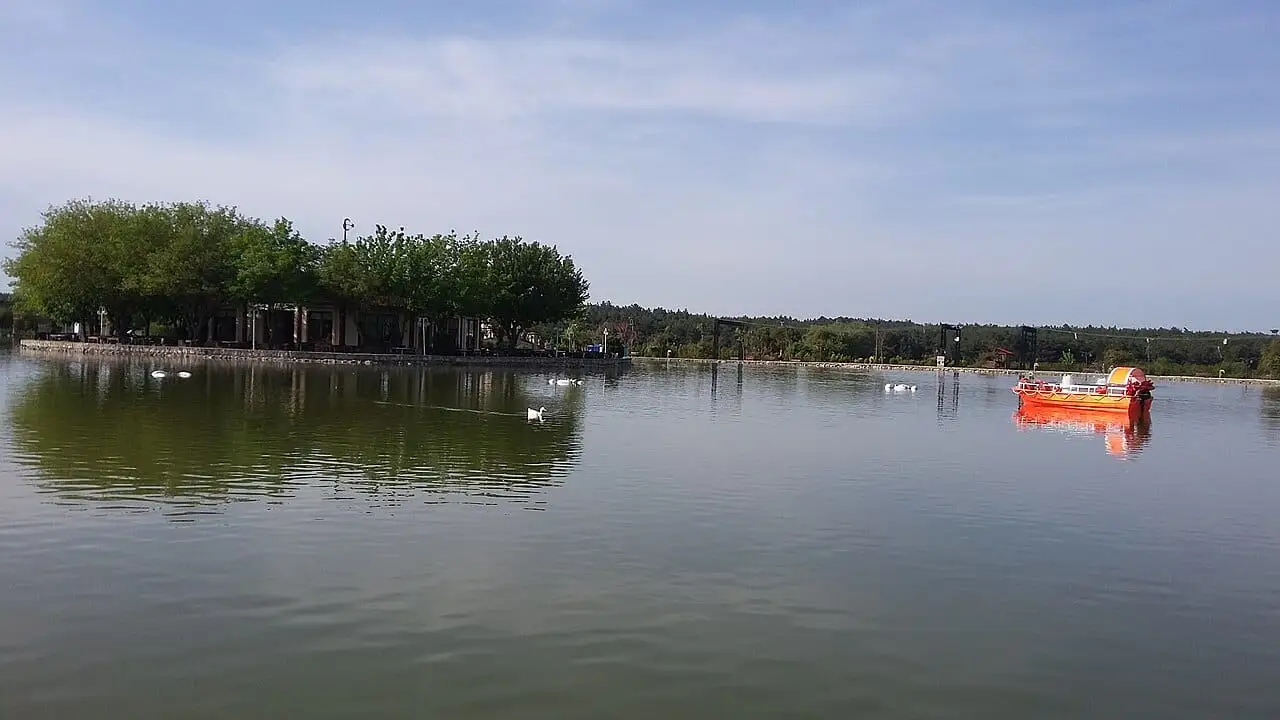 Photo: Kingbjelica (CC BY-SA 4.0) · Source
 6 places to visit in the Buca district of Izmir: Buca Levantine Houses, Buca Pond and Hasanağa Garden. Plan your trip to Buca with local food, practical tips and transport information.
Buca, with a population of 523,193, is the most populous district of Izmir. It covers an area of 178 km², and the average elevation of the district centre is 101 metres above sea level. With a history going back to around 130 BC and witness to many civilisations, Buca is a district of culture and history.
It is accepted that the native population lived quite comfortably until the Aeolians took the city in 1102 BC. In 628 BC the Lydians, who had grown stronger, took Izmir and the city was dispersed. Scholars have confirmed that there has been a settlement in Buca since antiquity. In 1868, a large female bust from the ancient period was unearthed north-east of Buca; this bust is still displayed at the British Museum in London. After the proclamation of the Republic, Buca developed very rapidly, and migrant communities continued to settle there. Buca became a district by separating from Merkez district under Law no. 3392, which entered into force on 4 July 1987.
Buca is located 9 km south-east of Izmir, on the southern foothills of Nif Mountain. The district has forty-seven neighbourhoods, and all its settlements are built on the plain.
Buca is among the fastest-growing districts in Turkey in terms of population increase. In 1990 it became the fastest-growing district at metropolitan level, with a growth rate of 97% compared with 1980. The population, which was 203,383 in 1990 and 285,250 in 1997, reached 461,761 in 2014.
Buca has a very important place in horse racing in Turkey, and races have been held at its racecourse since 1856. The first night horse races were also held at Şirinyer Racecourse.
Buca is a culture and history town with a history going back to around 130 BC and witness to many civilisations. Buca separated from Merkez district and became a district in 1987. When Buca was retaken from the Greeks on 9 September 1922, its Greek population left the area.
Last updated:
Settlements of the Levantine Group of British, French, Italian and Dutch origin from the late Ottoman period. Historic houses with distinctive architecture.
View on map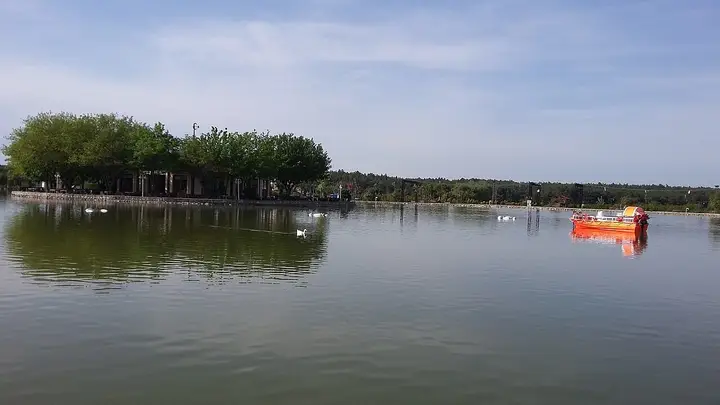 Photo: Kingbjelica (CC BY-SA 4.0) · Source
 A garden commissioned by Hasanağa in the Ottoman period, one of Izmir's oldest parks. With its monumental trees, pools and walking paths, it is the green lung of Buca.
View on mapAt the Kaynaklar location; a recreation area with an artificial lake, social facilities, a picnic area and viewing terraces.
View on mapThe Atatürk Mask, described as the tallest sculpture in Turkey, is in Buca.
View on mapWhile you are in Buca, you can also see the highlights of Izmir province. These places are in other districts; Buca is about 10 km from the provincial centre.
Boyoz, the emblem of Izmir, is prepared fresh every morning in Buca's traditional bakeries.
Prepared with semolina, yoghurt and sugar, şambali is one of Izmir's traditional desserts. It is topped with almonds, baked, and then soaked in syrup.
In the 19th century, Buca was one of the most cosmopolitan neighbourhoods of Izmir. Levantine mansions, Greek churches and traces of multicultural life can still be seen today.
Buca is the most populous district in Izmir. Dokuz Eylül University's Tınaztepe Campus is within the district boundaries. Trade, services and education are the main economic activities.
Buca is 10 km from Izmir city centre. Transport is provided by ESHOT buses and the Izmir Metro. The Buca–Üçyol metro line connects the district to the city centre.
The 6 highlights of Buca are: Buca Levantine Houses, Buca Pond, Hasanağa Garden, Buca Lake, Buca Railway Station and the Atatürk Mask.
Boyoz and Şambali are the standout dishes on Buca's tables.
Buca is known for Buca Fig and its Levantine and Greek Heritage. Sarılop figs grown in Buca and the surrounding area are known for their sweet aroma and thin skin. They are also exported as dried figs.
Buca is 10 km from Izmir city centre. Transport is provided by ESHOT buses and the Izmir Metro. The Buca–Üçyol metro line connects the district to the city centre.
Suggested visit length: half a day. Best time to visit: spring and autumn.