Karaburun Peninsula Coves
The area where many coves and bays that form the geography of the district come together.
View on map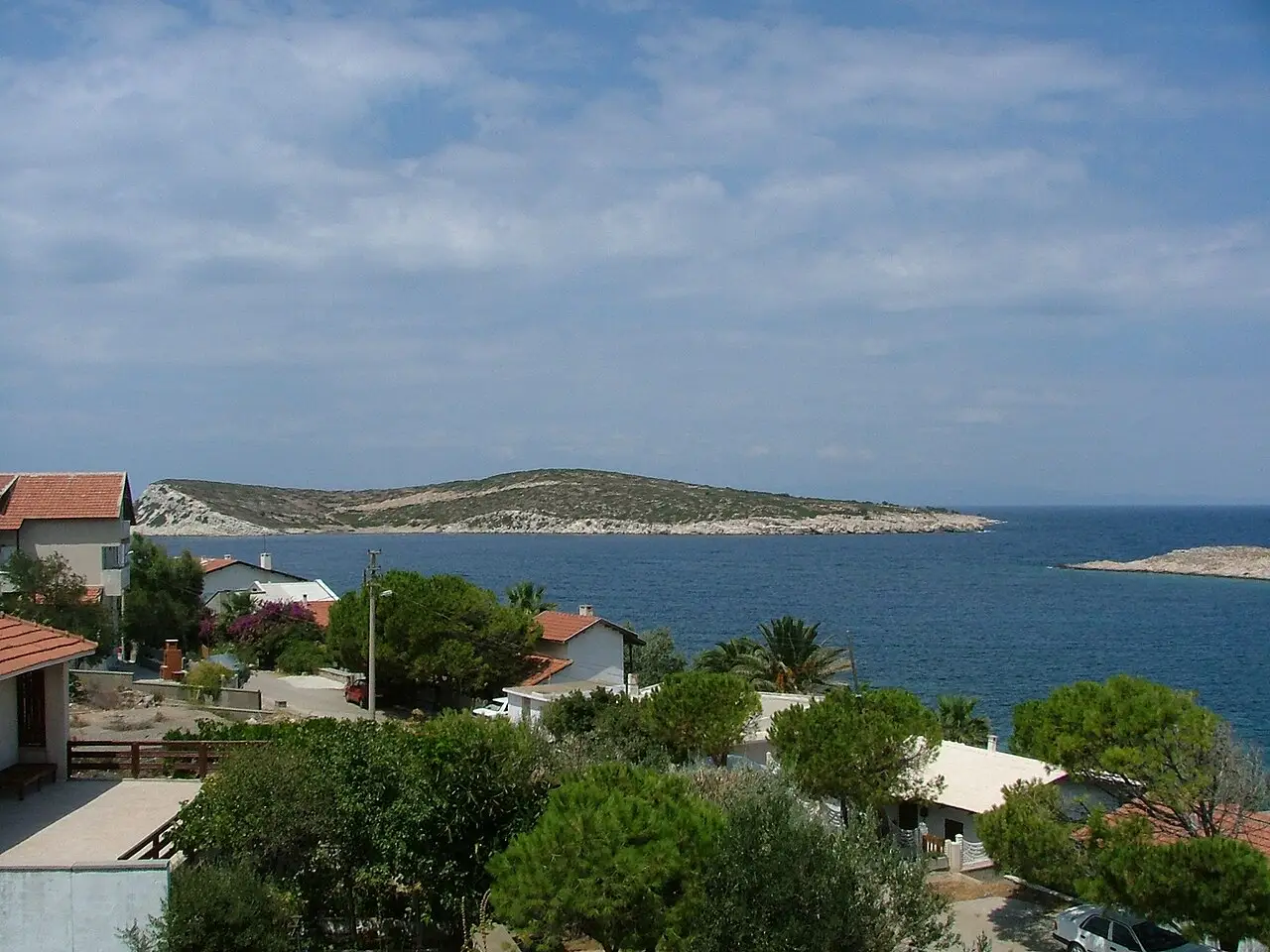 Photo: The original uploader was Dbl2010 at Turkish Wikipedia . (CC BY 2.5) · Source
 6 places to visit in the Karaburun district of Izmir: Karaburun Peninsula Coves, Karaburun Underwater Archaeology Museum and Karaburun Wind Power Plants. Plan your trip to Karaburun with local food, practical tips and transport information.
Karaburun is a district of İzmir province, and its administrative centre is the town of the same name. Located on the Karaburun Peninsula, the district is the second-smallest in the province by population.
Settlement on the Karaburun Peninsula began in the Chalcolithic period. In Antiquity, Erithrai and five cities attached to it were founded in the region where the Ionians settled, while Sidusa was located where the district centre now stands. In 1320 it was joined to the Aydınoğulları Principality and came under Turkish rule. In 1910 it was separated from Çeşme as a district under the name Karaburun.
Karaburun is 106 km from İzmir city centre. Because of its steep, mountainous structure, the district is rocky rather than sandy, and it is notable for its underwater richness. The imbat wind blows regularly every day from the afternoon until dusk in the summer months.
The main commercial products are artichokes, grapes, daffodils, pomegranates, citrus fruit and almonds. Fishing continues in the area by villagers using nets or lines.
Because the district faces the open sea, its water is clean as it is constantly renewed. In spring, hundreds of varieties of flowers bloom, attracting those who enjoy fresh air and nature. Tourist potential is mostly formed by domestic tourists who have summer houses there.
Karaburun became a municipality in 1902 and a district in 1910. Karaburun was under Greek occupation between 1919 and 1922. Daffodils growing in the Karaburun fields are an important source of income for the region.
Last updated:
The area where many coves and bays that form the geography of the district come together.
View on mapAncient wrecks off the coast of Karaburun are of great importance for underwater archaeology. Remains of a merchant ship dating to the 5th century BC have been found in the area.
View on mapThe wind turbines on the peninsula's hills produce energy from the strong winds of the Aegean. The roads between the turbines offer panoramic views.
View on mapThe Karaburun Mimosa Festival, held every February, celebrates the peninsula's yellow mimosa trees. Walks, concerts and local product stalls are held during the festival.
View on mapA fishing harbour, dive centres and fish restaurants, with a waterfront promenade where people walk in the evenings.
View on mapWhile you are in Karaburun, you can also see the highlights of Izmir province. These places are in other districts.
Sea bass from the clear waters of Karaburun, served grilled or baked in salt.
Mastic squash, native to Karaburun, stuffed with a rice filling and cooked in olive oil.
Although close to İzmir, Karaburun is one of the rare places that has kept its calm and natural way of life. Fishing, olive growing and mastic cultivation form the basis of traditional life.
Karaburun's economy is based on fishing, olive growing and tourism. Wind power plants have created a new source of income. The peninsula's unspoilt nature has potential for eco-tourism.
Karaburun is 95 km from İzmir. Minibus services run from İzmir. It is also possible to reach the district by sea.
The top 6 places in Karaburun are Karaburun Peninsula Coves, Karaburun Underwater Archaeology Museum, Karaburun Wind Power Plants, Mimosa Festival Area, Karaburun Pier and Bodrum Beach.
Karaburun Sea Bass and Sakız Kabağı Dolması are the standout flavours on Karaburun's tables.
Karaburun is known for Karaburun Mastic Resin and its Peninsula Way of Life. The resin obtained from mastic trees grown on the Karaburun Peninsula is used in the food and cosmetics sectors.
Karaburun is 95 km from İzmir. Minibus services run from İzmir. It is also possible to reach the district by sea.
The recommended visit is 1–2 days. The best time to visit is the summer months (for diving) and February (Mimosa Festival).