 Photo: Ezzeldin.Elbaksawy (CC BY-SA 4.0) · Source
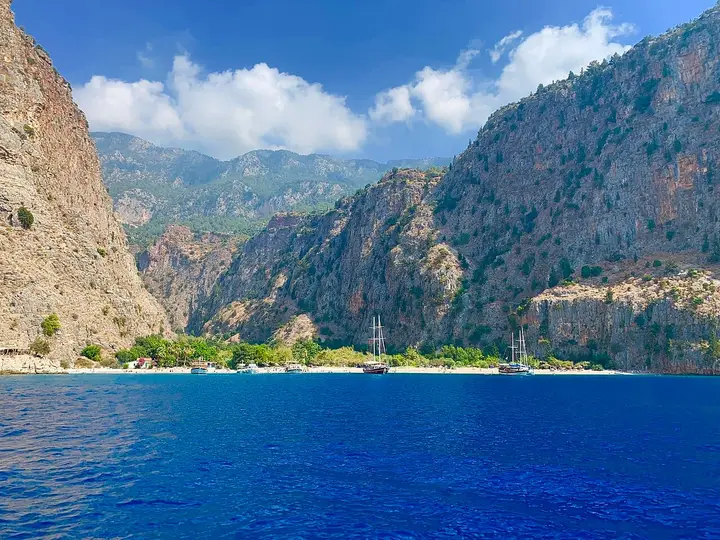
 Butterfly Valley (Kelebekler Vadisi)
One of Fethiye's natural habitats, the famous valley where butterfly species live.
View on map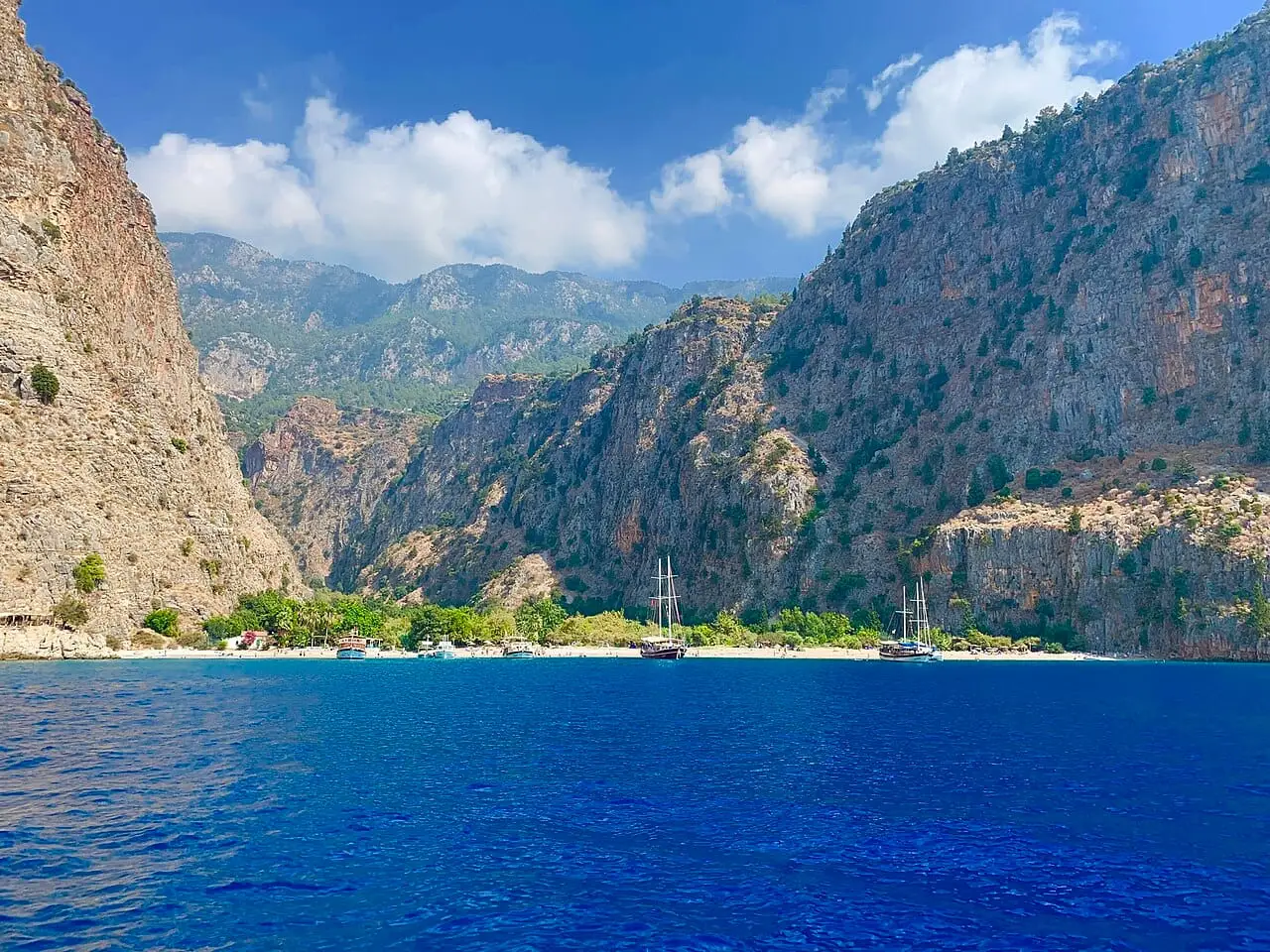 Photo: Ezzeldin.Elbaksawy (CC BY-SA 4.0) · Source
 7 places to visit in the Fethiye district of Muğla: Butterfly Valley (Kelebekler Vadisi), Amintas Rock Tombs (Amintas Kaya Mezarları) and Saklıkent Canyon. Plan your trip to Fethiye with local food, practical tips and transport information.
Fethiye is one of the 13 districts of Muğla Province and is also the centre of the district of the same name. It is a well-known tourism centre in Türkiye and the world, and alongside world-famous bays such as Ölüdeniz it has natural beauties such as the Saklıkent Canyon. The district covers 875 km². The average altitude of Fethiye district centre above sea level is 14 metres.
Ancient Telmessos, believed to have been founded around the 2000s BC at Belen near today’s Fethiye, lay on the border between Lycia and Caria. After Alexander, who freed Anatolia from the Persian invasion in 333 BC, the Seleucids ruled, and later the city came under the Kingdom of Pergamon. It remained under Roman and Byzantine rule and began to be called Anastasioupolis in the 8th century. In 1282 it came under the Menteşeoğulları Principality. Over time the town took the name Meğri. In 1934 Mustafa Kemal Atatürk named it Fethiye, in memory of Tayyareci Fethi Bey, one of the first air martyrs, whose plane crashed in 1914.
Fethiye lies in the west of the Mediterranean Region. It is bordered by Seydikemer district to the east, the Mediterranean to the south, south-west and west, Dalaman district to the north-west, and Çameli district of Denizli to the north. Fethiye district, which hides the ancient city of Telmessos, lies at the eastern end of Fethiye Bay and to the south-west of Fethiye Plain.
Fethiye, which has a beach like Ölüdeniz, is one of Türkiye’s leading tourism centres. It has diving sites such as Af Kule, and many caves have been opened to visitors. Its natural landscape also allows alternative sports such as paragliding. The ancient cities around Fethiye are Telmessos, Kaunos, Kadyanda, Tlos, Pınara, Letoon, Sidyma and Xanthos, and Fethiye Museum serves visitors with its rich collection.
Until the metropolitan municipality law of 2012, Fethiye was the largest district of Muğla. The district took the name Fethiye from Mustafa Kemal Atatürk in 1934. Museum work in Fethiye began in 1962.
Last updated:
Photo: Ezzeldin.Elbaksawy (CC BY-SA 4.0) · Source One of Fethiye's natural habitats, the famous valley where butterfly species live.
View on map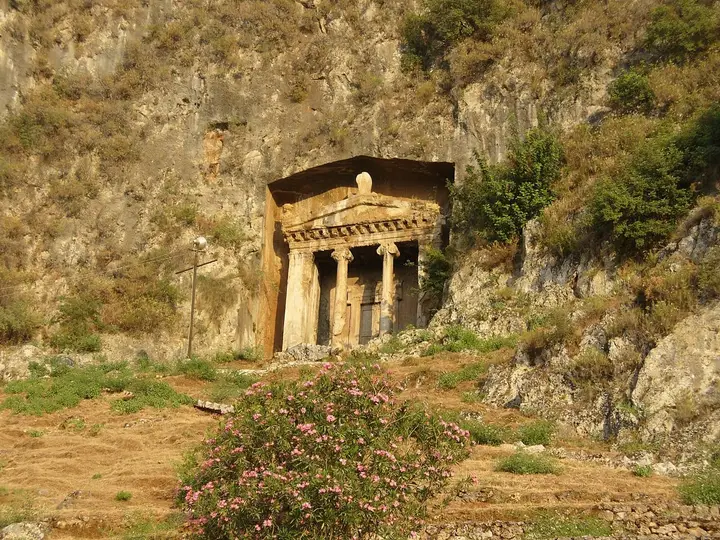 Photo: No machine-readable author provided. Jedyooo assumed (based on copyright claims). (CC BY-SA 2.5) · Source
 Rock tombs from antiquity, among the historic monuments of Fethiye.
View on map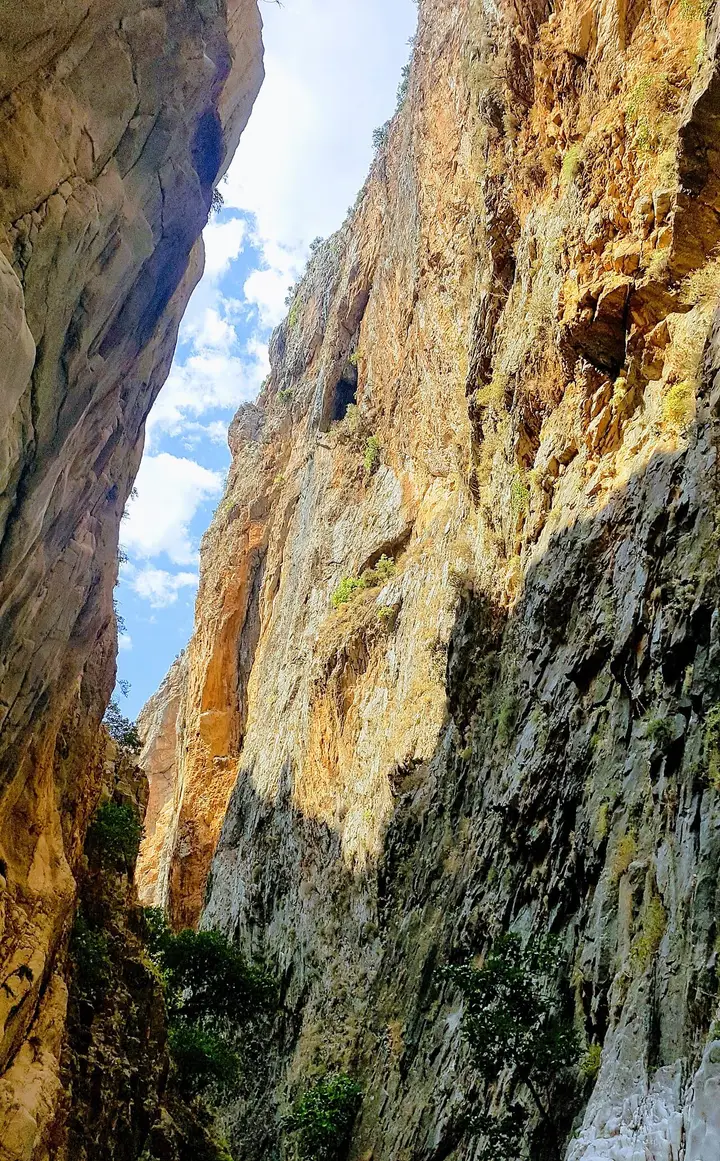 Photo: Buse Kocaaslan (CC BY-SA 4.0) · Source
 Island at the entrance to Fethiye Bay, where the remains of the castle of the Knights of Rhodes are found.
View on mapLycian city known for its bath, theatre, agora and hundreds of rock tombs.
View on mapThe largest island in the bay, with the ruins of an old Greek settlement and a shipyard tower.
View on mapWhile you are in Fethiye, you can also see the highlights of Muğla province. These places are in other districts.
Fethiye Tarhanası was registered as a geographical indication on 11 October 2023 (TÜRKPATENT registration no. 1484). Product group: dishes and soups. Registered by: Fethiye Chamber of Commerce and Industry.
Fethiye's fish restaurants are famous for more than 20 varieties of meze. Sea blite, octopus salad and spicy ezme are among the most popular mezes.
Kuzugöbeği mushrooms, gathered in spring in Fethiye's mountainous areas, are sautéed in butter and served. This rare mushroom is one of the most valued flavours of Aegean cuisine.
Dough opened into a boat shape, filled with minced meat, cheese or mixed ingredients, and baked in a stone oven. The pide ovens of Fethiye's Paspatur Bazaar are especially famous.
Fethiye was founded on the site of Telmessos, the centre of the ancient Lycian civilisation. Rock tombs, sarcophagi and the remains of an ancient theatre keep the Lycian heritage alive throughout the town. It is one of the starting points of the Lycian Way.
Fethiye's historic bazaar offers a lively shopping experience, with shops selling handicrafts, spices, jewellery and souvenirs along its narrow streets. Keeping alive the trading tradition of the Ottoman period, it is one of the places tourists visit most.
Fethiye's economy is dominated by tourism. Ölüdeniz, Butterfly Valley and the 12 Islands boat tour have made the district an international destination. In farming, citrus fruits, olives and greenhouse vegetables stand out. Paragliding and diving tourism are also important sources of income.
Dalaman Airport is 45 km from Fethiye. Muğla is 130 km away and Antalya 200 km. Ferries run from Fethiye Port to Rhodes. The D-400 highway links the district with Antalya and İzmir.
The 7 highlights of Fethiye are: Butterfly Valley, Amintas Rock Tombs, Saklıkent Canyon, Knights Island, Pınara Ancient City, Kadyanda and Tersane Island.
Fethiye Tarhanası, Fethiye Mezes, Kuzugöbeği Mantarı Sote and Fethiye Pidesi are the standout dishes on Fethiye tables.
Fethiye is known for Fethiye Kaya Halısı/Fethiye Kayaköy Halısı/Fethiye Halısı and the heritage of Lycian civilisation. Registered with TÜRKPATENT as a geographical indication.
Dalaman Airport is 45 km from Fethiye. Muğla is 130 km away and Antalya 200 km. Ferries run from Fethiye Port to Rhodes. The D-400 highway links the district with Antalya and İzmir.
Suggested visit length: 3-5 days. Best time to visit: April-November.