 Photo: mwanasimba from La Réunion (CC BY-SA 2.0) · Source
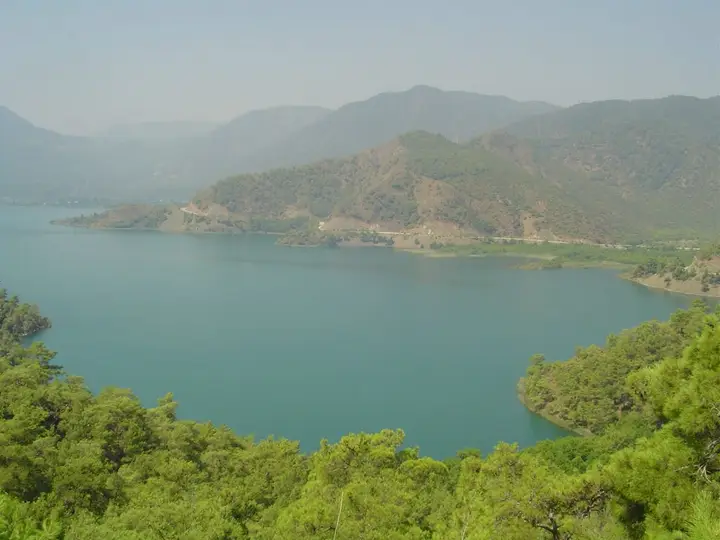
 Köyceğiz Lake
A lake that bears the name of the district, with sulphurous water, located within the district's boundaries.
View on map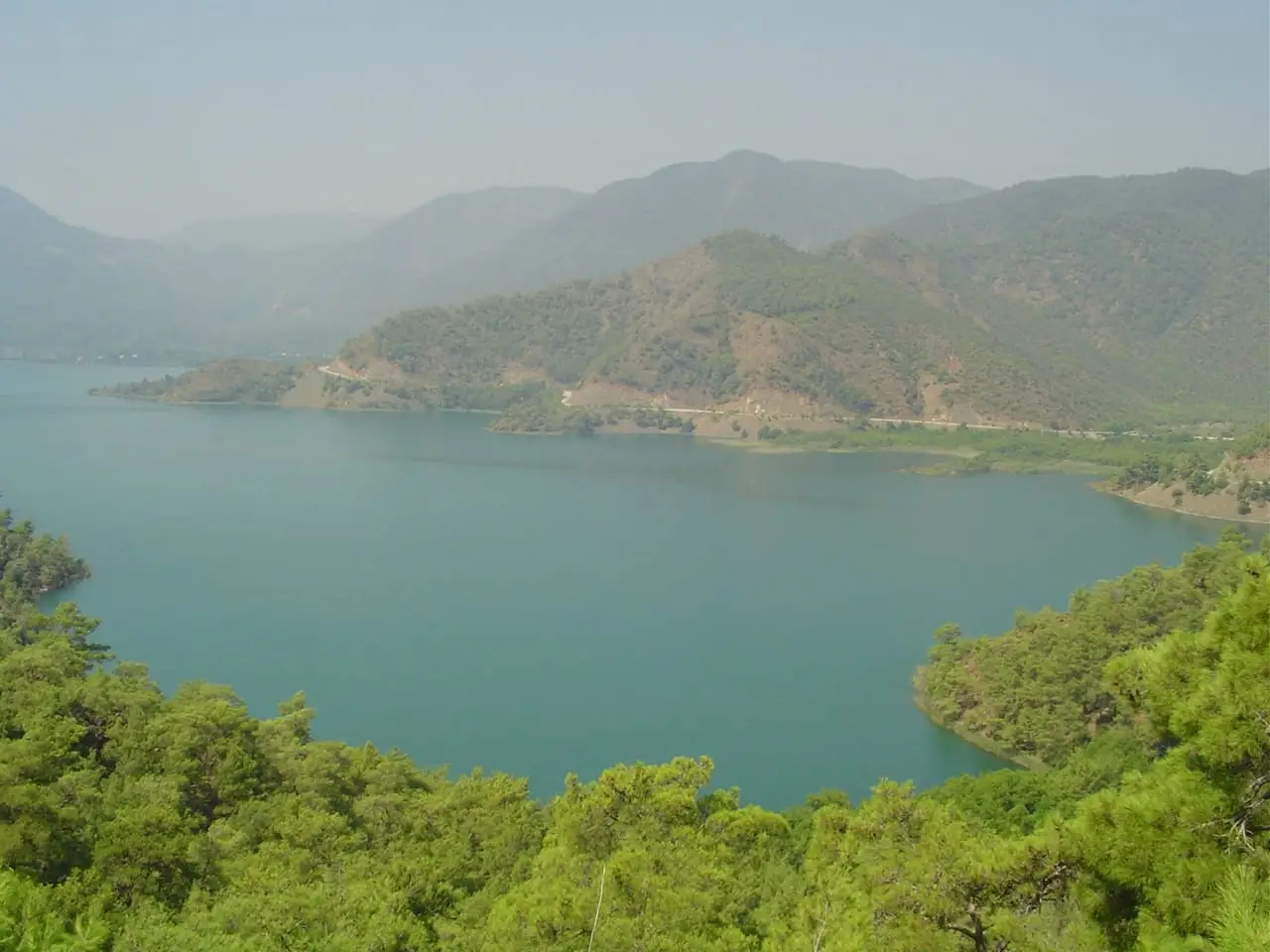 Photo: mwanasimba from La Réunion (CC BY-SA 2.0) · Source
 5 places to visit in the Köyceğiz district of Muğla: Köyceğiz Lake, Kaunos Ancient City and İztuzu Beach (Caretta Caretta Beach). Plan your trip to Köyceğiz with local food, practical tips and transport information.
Köyceğiz is one of the 13 districts of Muğla and is famous for its lake of the same name, its coves on the Mediterranean coast and the ancient city of Kaunos. The district covers 1,329 km², and the district centre lies at an average altitude of 18 metres above sea level.
Köyceğiz’s history goes back to around 3400 BC. Kaunos, founded in the area where Köyceğiz Lake meets the coast, was one of the important ports and trading centres of Caria.
Köyceğiz has a Mediterranean climate on the coast and a continental climate in the mountainous areas. Köyceğiz, which receives the most rainfall in Türkiye after Rize, has winter rains lasting 2–3 months.
85% of the district’s population lives in the neighbourhood and makes a living from agriculture, livestock farming, forestry and tourism.
Köyceğiz’s history goes back to around 3400 BC. The district of Köyceğiz was founded in 1860. According to one source, the district was settled by the Karians and Lycians around 3000 BC. Kaunos Ancient City has been on UNESCO’s World Heritage Tentative List since 2014. On 16 March 2019, Köyceğiz was accepted as a member of the Cittaslow network, the “quiet town” movement, at the International Cittaslow Executive Board meeting in Italy.
Last updated:
Photo: mwanasimba from La Réunion (CC BY-SA 2.0) · Source A lake that bears the name of the district, with sulphurous water, located within the district's boundaries.
View on mapKaunos, founded where Köyceğiz Lake meets the coast, was one of the important ports and trading centres of Caria.
View on map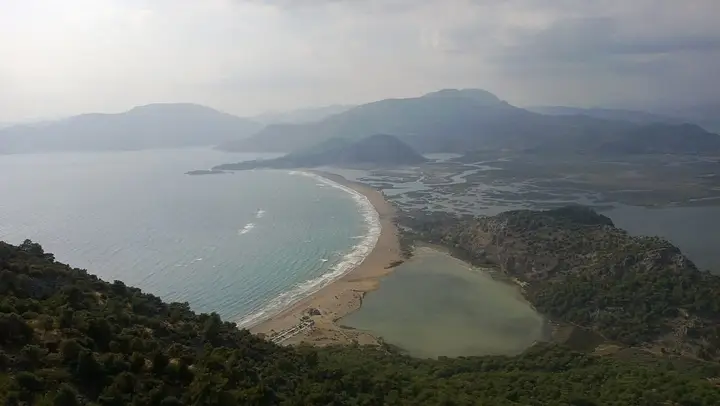 Photo: FurkanYalcin3 (CC BY 3.0) · Source
 The 4.5 km stretch of sand is one of the most important nesting grounds in the Mediterranean for the endangered loggerhead sea turtle (Caretta caretta). Under protection from May to October, the beach has both a freshwater lake and the sea on its shores.
View on map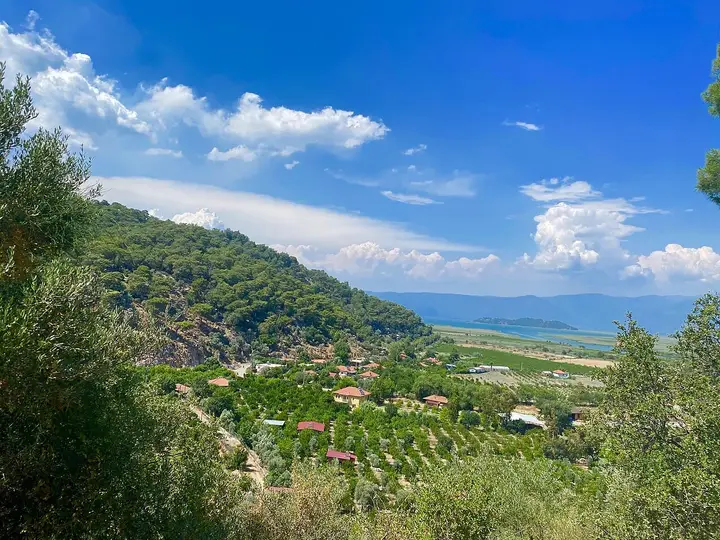 Photo: Mehmettorun (CC BY-SA 4.0) · Source
 Thermal springs on the southern shore of Köyceğiz Lake, at 39°C, contain sulphurous and radioactive water. The baths, which are believed to be good for rheumatism and skin conditions, offer mud baths.
View on mapEkincik, a neighbourhood of Köyceğiz on the Mediterranean coast, is a cove with a long beach and a yacht harbour.
View on mapWhile you are in Köyceğiz, you can also see the highlights of Muğla province. These places are in other districts.
Grey mullet caught in Köyceğiz Lake, prepared grilled or steamed. Grown in the mix of fresh and salt water in the lake, the mullet is known for its distinctive flavour.
Oil obtained from the sığla tree, which is specific to Köyceğiz, is used as a flavouring in traditional dishes. Olive-oil dishes made with sığla oil are among the region's distinctive specialities.
Traditional bread made from corn flour, cooked on a griddle and served with fresh cheese and butter. It is an essential part of the breakfast tables in Köyceğiz's villages.
A dish made with the sılcan plant, which grows at the base of sığla trees. It is frequently served at tables in Köyceğiz and offered to guests.
Grey mullet is produced in Köyceğiz Lake and the Dalyan Strait.
The Köyceğiz-Dalyan Special Environmental Protection Area has, since 1988, carried out internationally coordinated work to protect Caretta caretta turtles. The nesting areas on İztuzu Beach are under strict protection.
The sığla forests around Köyceğiz are the largest natural habitat of this species in the world. Home to endemic plant and animal species, the forests are a candidate for UNESCO Biosphere Reserve status.
The economy of Köyceğiz is based on agriculture, beekeeping and tourism. Citrus, olive and sığla oil production are the main agricultural activities. Dalyan–İztuzu tourism and thermal tourism are important sources of income. Organic farming has developed in recent years.
Dalaman Airport is 25 km away. Muğla is 70 km away and Fethiye is 75 km away. The D-400 highway passes through the district. Regular boat trips run from Köyceğiz Lake to Dalyan.
The 5 highlights of Köyceğiz are: Köyceğiz Lake, Kaunos Ancient City, İztuzu Beach (Caretta Caretta Beach), Sultaniye Hot Springs and Ekincik Cove.
Köyceğiz Kefali, Sığla Yağlı Yemekler, Çıtırma (corn bread) and Sılcan kavurması are the standout flavours on Köyceğiz's tables.
Köyceğiz is known for Köyceğiz Portakalı and the Caretta Caretta Conservation Efforts. It is a protected designation of origin product registered with TÜRKPATENT.
Dalaman Airport is 25 km away. Muğla is 70 km away and Fethiye is 75 km away. The D-400 highway passes through the district. Regular boat trips run from Köyceğiz Lake to Dalyan.
Suggested visit length: half a day. Best time to visit: spring and autumn.