 Photo: Wikipedia (CC BY-SA) · Source
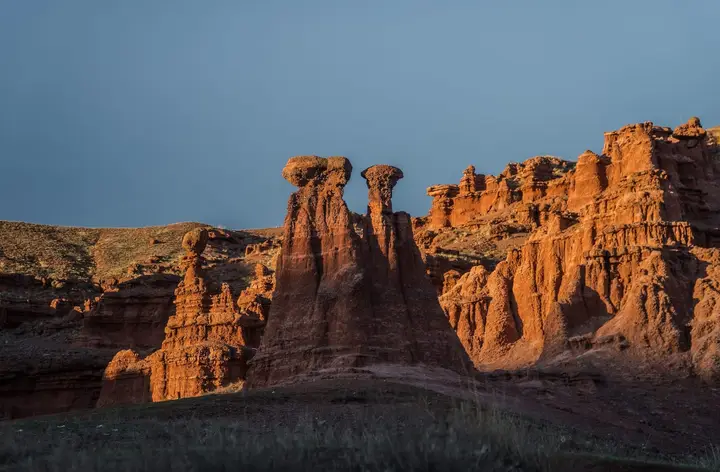
 Narman Fairy Chimneys
One of the district's most important natural wonders, the fairy chimneys.
View on map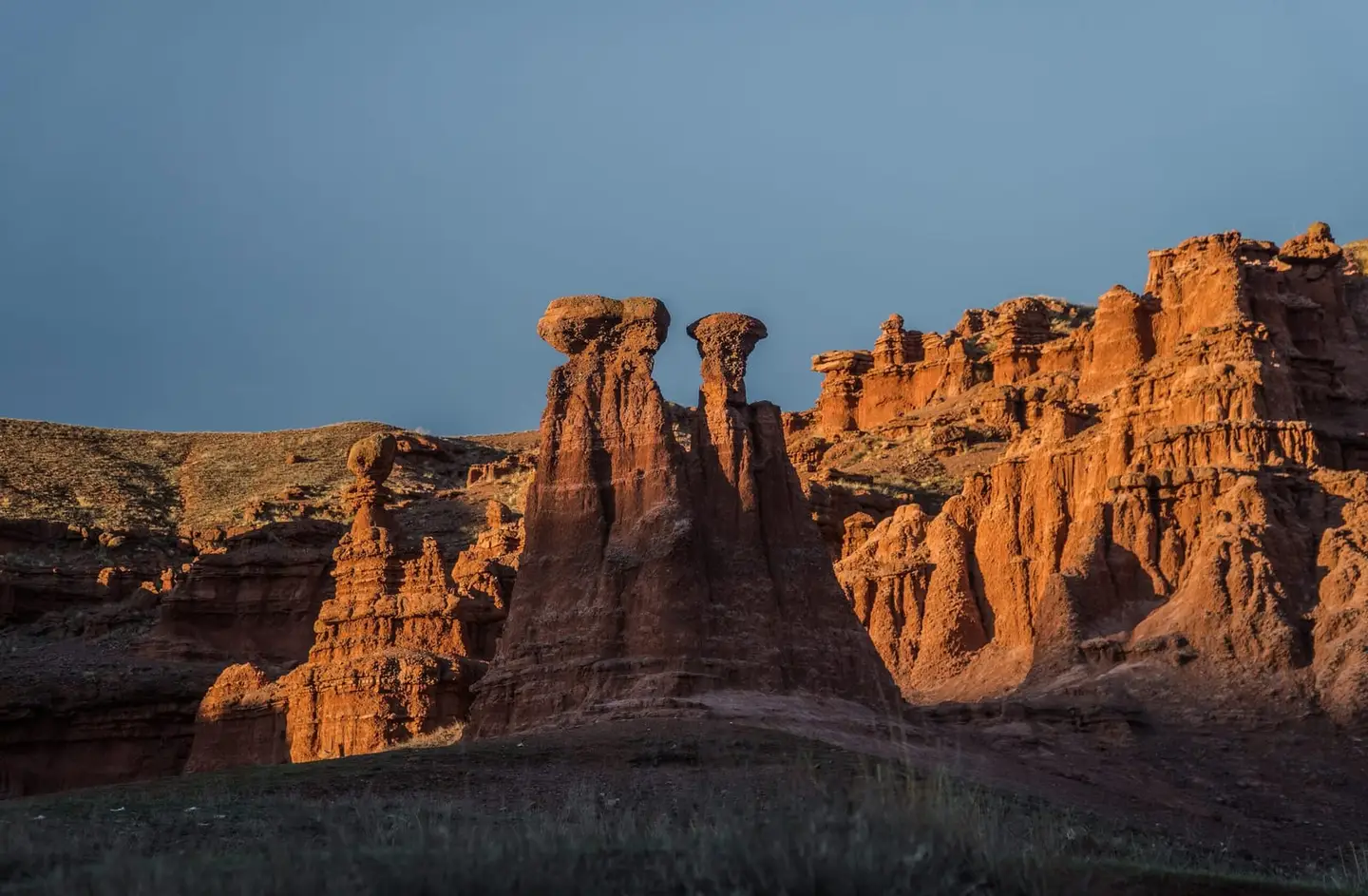 Photo: Wikipedia (CC BY-SA) · Source
 5 places to visit in the Narman district of Erzurum: Narman Fairy Chimneys, Narman Five Lakes and Red Hills (Rainbow Hills). Plan your trip to Narman with local food, practical tips and transport information.
Narman is a district of Erzurum province and has 45 neighbourhoods (mahalle). The district covers an area of 799 km² and lies at an elevation of 1,638 metres above sea level. The district is 90 kilometres from the provincial centre.
The Georgian geographer Vakhushti referred to Narman as Narumaki and Narimani. After the 1877–1878 Ottoman–Russian War, when part of the Mamirvan sanjak was left to Russia, İdi village (today’s Narman town) became the centre. In 1954, when Narman became a kaza (sub-district), the village of İdi was also renamed Narman.
Because the district lies among high mountains, its climate is considerably milder than that of Erzurum. The Narman Fairy Chimneys and the Narman Five Lakes are the district’s most important natural beauties.
The district’s economy rests on livestock farming and agriculture and takes the form of family enterprise. Beekeeping holds an important place in the district’s economy.
Aşık Sümmani, known for his works in Turkish folk literature, was from the district. The former name of the district was Mamervân. Narman became a kaza in 1954; the village of İdi was renamed Narman at that time. While it was a bucak centre attached to Tortum, it gained municipal status on 24 November 1952.
Last updated:
Photo: Wikipedia (CC BY-SA) · Source One of the district's most important natural wonders, the fairy chimneys.
View on mapA significant natural formation created by the five lakes in the district.
View on mapIron-oxide-rich soil layers around Narman form coloured hills in red, orange and yellow tones. The colours, which come alive especially after rain, attract international interest in the region.
View on mapA castle on a hill overlooking the district centre; its surviving Seljuk-period walls reflect the strategic importance of the region. From the castle ruins, there are panoramic views of the Narman plain and the surrounding coloured hills.
View on mapA waterfall near the district, whose water cascading over rocks is at its most spectacular in spring, when the snow melts. Its green surroundings make it an ideal spot for picnics and walks.
View on mapWhile you are in Narman, you can also see the highlights of Erzurum province. These places are in other districts; Narman is about 90 km from the provincial centre.
Lamb roasted on a horizontal spit over a wood fire. It has a special flavour from the meat of sheep raised on Narman's highland pastures.
A traditional soup made with yoghurt, bulgur and mint; a nourishing dish that is never absent from tables on cold winter days in Narman.
A traditional dessert of fine kadayıf dough wrapped around walnuts, baked and soaked in syrup. In Narman it is an indispensable part of festival and wedding tables.
A local product registered as a protected designation of origin.
Narman, with its fairy chimneys, some 3 million years old, and coloured hills, is one of Türkiye's most important geological heritage sites. These natural formations are living witnesses to the region's volcanic and sedimentary past.
Throughout history, Narman was under Arab, Byzantine, Seljuk and Ottoman control, and briefly under Russian control. After the 1917 Bolshevik Revolution, it briefly came under Armenian control, and in 1918 it was incorporated into Ottoman territory.
Narman's economy rests on livestock farming and agriculture. Small-livestock farming and beekeeping are the main livelihoods. Wheat and barley are grown. Nature tourism is developing thanks to the fairy chimneys and coloured hills.
Narman is about 90 km from Erzurum city centre. Access is by the Erzurum–Kars road. The nearest airport is Erzurum Airport. The district can be reached by minibus and bus services.
The 5 highlights of Narman are: Narman Fairy Chimneys, Narman Five Lakes, Red Hills (Rainbow Hills), Narman Castle and Narman Waterfall.
Cağ Kebabı, Ayran Aşı, Kadayıf Dolması and Narman Şeker Fasulyesi (sugar beans) are the standout flavours on Narman's tables.
Narman is known for Narman Şeker Fasulyesi (sugar beans) and its Geological Heritage. It is a registered product with a protected designation of origin on TÜRKPATENT.
Narman is about 90 km from Erzurum city centre. Access is by the Erzurum–Kars road. The nearest airport is Erzurum Airport. The district can be reached by minibus and bus services.
Suggested visit length: 1 day. Best time to visit: spring and summer (May–September).