 Photo: Wikipedia (CC BY-SA) · Source
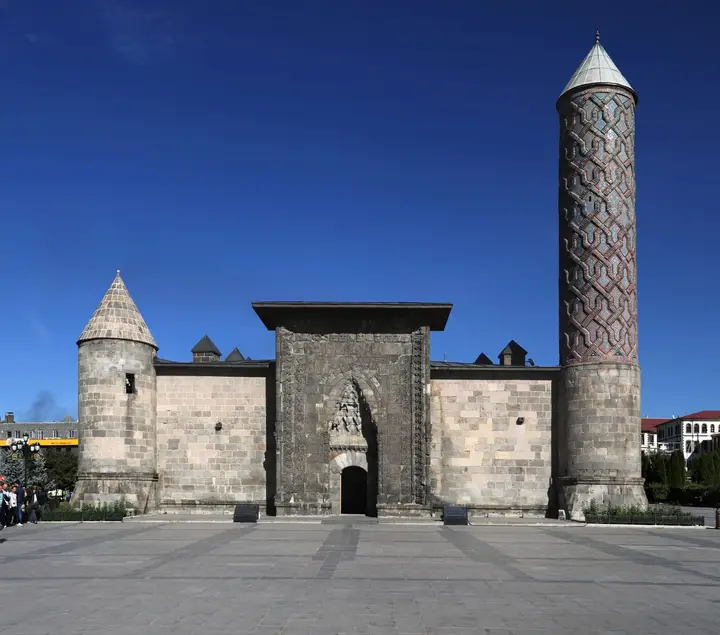
 Yakutiye Madrasa
A madrasa in the city centre, built in 1310 by Hoca Yakut Gazani and dating from the Ilkhanid period.
View on map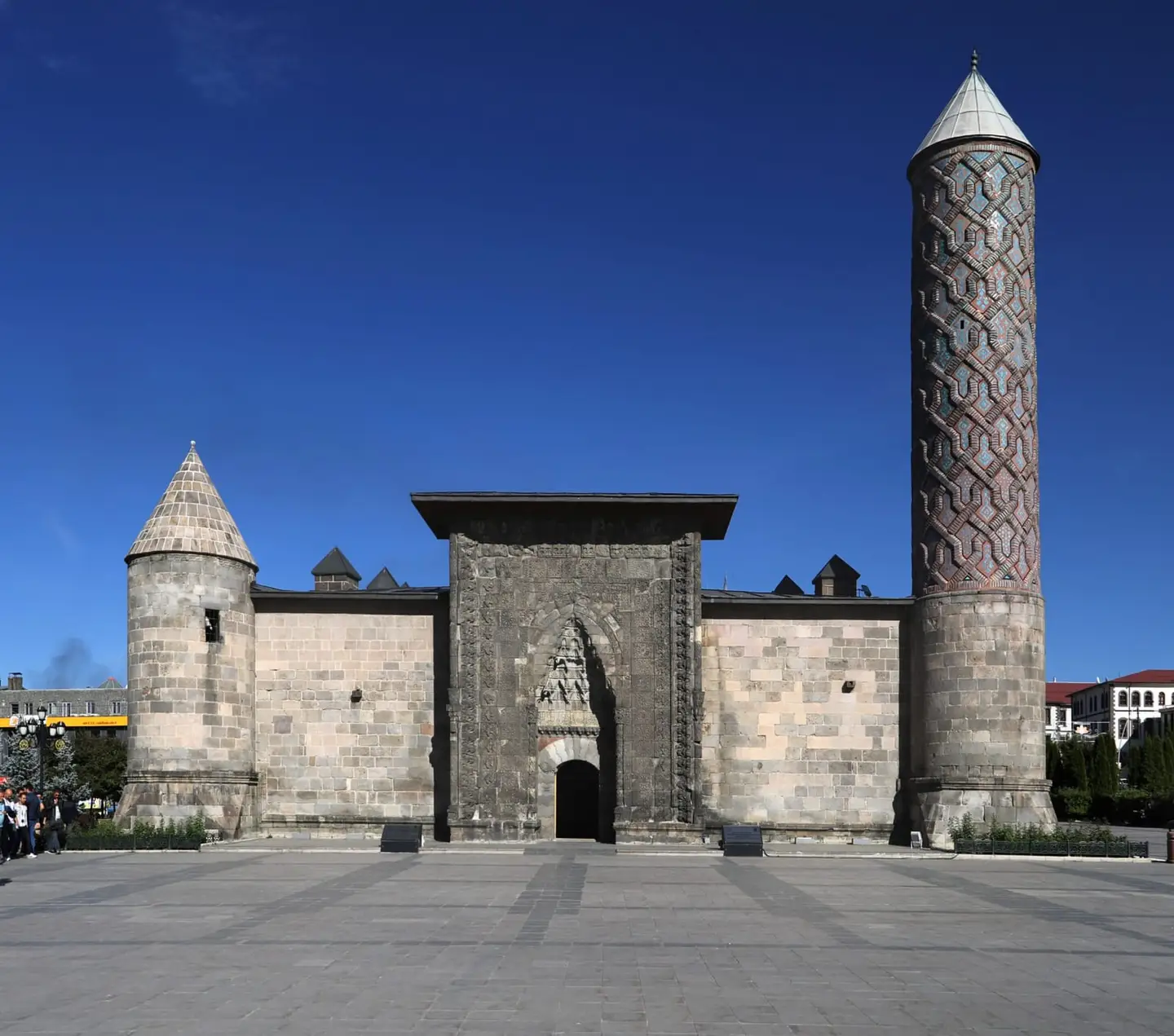 Photo: Wikipedia (CC BY-SA) · Source
 6 places to visit in the Yakutiye district of Erzurum: Yakutiye Madrasa, Çifte Minareli Madrasa and Erzurum Castle and Clock Tower. Plan your trip to Yakutiye with local food, practical tips and transport information.
Yakutiye is one of the central districts that make up Erzurum city centre, in the Eastern Anatolia Region of Türkiye. The district covers 945 km². Its average altitude above sea level is 1,893 metres. It borders Tortum to the north, Aziziye and Palandöken to the west, and Pasinler to the east.
The history of the district (Erzurum) goes back to around 4000 BC. Archaeological excavations at Karaz, Pulur and Güzelova Sos Höyük have revealed that Erzurum and its surroundings were a very ancient and important settlement. From the earliest periods of history, Erzurum came under the rule of various peoples and nations and has a rich past in terms of cultural heritage.
The Yakutiye Madrasa in the city centre bears the name of its builder, Hoca Yakut Gazani, who commissioned it in 1310 during the Ilkhanid period. With its plan, balanced architecture and bold motif decoration, the madrasa attracts visitors from home and abroad.
The Yakutiye Madrasa was added to UNESCO’s tentative list in 2014 together with the Seljuk madrasas. The madrasa was restored in 1995 and is now used as the Turkish Islamic Works and Ethnography Museum. Excavations at Karaz, Pulur and Güzelova Sos Höyük show that Erzurum is a very ancient settlement.
Last updated:
Photo: Wikipedia (CC BY-SA) · Source A madrasa in the city centre, built in 1310 by Hoca Yakut Gazani and dating from the Ilkhanid period.
View on map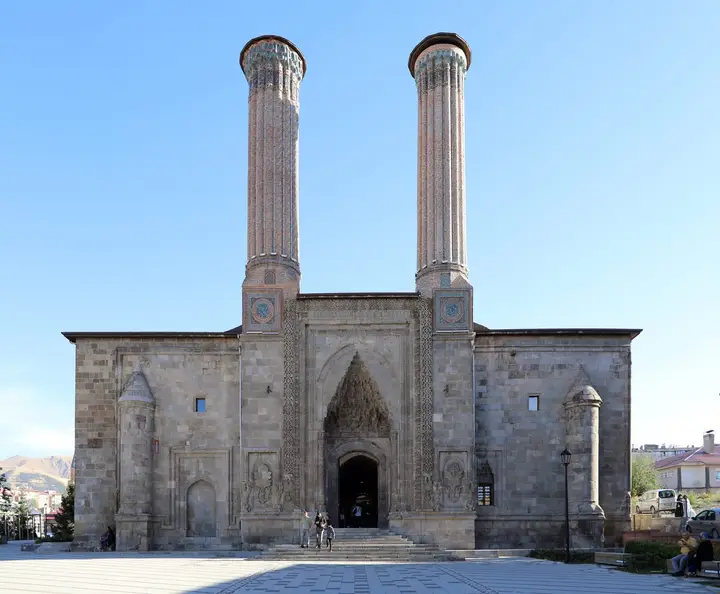 Photo: Wikipedia (CC BY-SA) · Source
 Built in 1271 by Hüdavend Hatun, daughter of the Seljuk Sultan I. Alaeddin Keykubad, this madrasa covers an area of 1,824 square metres and is the largest Seljuk madrasa in Anatolia. Its two minarets, stone craftsmanship and geometric decoration make it one of the masterpieces of Seljuk architecture.
View on mapBuilt in the 5th century under the Byzantine Emperor Theodosius I, the castle is the oldest structure in the city. The Clock Tower (Tepsi Minare) inside the castle was added in the 12th century during the Saltukid period and has become a symbol of Erzurum.
View on map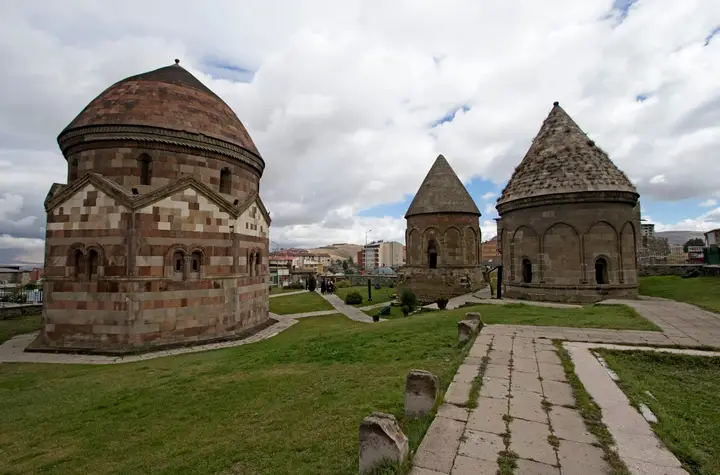 Photo: Wikipedia (CC BY-SA) · Source
 Three funerary monuments from the Saltukid period in the 12th century, among the most striking historic structures in Erzurum. The octagonal body and conical roof of the Emir Saltuk Tomb are an important example of Seljuk-period tomb architecture.
View on mapThe provincial museum in Yakutiye district, displaying archaeological and ethnographic artefacts and coins.
View on mapWhile you are in Yakutiye, you can also see the highlights of Erzurum province. These places are in other districts.
Prepared by roasting lamb on a horizontal spit over a wood fire. The geographically indicated speciality of Erzurum, cağ kebabı is cut into thin slices and served with lavash and onion.
Fine kadayıf dough is rolled around walnuts, baked, and then soaked in syrup. The most famous sweet of Erzurum, it is served in the city's historic pastry shops.
The Erzurum su böreği is prepared by boiling thin yufka sheets and layering them with cheese or minced meat. Served with butter, it is a traditional breakfast dish.
A traditional soup made with yoghurt, bulgur and mint. It is one of the most popular hot dishes on cold winter days in Erzurum.
The Erzurum Congress, held from 23 July to 7 August 1919 in a building in Yakutiye, is a historic meeting where the foundations of the Turkish War of Independence were laid. Chaired by Mustafa Kemal Atatürk, the congress was a turning point in the national struggle.
With structures such as the Çifte Minareli Madrasa, the Yakutiye Madrasa and the Three Tombs, Yakutiye is one of the areas where Anatolian Seljuk and Ilkhanid architecture is most concentrated. These monuments are on UNESCO's World Heritage tentative list.
Yakutiye is the historic and commercial centre of Erzurum. Atatürk University lies within the district boundaries, and the education sector makes a major economic contribution. Trade, services and tourism are the main sources of income. Oltu stone craftsmanship continues as a traditional trade.
Yakutiye is a central district of Erzurum. It is 15 km from Erzurum Airport. The intercity bus terminal and the railway station are within the district boundaries. There are air and road connections with Istanbul, Ankara and other major cities.
Six highlights in Yakutiye: Yakutiye Madrasa, Çifte Minareli Madrasa, Erzurum Castle and Clock Tower, Üç Kümbetler, Yakutiye Tomb and Erzurum Museum.
Cağ Kebabı, Kadayıf Dolması, Su Böreği and Ayran Aşı are the signature flavours on Yakutiye's tables.
Yakutiye is known for Erzurum Civil Cheese and the Erzurum Congress Legacy. Civil cheese made from fresh milk and separated into threads is a geographically indicated product of Erzurum and an essential part of the breakfast table.
Yakutiye is a central district of Erzurum. It is 15 km from Erzurum Airport. The intercity bus terminal and the railway station are within the district boundaries. There are air and road connections with Istanbul, Ankara and other major cities.
Suggested visit: 2–3 days. Best time to visit: spring and summer (May–September).