Perşembe Plateau (Aybastı Section)
The highland areas in the upper parts of Aybastı are viewpoints above the clouds, with green meadows, and are among the key sites of Black Sea plateau tourism.
View on map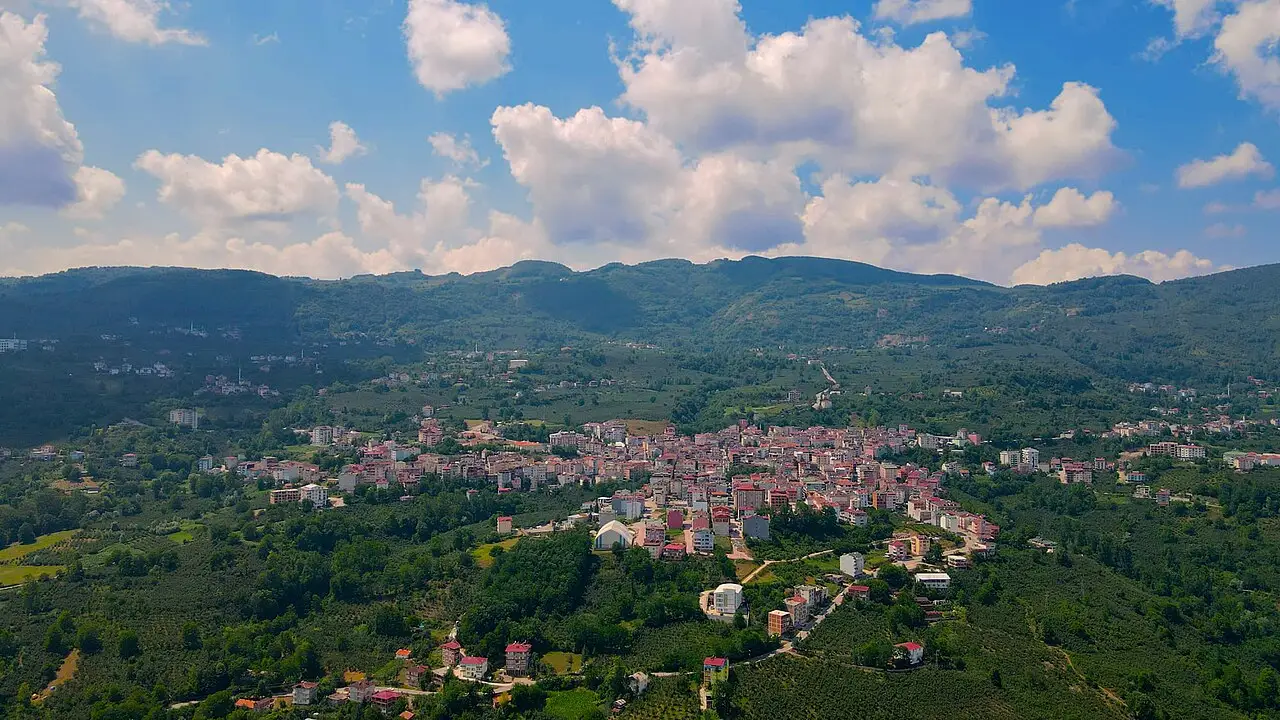 Photo: Slmxyz (CC BY-SA 4.0) · Source
 4 places to visit in the Aybastı district of Ordu: Perşembe Plateau (Aybastı Section), Aybastı Waterfalls and Aybastı Historic Houses. Plan your trip to Aybastı with local food, practical tips and transport information.
Aybastı is a district in the inland south of Ordu, away from the sea. The majority of its population are Turkmen Çepni. The origin of its name is not known for certain, but it is thought to come from concepts such as the moon, sun and smoke, which were sacred to the Göktürks and Oghuz, or from a lunar eclipse. In the past it was known as İbasti/Ebasya.
Because cave artefacts from the prehistoric period have been found, some sources date the history of the district back to before the common era.
The name of the district was probably given in the period of the Pontus Kingdom, at the same time as the names Phacisane (Fatsa), Hapsamina (Hapsamana, Gölköy) and Oinoie (Ünye); there are traces of life from that period in the district’s lands. According to Greek sources, the first peoples to rule the region including Aybastı were the Chalybes, Colchians, Kokons and Tibarenes. These peoples lived in the area for a long time under the Hittite, Persian, Median and Pontic states, and worked in metalsmithing. When the Roman Empire was divided in two in 395 AD, Aybastı remained in Eastern Roman (Byzantine) territory.
After the Battle of Malazgirt in 1071, during the conquests that began in Anatolia, Danişmend Ahmet Gazi took the regions of Sivas, Amasya, Tokat and Niksar and founded the Danishmendid Principality. For security reasons, the capital of the principality was moved from Sivas to Niksar. Ahmet Gazi’s son, Melik Emir Gazi, sent campaigns to the region called Canik in order to extend the borders of the principality towards the coast; in the first stage, Mesudiye, İskefsür and Aybastı in the east, and Ünye and Fatsa in the west, passed into Danishmendid hands. Aybastı, the part of the Canik region closest to Niksar, was one of the first places taken by the Turks.
In 1157 the Danishmendid ruler Nizamettin Yağıbasan led a campaign against Ünye and took the coast from Ünye to Bafra; a year later these places were left to the Byzantines in return for tribute under a treaty. In 1175 the Anatolian Seljuk Sultan II. Kılıçarslan put an end to the Danishmendid Principality and added the region to his lands. In the district, around the saints Kutlu Doğmuş and Kümbet, lie the graves of soldiers and commanders who fell in the wars of the Danishmendid period. When the Anatolian Seljuk State was destroyed by the Mongol invasion, the region remained within the lands of the Ilkhanids, the Eratna Principality and the Qadi Burhan al-Din State. The mountainous structure of Aybastı and its surroundings made conquest difficult, and so it took many years.
In the tax register of 1485, the name of the district appears as Bölük-i Fidâverende; the centre of the nahiye is thought to have been the village of Elbey. İbassa, in 1455, was a village of 49 households attached to Fidâverende, with a mosque. At that time the region was a nahiye attached to İskefsür kaza, the Şebinkarahisar sanjak and the Erzincan eyalet. Fidâverende reached 643 households in 1485, 1,006 in 1520, 1,590 in 1547 and 1,745 in 1613, which points to rapid population growth.
Aybastı was important because it lay on the shortest and safest route linking Tokat, İskefsür and Niksar to the port of Fatsa; remnants of an old silk road are found in the district’s lands. Because it was close to the route of the Ottoman sultans’ eastern campaigns, it was directly affected by those campaigns; it is known that Yavuz Sultan Selim stayed at Selemen Plateau. Because of its distance from the centre and its forested structure, the area was always a refuge for outlaws and deserters, and for this reason the Ottoman state kept a permanent military force there. The famous Celali leader Karayazıcı fled from state forces and took refuge in Perşembe Plateau in the Canik Mountains, and died there.
According to the Trabzon Province yearbooks for 1869–1874, Aybastı was a nahiye attached to Ordu kaza in those years.
The majority of Aybastı’s population are Turkmen Çepni. In the tax register of 1485 the name of the district appears as Bölük-i Fidâverende. Remnants of an old silk road are found in Aybastı’s lands.
The first point at which the Turks (the Çepni branch of the Oghuz) entered the lands of Ordu is Aybastı Perşembe Plateau. The tomb of Şeyh Hasan is on the Gölköy–Aybastı road, at the Alacalar site, 1 km from the main road. Aybastı Cheese is still being registered by the Turkish Patent Institute.
Last updated:
The highland areas in the upper parts of Aybastı are viewpoints above the clouds, with green meadows, and are among the key sites of Black Sea plateau tourism.
View on mapWaterfalls cascading from streams and rivers around the district form natural pools in the forest. They can be explored along walking trails.
View on mapThe Ottoman-period wooden houses in the district centre are fine examples of Black Sea civil architecture.
View on mapIn the lands of Aybastı are the saints Kutlu Doğmuş and Kümbet; around them lie martyrs' graves.
View on mapWhile you are in Aybastı, you can also see the highlights of Ordu province. These places are in other districts.
Black Sea pide made with buttery dough and baked in a stone oven. This dish, which has an important place on local people's tables, is prepared using traditional recipes.
A soup made with collard greens, maize flour and beans. This dish, prepared using recipes passed down through generations, is an important part of the local culinary culture.
Made with maize flour and cheese melted in butter, this is the best-known delicacy of the Black Sea.
The tradition of moving to the highland pastures in the summer months continues in Aybastı. Highland festivals and horon performances are held.
In Aybastı, the horon is an essential dance at weddings and festivities. Danced to the accompaniment of the kemençe, the horon is a symbol of Black Sea culture.
Aybastı's economy is based on hazelnut production, livestock farming and forestry. Highland tourism is also a developing sector.
Aybastı is 55 km from Ordu. Ordu-Giresun Airport is 70 km away.
The highlights of Aybastı are 4 places: Perşembe Plateau (Aybastı Section), Aybastı Waterfalls, Aybastı Historic Houses and the saints Kutlu Doğmuş and Kümbet.
Aybastı Pidesi, Karalahana Soup and Kuymak (Muhlama) are the standout dishes on Aybastı's tables.
Aybastı is known for Aybastı Hazelnuts and Highland Culture. Hazelnuts grown in the district are among the high-quality varieties of Ordu hazelnuts.
Aybastı is 55 km from Ordu. Ordu-Giresun Airport is 70 km away.
Suggested visit length: 1 day. Best time to visit: the summer months (June–September).