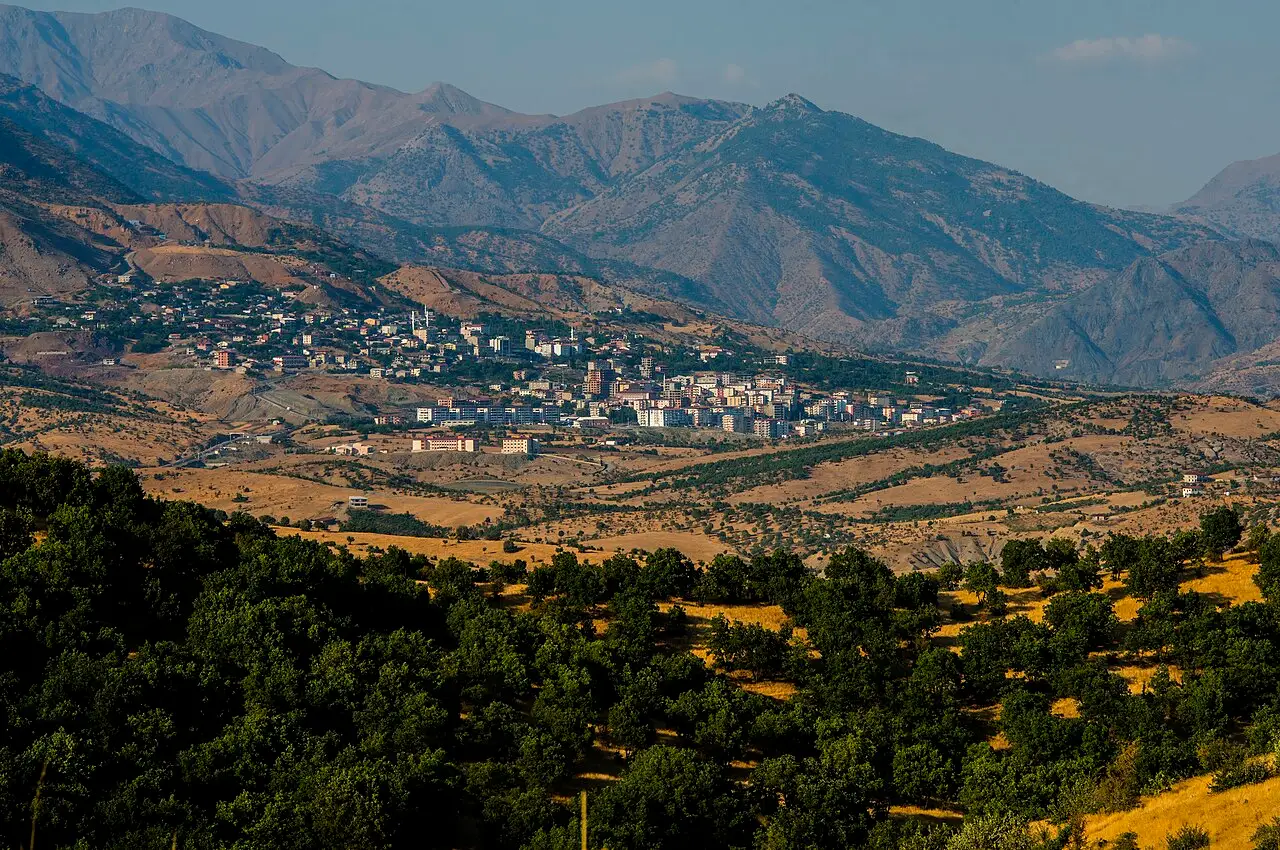
9 places to visit in the Kulp district of Diyarbakır: Kefrum Castle, Kanîkan Mağaraları (Kanîkan Caves) and Kale-i Ulya. Plan your trip to Kulp with local food, practical tips and transport information.

Share with friends

General Information

Kulp is a district of Diyarbakır province. The average elevation of the district centre above sea level is 1,034 metres. Lying north of Silvan, the district remains under snow for long periods in the winter months.

History

Kulp, founded in the North Mesopotamian region, is one of the places where the first settlements were established in history. The region came under the rule of the Sumerians, Mitanni, Urartians, Cimmerians, Medes and Alexander the Great. Kulp came under Roman rule in 226 AD and was captured by Khalid ibn al-Walid in 637. The region came under Ottoman rule in 1515. In earlier times it remained attached to Muş province; until 1927 it was a subdistrict attached to the Lice sanjak, and in the same year it became a district.

Geography and Climate

Kulp, founded on a steep site in a volcanic, first-degree earthquake zone, is an old settlement centre.

Economy

The district’s economy is based on livestock, beekeeping and silkworm rearing, as the geography is not suitable for farming. The mountainous terrain has encouraged large-scale cattle farming. The dense presence of mulberry trees in the district made it the third most important area for silkworm rearing in Türkiye. Walnuts, small sweet onions, apples, pears and plenty of grapes grow in the district. A section of the population also makes its living from fishing in the Kulp Stream.

History and Culture

Kulp became a district in 1927. The district governorate’s page notes that Kulp was attached to Diyarbekir province according to the 1540 tax register (tahrir defteri). Kulp was conquered by the Ottomans in 1515. Some parts of the district were attached to Muş in 2021.

Last updated:

Places to Visit in Kulp

  • 1 Historic
  • 2 Ancient City
  • 2 Religious
  • 4 Nature

Historic Sites 1

Historic

Kale-i Ulya

A castle among the historic structures of the district.

View on map

Ancient Cities 2

Ancient City

Kefrum Castle

A castle built by the past civilisations of the region. It holds an important place in the district's historical heritage.

View on map
Ancient City

Cikse Kalesi (Cikse Castle)

A historic castle within the district boundaries.

View on map

Religious Buildings 2

Religious

Telli Ağa Kasrı (Telli Ağa Mansion)

A historic building in Karabulak neighbourhood.

View on map
Religious

Çiçekli mezrasındaki tarihi kiliseler (Historic churches in Çiçekli hamlet)

There are historic churches in the Çiçekli hamlet (mezra) of Konuklu neighbourhood.

View on map

Natural Wonders 4

Nature

Kanîkan Mağaraları (Kanîkan Caves)

One of the natural formations worth seeing in the district.

View on map
Nature

Büyük Kaya (Big Rock)

One of the natural formations worth seeing in the district.

View on map
Nature

Kulp Çayı (Kulp River)

A river that is important for irrigating the district and for fishing.

View on map
Nature

Narlıca şifalı su kaynağı (Narlıca healing spring)

The healing spring in Narlıca neighbourhood is among the places of interest.

View on map

Places to Visit Around Diyarbakır Province

See all →

While you are in Kulp, you can also see the highlights of Diyarbakır province. These places are in other districts; Kulp is about 110 km from the provincial centre.

  • Diyarbakır City Walls — Black basalt walls made up of the Inner Castle and the Outer Castle; the Dağ Kapı (Harput Gate), Urfa Kapı, Mardin Kapı and Yeni Kapı are the main entrances.
  • Hevsel Gardens — About 700 hectares of farmland between the walls and the Tigris; with more than 180 bird species, it is the largest bird paradise in Southeastern Anatolia.
  • Diyarbakır Grand Mosque — A mosque formed in 639 when the city's largest church was converted into a mosque and repaired in 1091 under Malik-Shah; it is considered the Anatolian counterpart of the Umayyad Mosque in Damascus and is known in the Islamic world as the 'fifth sacred sanctuary' (beşinci harem-i şerif).
  • Ten-Eyed Bridge (Tigris Bridge) — A ten-arched basalt bridge over the Tigris, 3 km south of Mardin Kapı, built in 1065 in the Marwanid period according to its inscription; it links the city with Bağıvar.
  • Hasan Paşa Caravanserai — Opposite the Grand Mosque, a caravanserai with black-and-white stone banding, built in 1572–1575 by Governor Hasan Paşa, son of Sokullu Mehmet Paşa; today its courtyard breakfast rooms make it the city's meeting place.
  • Four-Legged Minaret (Şeyh Mutahhar Mosque) — The minaret of the mosque built in 1500 by the Aq Qoyunlu ruler Kasım Bey, rising on four monolithic stone columns; it is the only example in Anatolia.

Practical Information for Visiting Kulp

Suggested time
Half a day
Best time to visit
Spring and summer
Places to visit
9 places

What to Eat in Kulp

Food guide →
  • Ciğer Kebabı (lamb liver kebab)

    Prepared by threading lamb liver onto skewers and grilling it over charcoal. This dish has an important place at local tables and is prepared using traditional recipes. Prepared by local people on special occasions, it is a symbol of hospitality.

  • İçli Köfte (stuffed bulgur balls)

    Prepared by boiling bulgur dough with a filling of minced meat, onion and walnuts. Made from recipes passed down through generations, this dish is an important part of the region's culinary culture. Made with fresh, natural ingredients, it is a healthy option.

  • Keşkek (wheat and meat porridge)

    Prepared by boiling crushed wheat and meat for a long time, then pounding them. Made with local ingredients, this dish reflects the region's gastronomic richness. Serving it drizzled with melted butter is part of the tradition.

  • Kulp balığı (Kulp fish)

    In a district where people make their living from fishing in the Kulp River, Kulp fish stands out among the freshwater fish.

Culture, Local Products and Economy of Kulp

  • Dağ Kültürü (Mountain Culture)

    Kulp's mountainous geography has shaped the lifestyle of local people. Herding and the tradition of summer pasture farming (yaylacılık) are maintained.

  • Geleneksel Yaşam (Traditional Way of Life)

    Traditional farming and livestock culture is maintained in Kulp. This cultural element, which strengthens social bonds, remains an important part of the region's social life.

Local Products

  • Bal (Honey) — Beekeeping takes place in Kulp's mountainous areas. Local flower honey is known for its natural aroma.
  • Hayvancılık Ürünleri (Livestock Products) — Small livestock farming takes place in the district. Milk and dairy production is an important source of income.

Economy

Kulp's economy is based on livestock and agriculture. Small livestock farming is the district's most important source of livelihood. Wheat, barley and lentils are also grown. Beekeeping is an important source of income.

How to Get to Kulp

Kulp is 110 km from Diyarbakır city centre. Minibus services run from Diyarbakır.

Get directions on Google Maps Getting to Diyarbakır

Kulp: Frequently Asked Questions

What are the places to see in Kulp?

The top 9 places in Kulp: Kefrum Castle, Kanîkan Mağaraları, Kale-i Ulya, Cikse Castle, Büyük Kaya, Telli Ağa Kasrı, Kulp Stream, Narlıca şifalı su kaynağı and the historic churches in Çiçekli hamlet.

What should I eat in Kulp?

Ciğer Kebabı, İçli Köfte, Keşkek and Kulp balığı are the standout dishes on Kulp's tables.

What is Kulp famous for?

Kulp is known for Honey and Mountain Culture. Beekeeping takes place in Kulp's mountainous areas. Local flower honey is known for its natural aroma.

How do I get to Kulp?

Kulp is 110 km from Diyarbakır city centre. Minibus services run from Diyarbakır.

How much time should I set aside for a trip to Kulp?

Suggested visit length: half a day. Best time to visit: spring and summer.

Continue Your Trip

Other Districts of Diyarbakır

Search 81 province guides and 968 district guides.