Dicle Köprüsü (On Gözlü Bridge)
The historic ten-arched bridge connects the two banks of the Tigris.
View on map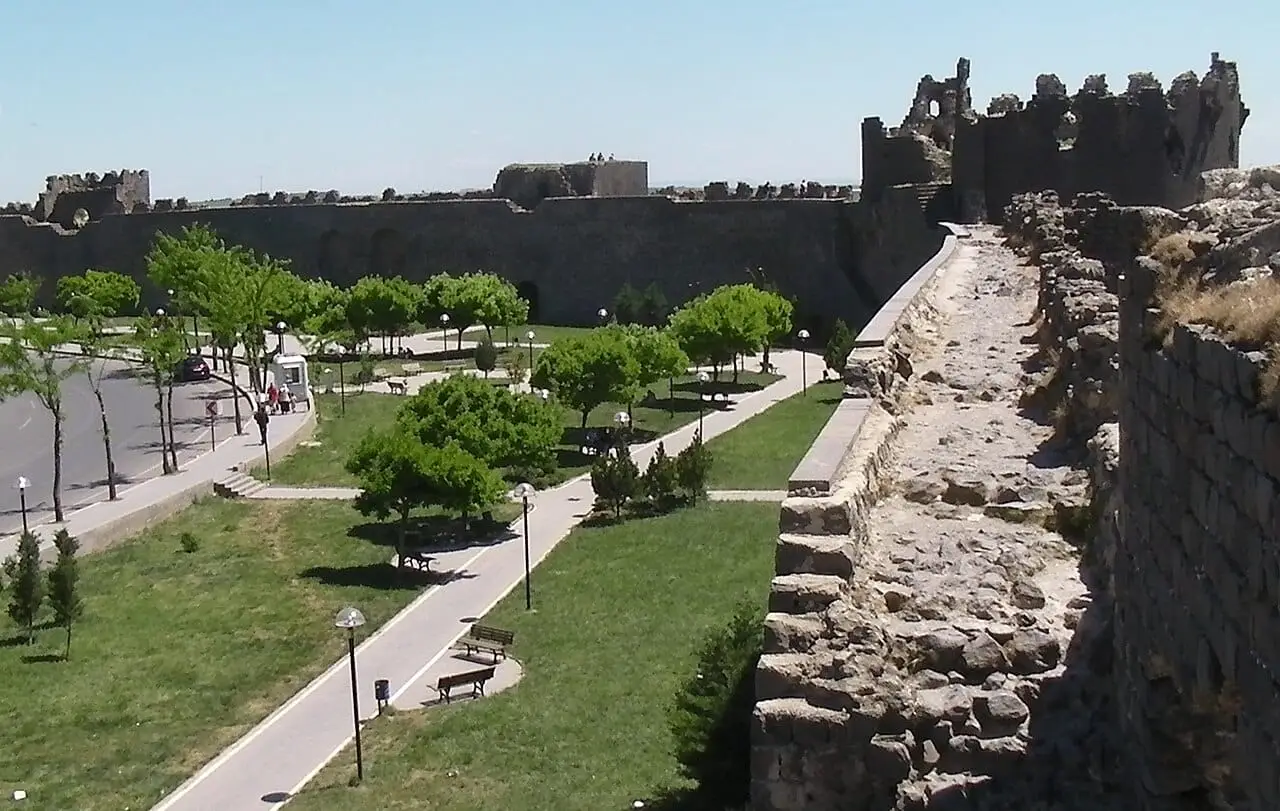
12 places to visit in the Sur district of Diyarbakır: Diyarbakır Surları ve Hevsel Bahçeleri (Diyarbakır City Walls and Hevsel Gardens), Diyarbakır Ulu Camii (Diyarbakır Grand Mosque) and Hz. Süleyman Mosque. Plan your trip to Sur with local food, practical tips and transport information.
Sur is one of the four central districts of Diyarbakır. It was established in 2008, and its district centre lies in the oldest settlement area of Diyarbakır. Sur takes its name from the historic Diyarbakır walls that surround the district centre.
Sur’s history dates back to around 7500 BC. Over the course of its history, the Hurrians, Mitanni, Hittites, Assyrians, Medes, Persians, Alexander the Great, Romans, Byzantines, Arabs, the Seljuk dynasty, the Ottomans and nearly 30 other civilisations ruled here in turn.
The Diyarbakır Grand Mosque, known in the Islamic world as the fifth Harem-i Şerif, and the Diyarbakır City Walls, about 5 km long and on the UNESCO World Heritage List, are remarkable monuments worth seeing.
Nearly 30 civilisations ruled in the district. Excavations have shown that one of the oldest settlement areas in the world is in this region. The Behram Paşa Mosque was built by Behram Paşa, the 13th Ottoman governor of Diyarbakır, between 1564 and 1572. The Mesudiye Madrasa is described as the first university in Anatolia. The name Sur comes from the historic Diyarbakır walls surrounding the district centre. The Hasan Paşa Caravanserai was built by Vezirzade Hasan Paşa in 1573.
Last updated:
The historic ten-arched bridge connects the two banks of the Tigris.
View on mapA two-storey caravanserai with a courtyard, east of the Grand Mosque.
View on mapA caravanserai near Mardin Gate, also known as the Hüsrev Paşa Caravanserai.
View on map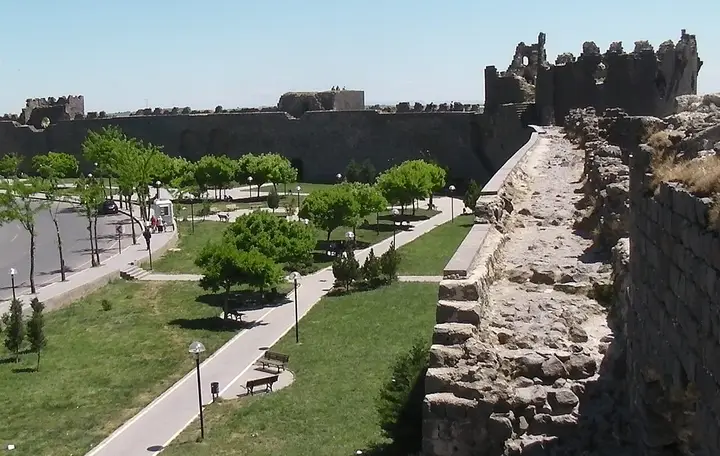
The Diyarbakır City Walls, about 5 km long, are on the UNESCO World Heritage List.
View on map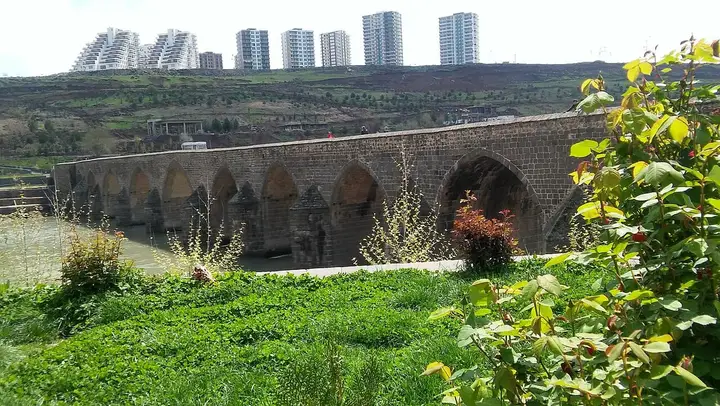 Photo: ToprakM (CC BY-SA 4.0) · Source
 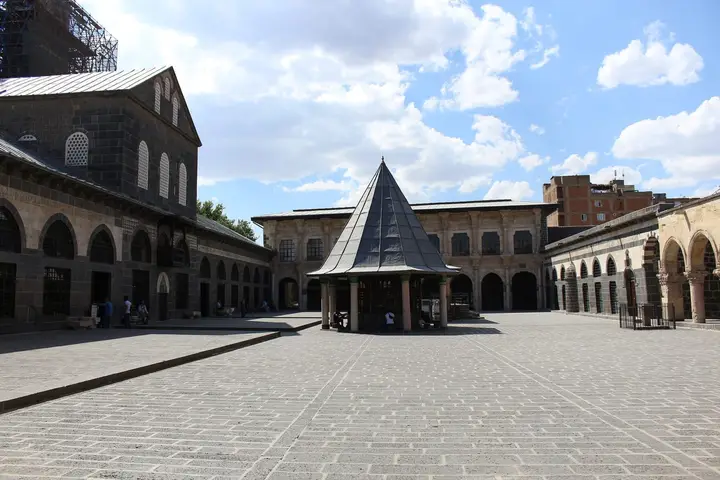 Photo: Wikipedia (CC BY-SA) · Source
 Known in the Islamic world as the fifth Harem-i Şerif (Haram al-Sharif), the Diyarbakır Grand Mosque.
View on map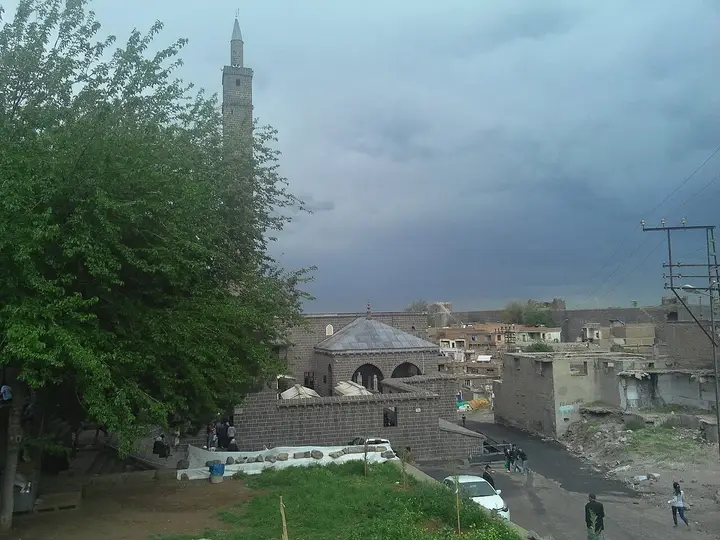 Photo: Sralp2 (CC BY-SA 4.0) · Source
 A mosque with 27 tombs of Companions of the Prophet (sahabe) in its courtyard.
View on mapA mosque in the İçkale (Inner Castle). It is important because the conquest of Diyarbakır is said to have begun from this point in the time of Caliph Umar.
View on mapBelonging to the Syriac Orthodox Church, it is described as the most beautiful Syriac church in Diyarbakır.
View on mapBuilt in 1500 by Aq Qoyunlu Kasım Bey, known for its minaret on four columns.
View on mapThe church in the north-eastern corner of the İçkale (Inner Castle), which is now used as an art gallery.
View on mapA five-aisled Armenian church that burned in 1880 and was rebuilt on the same site in 1883.
View on mapWhile you are in Sur, you can also see the highlights of Diyarbakır province. These places are in other districts.
Lamb ribs are filled with a stuffing of rice, mince and spices, then baked in the oven. It is one of the most distinctive dishes of Diyarbakır cuisine.
Prepared by threading lamb liver onto skewers and grilling it over charcoal. Served with lavash bread, onion and parsley, this liver kebab can be tasted in the historic streets of Sur.
Prepared by baking aubergine, pepper, tomato and mince in a clay pot (güveç). It is a vegetable dish specific to the summer months in Diyarbakır cuisine.
Diyarbakır watermelons are famous for their huge size. Watermelons weighing over 50 kilograms become the symbol of the city in the summer months.
For thousands of years, Sur was home to different civilisations such as the Assyrians, Romans, Byzantines, Artuqids and Ottomans. Mosques, churches and historic buildings reflect this multicultural heritage.
The Hevsel Gardens on the banks of the Tigris have been continuously farmed for 8,000 years. Placed under protection as part of the UNESCO World Heritage, the gardens are the green lungs of the city.
Sur is the historic centre of Diyarbakır, and its economy is based on tourism, trade and handicrafts. Copperwork, jewellery and traditional crafts are practised in the historic bazaars. Cultural tourism is developing thanks to the UNESCO World Heritage status.
Sur is the historic core of Diyarbakır city centre. Diyarbakır Airport is 8 km away. There are direct flight connections from Istanbul, Ankara and İzmir. The intercity bus terminal provides connections to all major cities.
The top 12 places in Sur: Diyarbakır Surları ve Hevsel Bahçeleri, Diyarbakır Grand Mosque, Hz. Süleyman Mosque, On Gözlü Köprü, Hazreti Süleyman Mosque, Dicle Köprüsü (On Gözlü Bridge), Hasan Paşa Hanı, Deliller Hanı, Meryem Ana Church, Şeyh Mutahhar Camii (Dört Ayaklı Minare), Saint George Church and Surp Giragos Ermeni Church.
Kaburga Dolması, Diyarbakır Ciğer Kebabı, Meftune and Diyarbakır Karpuzu are the standout dishes on Sur's tables.
Sur is known for Diyarbakır Karpuzu and Multicultural Heritage. Diyarbakır watermelon is world-famous for its large size and sweet aroma. Watermelons grown in the Hevsel Gardens can weigh over 50 kg.
Sur is the historic core of Diyarbakır city centre. Diyarbakır Airport is 8 km away. There are direct flight connections from Istanbul, Ankara and İzmir. The intercity bus terminal provides connections to all major cities.
Suggested visit length: 2–3 days. Best time to visit: spring and autumn.