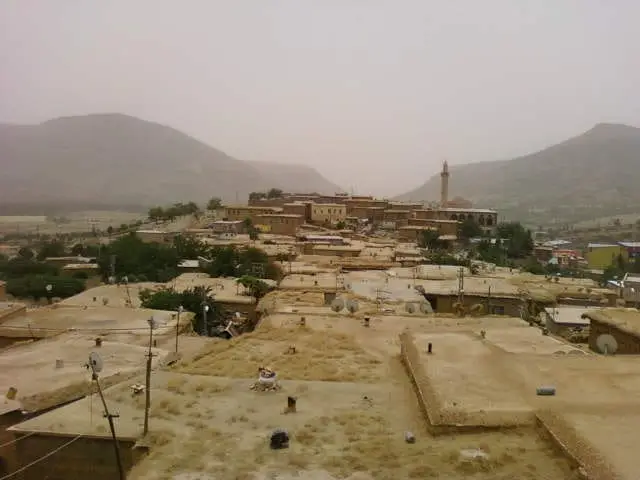
 Photo: User:Hedda Gabler (usurped) (CC BY-SA 3.0) · Source
 Hazro Castle
The castle ruins on the hill in the district centre date from various periods. The castle offers views of the district centre and the surrounding mountains.
View on map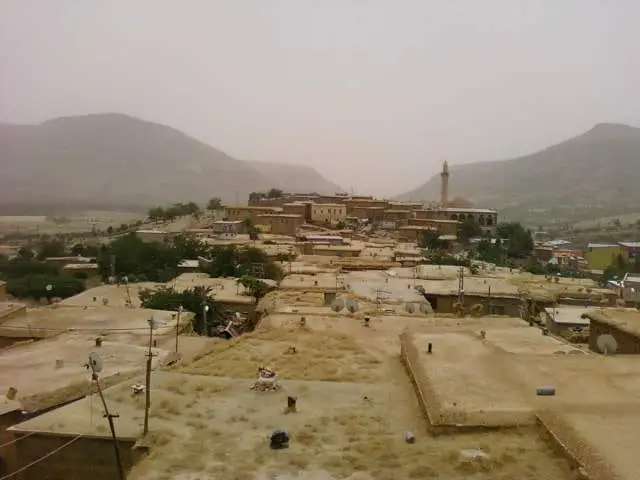 Photo: User:Hedda Gabler (usurped) (CC BY-SA 3.0) · Source
 4 places to visit in the Hazro district of Diyarbakır: Hazro Castle, Hazro Mountains and Hazro Grand Mosque. Plan your trip to Hazro with local food, practical tips and transport information.
Hazro is a district in the north-east of Diyarbakır. The district covers 426 km² and its elevation is 973 metres. Hazro lies at the foot of Uzuncaeski Mountain. The south of the district is flat, while the north is very mountainous. Being higher than its surroundings, the district centre receives more rainfall, is cooler in summer and has snowier winters.
The most important river in the district, which has a continental climate, is the Zuğur Stream.
Hazro was separated from Silvan in 1954 and became a district of Diyarbakır province. A municipal organisation was established in Hazro in 1943. The remains of the Tercil, Ayındar and Mihrani castles show that the district’s history goes back a very long way.
Last updated:
Photo: User:Hedda Gabler (usurped) (CC BY-SA 3.0) · Source The castle ruins on the hill in the district centre date from various periods. The castle offers views of the district centre and the surrounding mountains.
View on mapThe mountainous areas around the district are suitable for hiking and picnics. The cool climate makes them a favourite in the summer months.
View on mapBuilt in the Ottoman period, the Grand Mosque is the oldest place of worship in the district. This building, which bears traces of traditional construction techniques, reflects the spiritual values of the region. The calligraphic decoration on its mihrab and its wooden minbar are remarkable works of art.
View on mapA castle founded in the area during the Assyrian period, considered the origin of the name Hazro.
View on mapWhile you are in Hazro, you can also see the highlights of Diyarbakır province. These places are in other districts; Hazro is about 90 km from the provincial centre.
Prepared by threading lamb liver onto skewers and grilling it over charcoal. This dish has an important place at local tables and is prepared using traditional recipes. Its preparation with seasonal ingredients means it offers a different flavour in every season.
Prepared by boiling bulgur dough with a filling of minced meat, onion and walnuts. Made from recipes passed down through generations, this dish is an important part of the region's culinary culture. As an important part of Hazro's gastronomic identity, it is a favourite with visitors.
Thin kadayıf wrapped around walnuts into rolls, fried and soaked in syrup. The recipe, passed down through generations, varies in every household with small touches.
Hazro's mountainous geography has shaped the way of life of local people. Herding and the tradition of summer pasture farming (yaylacılık) are maintained.
Traditional farming and livestock culture is maintained in Hazro. This cultural element, which strengthens social bonds, remains an important part of the region's social life.
Hazro's economy is based on agriculture and livestock. Wheat, barley and lentils are the main agricultural products. Small livestock farming and beekeeping are important sources of livelihood.
Hazro is 90 km from Diyarbakır city centre. Minibus services run from Diyarbakır.
The top 4 places in Hazro: Hazro Castle, Hazro Mountains, Hazro Grand Mosque and Tercil Castle.
Ciğer Kebabı, İçli Köfte and Kadayıf Dolması are the standout dishes on Hazro's tables.
Hazro is known for Wheat and Mountain Culture. Wheat is grown on the plains of Hazro.
Hazro is 90 km from Diyarbakır city centre. Minibus services run from Diyarbakır.
Suggested visit length: half a day. Best time to visit: spring and summer.