Getting to Know Niğde
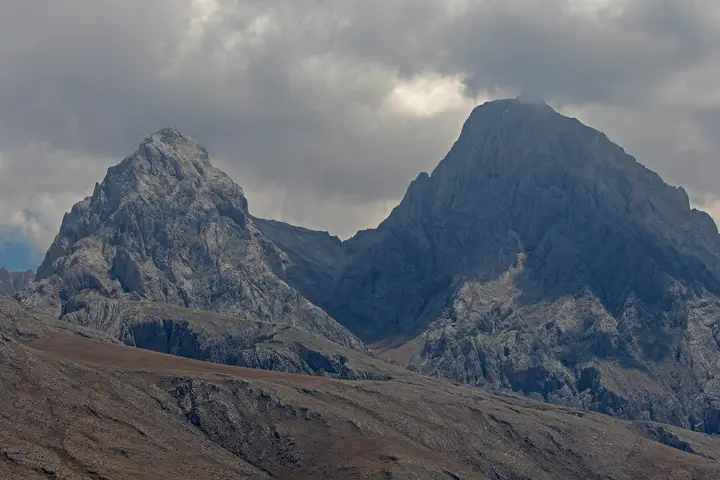
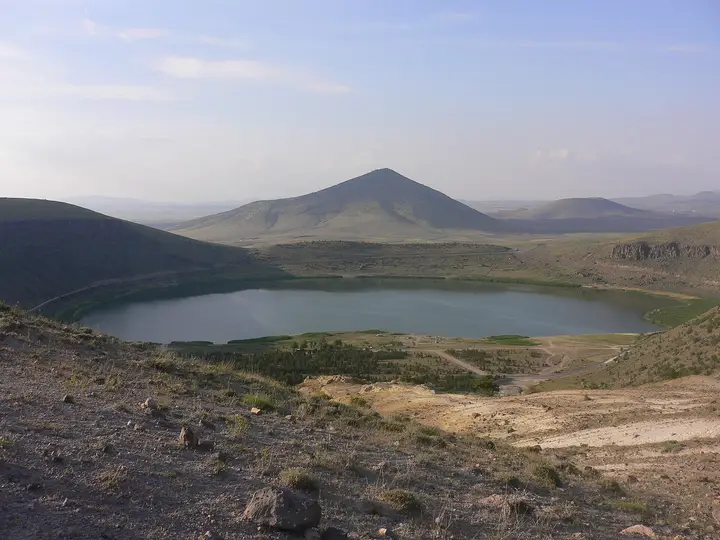
Niğde lies in the south-east of Central Anatolia, at the southern end of Cappadocia and on the northern foot of the Taurus Mountains. The south-east of the province is covered by the Aladağlar (Demirkazık, 3,756 m), the highest part of the Taurus, and the south by the Bolkar Mountains; to the north lie the volcanic plateau of Cappadocia and crater lakes such as Narlıgöl.
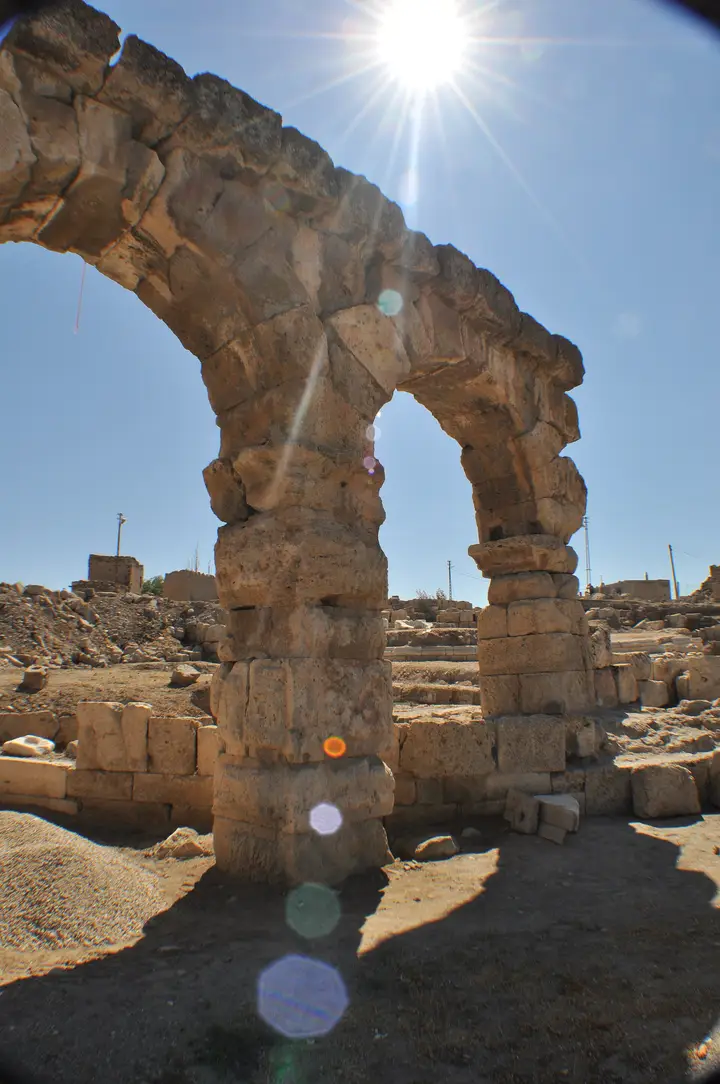
The region’s history goes back a very long way: Tyana (Hittite Tuwanuwa) at Kemerhisar, in the district of Bor, was the centre of the kingdom of Tuvana in the Late Hittite period and one of the important cities of Cappadocia in Roman times; the philosopher Apollonius of Tyana was born here, and the city’s Roman aqueducts still stand today. In the Byzantine period the region was part of Cappadocia’s monastic tradition; Gümüşler Monastery, with its 10th-century frescoes, is one of the best-preserved rock monasteries of Cappadocia.
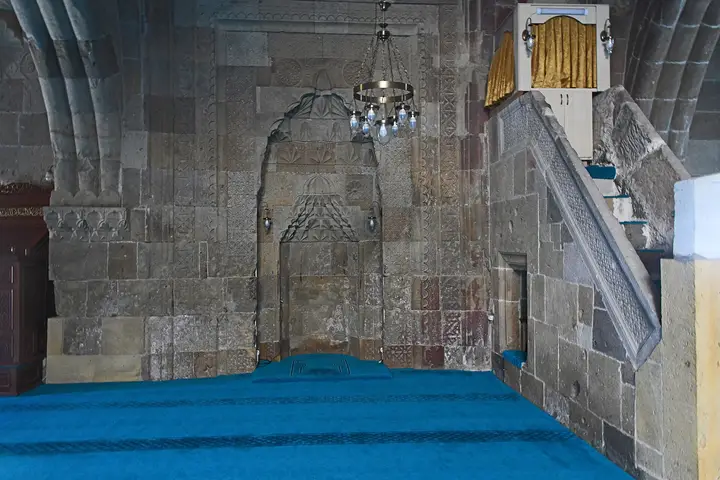
Niğde rose to importance under the Anatolian Seljuks: the Alaeddin Mosque, built in 1223, is the most important of the Seljuk buildings inside the castle; together with the Hüdavent Hatun Tomb (1312), the Ilkhanid-era Sungur Bey Mosque and the Karamanid-era Ak Madrasa (1409), it forms the city’s historic skyline. Today the province is one of the most important potato and apple production centres in Türkiye.
When to Go
Niğde has a continental climate: winters are cold and snowy, summers hot and dry. Averages for 1935–2025 from the Turkish State Meteorological Service:
| Month |
Avg. high |
Avg. low |
Rainfall |
Rainy days |
| January |
5.0 °C |
−4.5 °C |
35 mm |
11 |
| February |
6.5 °C |
−3.4 °C |
33 mm |
10 |
| March |
11.0 °C |
−0.1 °C |
36 mm |
11 |
| April |
16.8 °C |
4.5 °C |
41 mm |
11 |
| May |
21.6 °C |
8.4 °C |
48 mm |
12 |
| June |
25.9 °C |
12.0 °C |
28 mm |
7 |
| July |
29.5 °C |
14.9 °C |
6 mm |
2 |
| August |
29.7 °C |
14.6 °C |
7 mm |
2 |
| September |
25.7 °C |
10.5 °C |
11 mm |
3 |
| October |
19.8 °C |
6.0 °C |
26 mm |
6 |
| November |
13.1 °C |
1.2 °C |
31 mm |
7 |
| December |
7.2 °C |
−2.4 °C |
41 mm |
11 |
May–June and September–October are ideal for the city and Cappadocia, and July–September for mountaineering and walking in the Aladağlar. In the higher parts of the Aladağlar snow lasts until early summer; an experienced guide is recommended for the Demirkazık and Yedigöller routes.
How to Get to Niğde
By air: There is no airport in the province; the nearest are Nevşehir Cappadocia (about 90 km) and Kayseri (about 130 km) airports.
By train and road: Niğde lies on the Kayseri–Ulukışla–Adana railway and the Ankara–Adana motorway (via the Ulukışla junction). It is about 85 km from Nevşehir and about 200 km from Adana.
Niğde Area by Area
- Central district: Niğde Castle, the Alaeddin Mosque, the Sungur Bey Mosque, the Hüdavent Hatun Tomb, the Ak Madrasa, Niğde Museum and the bedesten; Gümüşler Monastery, 10 km north-east of the city.
- Bor: the Roman aqueducts of Tyana (Kemerhisar) and the historic houses of Bor.
- Çamardı: Aladağlar National Park, the village of Demirkazık, the Emli and Kazıklı valleys, and the Yedigöller.
- Çiftlik: the volcanic crater lake Narlıgöl and the thermal facilities around it.
- Ulukışla and Altunhisar: the Bolkar Mountains, the Çiftehan hot springs and the historic Öküz Mehmet Paşa Caravanserai.
Suggested Itineraries
Day 1 – Niğde centre and Gümüşler: Gümüşler Monastery in the morning; in the afternoon the Alaeddin Mosque, the Hüdavent Hatun Tomb, the Ak Madrasa and Niğde Museum. Niğde tavası in the evening.
Day 2 – Bor and Narlıgöl: The Tyana aqueducts at Kemerhisar; then the crater lake of Narlıgöl at Çiftlik.
Day 3 – The Aladağlar: Go from Çamardı to the village of Demirkazık and walk in the Emli Valley; for experienced walkers, a guided route to the Yedigöller.
Niğde Cuisine
The best-known flavours of Niğde cuisine all have registered geographical indications: Niğde tavası, Bor söğürmesi, Niğde kelle söğüş (boiled head meat), Niğde tahinlisi (Niğde tahini pastry), Niğde sarım burma tatlısı, Niğde geven balı (Niğde geven honey) and Darboğaz cherries (Darboğaz kirazı). The province is one of the most important potato and apple production centres in Türkiye. Among handicrafts, the Obruk (Arısama) carpet and the natural stone Niğde calcite (Niğde kalsiti) are also registered.
Practical Tips
- Although Gümüşler Monastery is close to the city centre, it is away from the tourist crowds; to see the frescoes, choose the midday hours when the daylight is good.
- The weather changes quickly in the Aladağlar; even in midsummer carry warm clothing, a map and enough water.
- Niğde can be added to a Cappadocia trip from the south; Derinkuyu is about 45 minutes away.
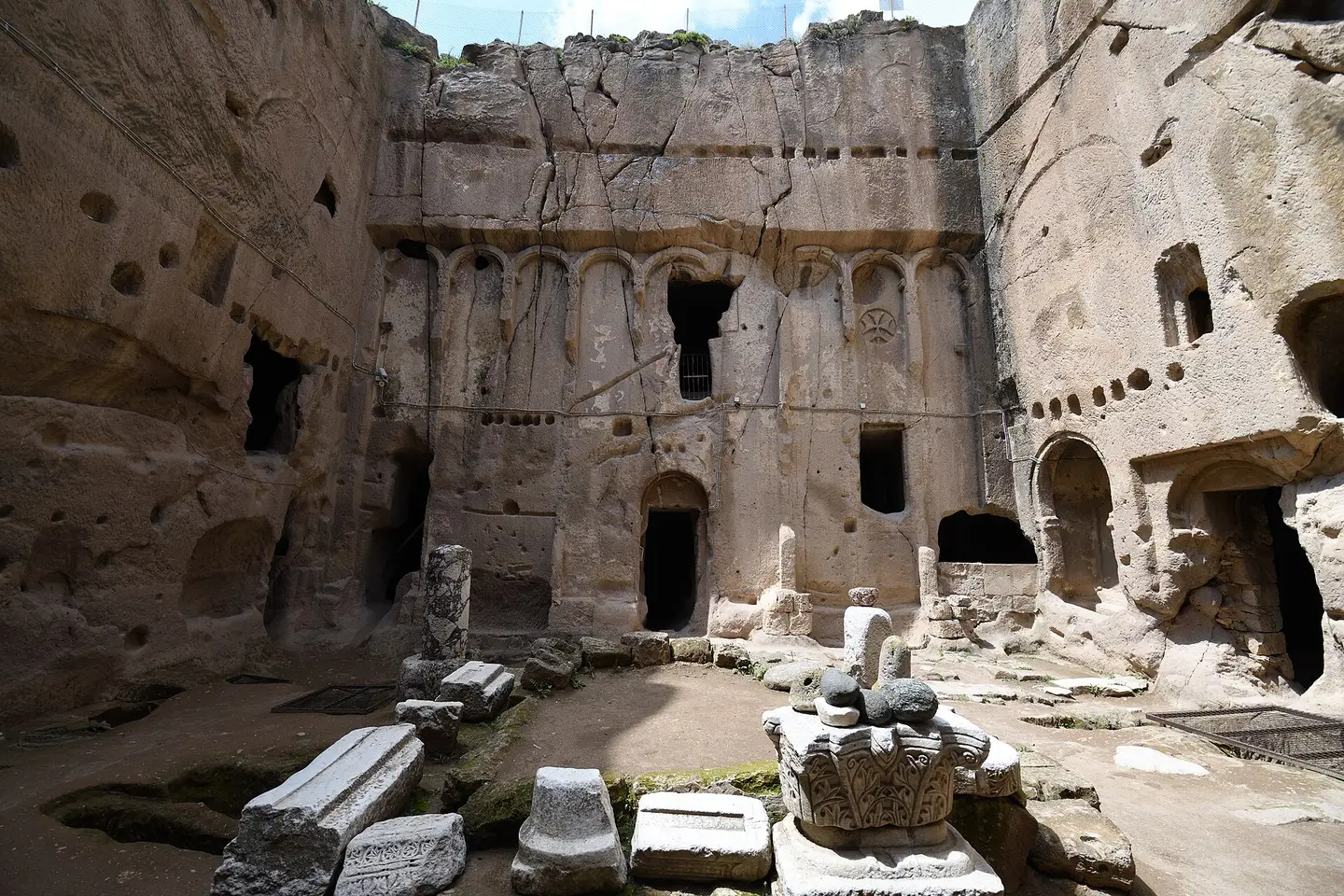
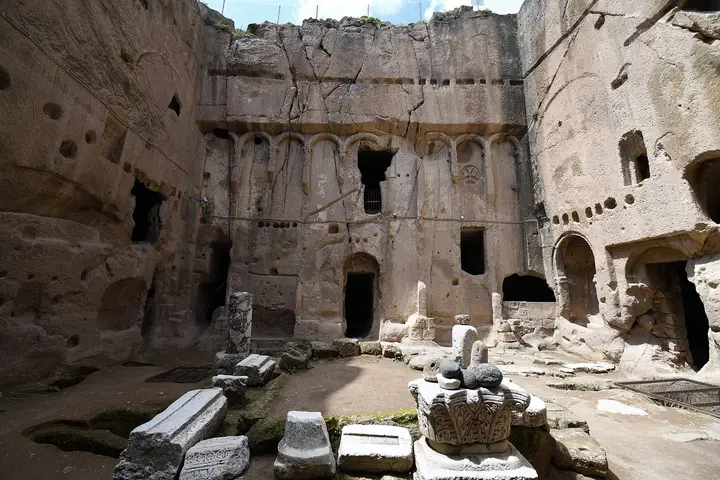 Photo: Dosseman (CC BY-SA 4.0) · Source