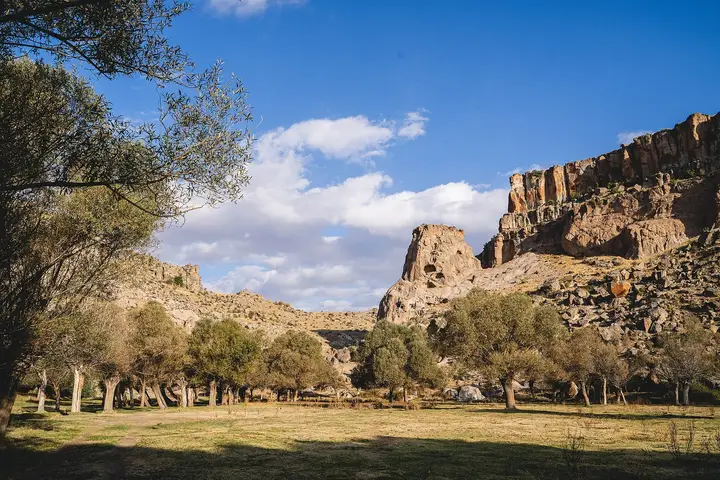
With the rock-cut churches of the Ihlara Valley, a 14-kilometre gorge carved by the Melendiz Stream, Sultan Han, the largest Seljuk caravanserai in Anatolia, and the 10,000-year-old Aşıklı Höyük, Aksaray is the western gateway to Cappadocia. Set against the silhouette of Mount Hasan, the province offers a Cappadocia experience away from the crowds.

Share with friends

Last updated:

Places to Visit in Aksaray

15 places worth seeing in Aksaray, from historic monuments to natural wonders, grouped by type. Open any of them on the map with a single click.

  • 4 Historic
  • 2 Ancient City
  • 4 Religious
  • 1 Museum
  • 4 Nature

Historic Sites 4

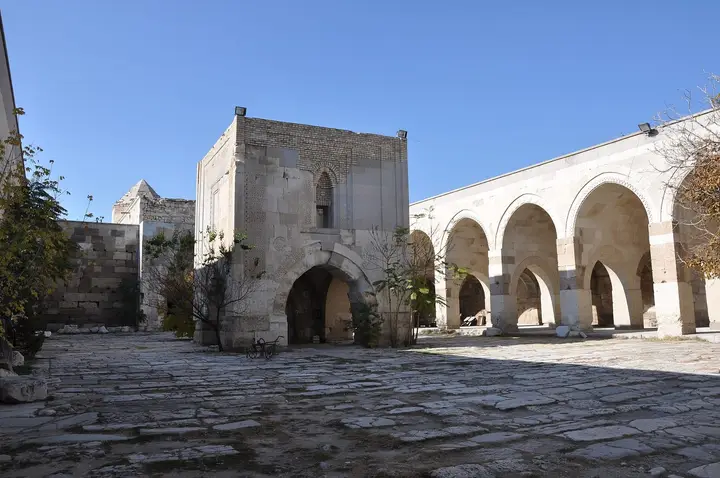
Courtyard and kiosk masjid of Sultan Han Caravanserai Photo: Robert Cutts (CC BY-SA 2.0) · Source
Historic

Sultan Han

A caravanserai in the Sultanhanı district, commissioned by the Anatolian Seljuk Sultan Alâeddin Keykubad I and completed in 1229; its architect was Muhammed bin Havlan of Damascus. At 4,800 m², it is the largest Seljuk caravanserai in Anatolia, with a kiosk masjid rising in the middle of the courtyard.

View on map
Historic

Ağzıkara Han

The covered section of the caravanserai in the village of Ağzıkarahan was completed in June 1231 and its courtyard in February 1240. The han, notable for its rich decoration, has been nominated for UNESCO World Heritage status as part of the "Seljuk Caravanserais on the Denizli–Doğubayazıt Route".

View on map
Historic

Güzelyurt (Gelveri)

Gelveri, which means "beautiful water" in Greek, is associated with the name of Gregory of Nazianzus, one of the Cappadocian Fathers. In the town, where a Greek population lived until the population exchange, you can see stone houses, a monastery converted into a hotel, a large Orthodox church and the rock-cut churches around it; it is 15 km from the Ihlara Valley.

View on map
Historic

Eğri Minare (Kızıl Minare)

Built of red brick between 1221 and 1237 in the reign of Alâeddin Keykubad I, the minaret is notable for the zigzag motifs on its lower section and the blue-green tile mosaics at the top. It was secured with steel cables in 1973 because of the danger of collapse.

View on map

Ancient Cities 2

Ancient City

Aşıklı Höyük

The mound near the village of Kızılkaya saw continuous settlement between 8200 and 7500 BC. The people of Aşıklı were among the first hunter-gatherers in the region to adopt settled life; humanity's transition from nomadism to settlement can be traced here.

View on map
Ancient City

Acemhöyük

A mound measuring 800 × 700 metres at Yeşilova, 18 km north-west of the city; an important trading centre that had its heyday in the Assyrian Trade Colonies Period (1950–1750 BC).

View on map

Religious Buildings 4

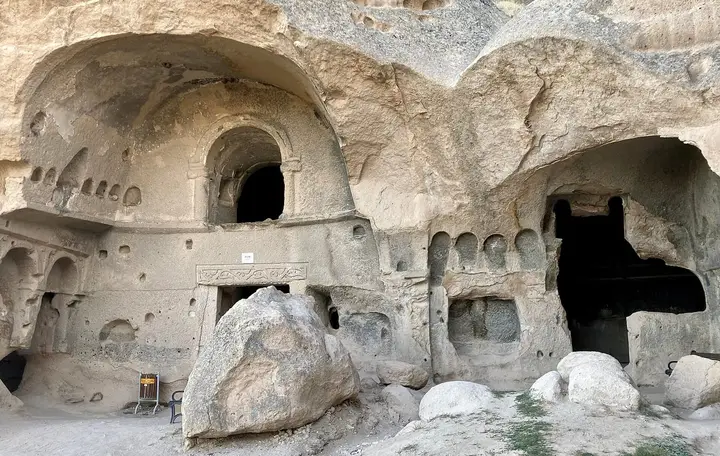
Selime Cathedral Photo: Dudva (CC BY-SA 4.0) · Source
Religious

Selime Cathedral

A cathedral carved into the rock in the village of Selime at the northern end of the Ihlara Valley, its interior divided into three naves by two rows of columns; it is the largest religious building in the valley. It is an archaeological site under the Ministry of Culture and Tourism, with an entrance fee.

View on map
Religious

Kızıl Kilise (Red Church)

A Byzantine church in the village of Sivrihisar in Güzelyurt, named after the red cut stone it is built of; it is thought to have been built in the 5th or 6th century.

View on map
Religious

Aksaray Grand Mosque

According to its inscription, the mosque was built in 1408–1409 by Karamanoğlu Mehmet Bey II, who commissioned it from the architect Mehmet Firuz Bey; it stands out for its west portal in the style of the Seljuk-era principalities. It was repaired in 1482–1483, and its present minaret dates from 1925.

View on map
Religious

Somuncu Baba Tomb

The Sufi Somuncu Baba (Sheikh Hamîdüddin), teacher of Hacı Bayram-ı Veli, died in Aksaray in 1412 and, after his funeral prayer was led by Hacı Bayram-ı Veli, was buried where his tomb now stands.

View on map

Museums 1

Museum

Aksaray Museum

Founded in 1969 in the Zinciriye Madrasa, the museum moved to its new building in 2004. It displays obsidian and bone tools from Aşıklı Höyük, seals from the Assyrian Trade Colonies Period from Acemhöyük, and finds from the excavations at Musular and Güvercinkayası.

View on map

Natural Wonders 4

Ihlara Valley Photo: Andrada Boldis (CC BY-SA 4.0) · Source
Nature

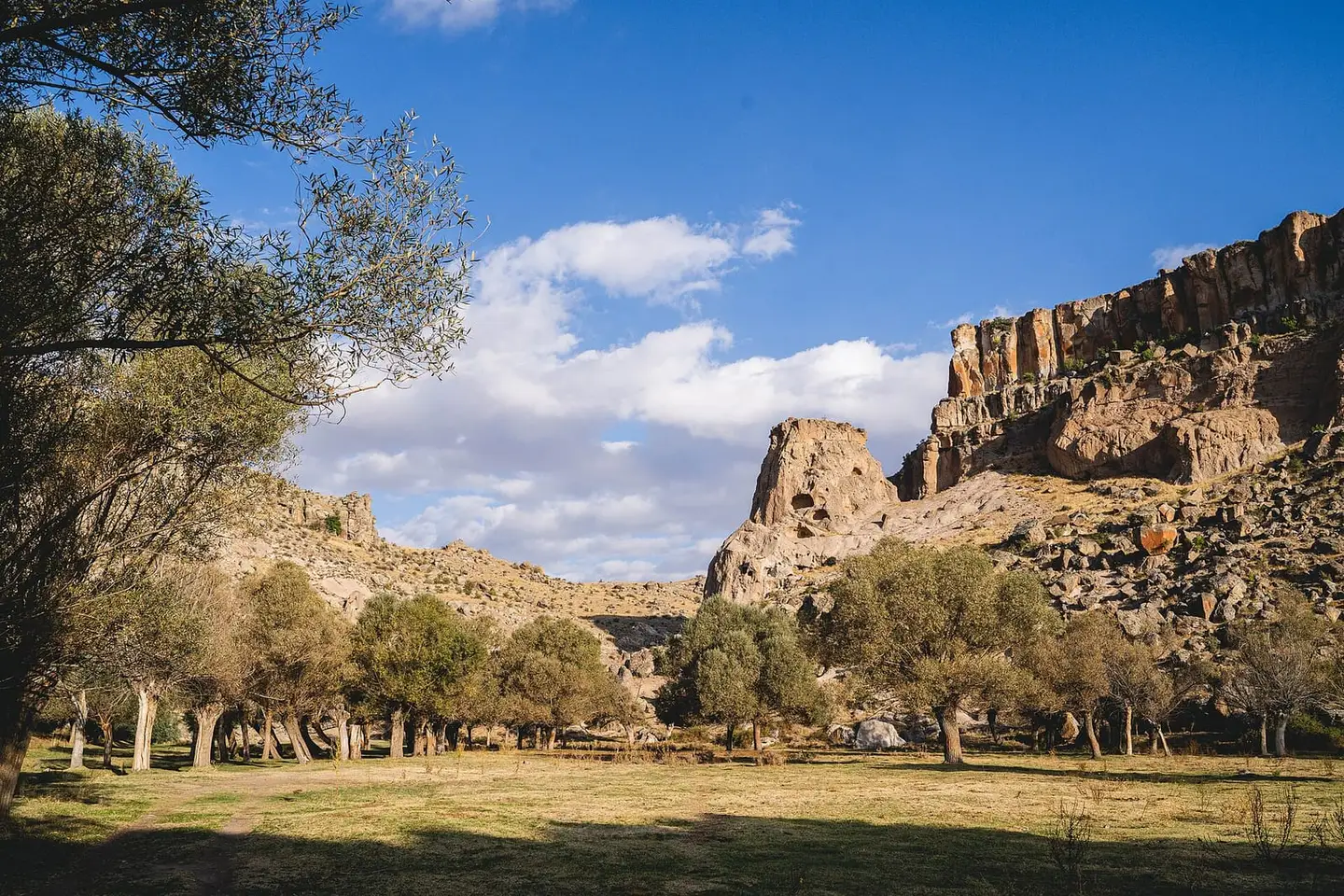
Ihlara Valley

A canyon 14 km long and in places 100–150 metres deep, formed as the Melendiz Stream eroded the lavas of Mount Hasan; it begins at Ihlara and ends at Selime. Along the valley are decorated rock-cut churches from the 6th to 13th centuries (Ağaçaltı, Pürenliseki, Kokar, Yılanlı, Sümbüllü) and dwellings.

View on map
Nature

Mount Hasan

A 3,268-metre volcanic mountain with two main craters, Büyük (Greater) Hasan and Küçük (Lesser) Hasan; its lavas formed most of Mount Melendiz and its tuffs reached as far as the Kızılırmak. It is the source of the volcanic formation that created the Ihlara Valley.

View on map
Nature

Lake Tuz (Salt Lake)

The lake lies in a tectonic basin where the borders of Ankara, Konya and Aksaray meet; it is the second-largest lake in Türkiye by surface area and supplies about 40% of the country's salt needs.

View on map
Nature

Narlıgöl (Acıgöl) Crater Lake

A maar-type crater lake on the Aksaray–Niğde border, at an altitude of 1,363 metres and 21 metres deep; thermal facilities have been built on the geothermal springs around it.

View on map

Getting to Know Aksaray

Aksaray is a province in the heart of Central Anatolia, stretching between Mount Hasan (3,268 m) and Lake Tuz. The volcanic landscape of western Cappadocia begins here: the lavas and tuffs thrown out by Mount Hasan have been eroded by streams, revealing canyons such as Ihlara and the rock-cut structures of Selime.

Human traces in the province go back to Aşıklı Höyük, one of the oldest settled villages in the world: the mound near the village of Kızılkaya saw continuous settlement between 8200 and 7500 BC, and the transition from hunting and gathering to settled life can be followed here. Acemhöyük, 18 km north-west of the city, was an important trading centre in the Assyrian Trade Colonies Period (1950–1750 BC).

In the Byzantine period the area around the Ihlara Valley and Güzelyurt became an important religious centre, with churches and monasteries carved into the rock; the name of Gregory of Nazianzus, one of the Cappadocian Fathers, is associated with Güzelyurt (Gelveri). In the Seljuk period Aksaray, which lay on the caravan road between Konya and Kayseri, was endowed with some of the most magnificent caravanserais in Anatolia, such as Sultan Han and Ağzıkara Han. The Grand Mosque from the Karamanid period and the city’s symbol, the Eğri Minare, are the traces of this layered past within the city.

Somuncu Baba, one of the Sufis of the Ottoman founding period, trained Hacı Bayram-ı Veli in Aksaray and was buried here in 1412.

When to Go

Aksaray has a continental climate: summers are hot and dry, and winters are cold. Averages for 1929–2025 from the Turkish State Meteorological Service:

Month Avg. high Avg. low Rainfall Rainy days
January 5.6 °C −3.4 °C 40 mm 10
February 7.5 °C −2.2 °C 34 mm 10
March 12.6 °C 1.4 °C 41 mm 10
April 18.1 °C 5.7 °C 45 mm 10
May 23.1 °C 9.7 °C 43 mm 10
June 27.2 °C 13.2 °C 29 mm 6
July 30.7 °C 16.3 °C 7 mm 1
August 30.9 °C 16.1 °C 6 mm 1
September 26.7 °C 11.5 °C 12 mm 3
October 21.0 °C 6.9 °C 23 mm 5
November 13.9 °C 2.1 °C 31 mm 7
December 7.8 °C −1.2 °C 46 mm 10

The best times for walking in the Ihlara Valley are April to June and September to October. Thanks to the Melendiz Stream, the valley floor is cool and green even in summer, but the midday sun is scorching in open areas such as Selime. In winter the valley is covered in snow and the paths can become slippery.

How to Explore the Ihlara Valley

The Ihlara Valley was formed as the Melendiz Stream eroded the lavas of Mount Hasan; it is a canyon 14 km long, running from Ihlara to Selime, and in places 100–150 metres deep. Over a straight-line distance of 8 km, the stream makes more than 26 meanders. Along the valley are dwellings, tombs and churches carved into the rock; the decoration in the churches spans the 6th century to the end of the 13th.

  • The valley is usually walked from the Ihlara entrance to Belisırma (the section where the churches are concentrated); at Belisırma you can stop at the restaurants by the stream. Those who continue reach Selime via Yaprakhisar.
  • Among the churches not to be missed are Ağaçaltı, Pürenliseki, Kokar, Yılanlı, Sümbüllü and the St George (Kırkdamaltı) church near Belisırma.
  • Selime Cathedral at Selime, with its two rows of columns carved from the rock, is the largest religious building in the valley; as an archaeological site under the Ministry of Culture and Tourism, it has an entrance fee.
  • Set aside a day to walk the whole valley; for a short visit, 3–4 hours between Ihlara and Belisırma is enough.

How to Get to Aksaray

By air: Aksaray has no airport. The nearest is Nevşehir Cappadocia Airport, about 77 km away; Kayseri Erkilet Airport is about 160 km away.

By road: Aksaray lies at the junction of the roads linking Ankara (about 220 km), Konya (about 150 km) and Nevşehir. The Ihlara Valley is about 40 km from the city centre and Güzelyurt 45 km. Because public transport between the valley and the villages is limited, hiring a car or taking a tour is the most practical option.

Suggested Itineraries

Day 1 – Ihlara and Selime: In the morning, descend into the valley from the Ihlara entrance and visit the churches, and have lunch by the stream at Belisırma. In the afternoon, drive to Selime to see Selime Cathedral, and watch the sunset from the upper rim of the valley.

Day 2 – Güzelyurt and Aşıklı Höyük: Explore Güzelyurt’s stone houses, its church and the Monastery Valley (Manastır Vadisi); stop at the 5th–6th-century Kızıl Kilise in the village of Sivrihisar. On the way back, visit Aşıklı Höyük near Kızılkaya.

Day 3 – The city and the caravan road: In the city centre, visit the Grand Mosque, the Eğri Minare and the Somuncu Baba Tomb, and see the finds from Aşıklı and Acemhöyük in the Aksaray Museum. Then go to Sultan Han on the Konya road or Ağzıkara Han on the Nevşehir road.

Aksaray Cuisine

Aksaray’s table is known above all for its desserts. Aksaray inceelek tatlısı (inceelek dessert), registered in 2019, is made of thin filo layers sprinkled with walnuts, hazelnuts or almonds, baked and soaked in syrup. Aksaray tahinlisi (tahini pastry), registered in 2021 as a protected geographical indication, and köpük helva (foam halva) made from soapwort root (çöven otu) are the other registered delicacies. As a main course, be sure to try Aksaray tavası (Aksaray tava), in which tomatoes, peppers, garlic and meat are baked in a clay pot with butter.

Practical Tips

  • You descend into the Ihlara Valley by steps; bring comfortable walking shoes and water.
  • The Selime and Ihlara entrances are archaeological sites with an entrance fee; the Museum Pass (Müzekart) is valid.
  • The valley gets crowded at weekends and during public holidays; start early in the morning.
  • For those heading to the centre of Cappadocia (Göreme, Ürgüp), Aksaray is a starting point away from the crowds.
Districts of Aksaray

Aksaray province has 8 districts. Explore the places to visit, local dishes and transport in each one.

What to Eat in Aksaray

All dishes →
  • Aksaray Tava (baked meat and vegetable casserole)

    A regional dish in which tomatoes, capia and green peppers, garlic and plenty of meat are mixed with spices and baked in a clay pot with butter.

  • Aksaray İnceelek Tatlısı (nut-layered filo dessert)

    A dessert of thin filo layers sprinkled with walnuts, hazelnuts or almonds, baked and soaked in syrup; it received its geographical indication on 17 October 2019.

  • Aksaray Tahinlisi (tahini pastry)

    A tahini-filled pastry registered as a protected geographical indication on 25 May 2021.

  • Aksaray Köpük Helva (soapwort foam halva)

    A traditional foam halva made by whisking soapwort root (çöven otu) with sugar and water; it has a geographical indication.

What to eat in Aksaray: the full food guide

Aksaray: Frequently Asked Questions

What are the best places to visit in Aksaray?

The main stops are the Ihlara Valley and its rock-cut churches, Selime Cathedral, the Sultan Han and Ağzıkara Han caravanserais, Güzelyurt, Aşıklı Höyük, the Eğri Minare, the Grand Mosque, the Somuncu Baba Tomb, the Aksaray Museum and Mount Hasan.

How long is the Ihlara Valley walk and how long does it take?

The valley, which runs from Ihlara to Selime, is 14 km long. The Ihlara–Belisırma section, where most of the churches are concentrated, takes 3–4 hours to walk; you need to set aside a day for the whole valley.

What is the nearest airport to Aksaray?

Aksaray has no airport; the nearest is Nevşehir Cappadocia Airport, about 77 km away.

When was Sultan Han built?

Sultan Han was commissioned by the Anatolian Seljuk Sultan Alâeddin Keykubad I and completed in 1229; it is the largest Seljuk caravanserai in Anatolia.

What is Aksaray famous for?

It is known for the Ihlara Valley, Sultan Han and Aşıklı Höyük; in its cuisine, for Aksaray tava and for the inceelek dessert, tahinli pastry and foam halva, all with geographical indications.

When is the best time to visit the Ihlara Valley?

April to June and September to October are the best months. In winter the valley is covered in snow and the paths can become slippery.

More from the Aksaray Guide

Other Provinces in the Central Anatolia Region

Sources

The information in this guide has been compiled from and checked against the sources below (last checked: 7 October 2026). If you spot an error, please let us know.

  1. Vikipedi – Aksaray
  2. Vikipedi – Aksaray (il)
  3. Meteoroloji Genel Müdürlüğü – Aksaray il istatistikleri
  4. Vikipedi – Ihlara, Güzelyurt (Ihlara Vadisi)
  5. Vikipedi – Selime Katedrali
  6. Vikipedi – Sultan Han (Aksaray)
  7. Vikipedi – Ağzıkara Han
  8. Vikipedi – Aşıklı Höyük
  9. Vikipedi – Acemhöyük
  10. Vikipedi – Güzelyurt, Aksaray
  11. Vikipedi – Kızıl Kilise (Sivrihisar, Güzelyurt)
  12. Vikipedi – Eğri Minare
  13. Vikipedi – Aksaray Ulu Camii
  14. Vikipedi – Somuncu Baba
  15. Vikipedi – Aksaray Müzesi
  16. Vikipedi – Hasandağı
  17. Vikipedi – Tuz Gölü
  18. Vikipedi – Narlıgöl
  19. Küre Ansiklopedi – Aksaray İnceelek Tatlısı
  20. Küre Ansiklopedi – Aksaray Tahinlisi
  21. Küre Ansiklopedi – Aksaray Köpük Helva
  22. Turna – Aksaray gurme rehberi (Aksaray tava)
  23. Turna – Aksaray gezi rehberi (mesafeler, havalimanı)
  24. Wikimedia Commons – görseller (Andrada Boldis, Dudva, Robert Cutts)

Search 81 province guides and 968 district guides.