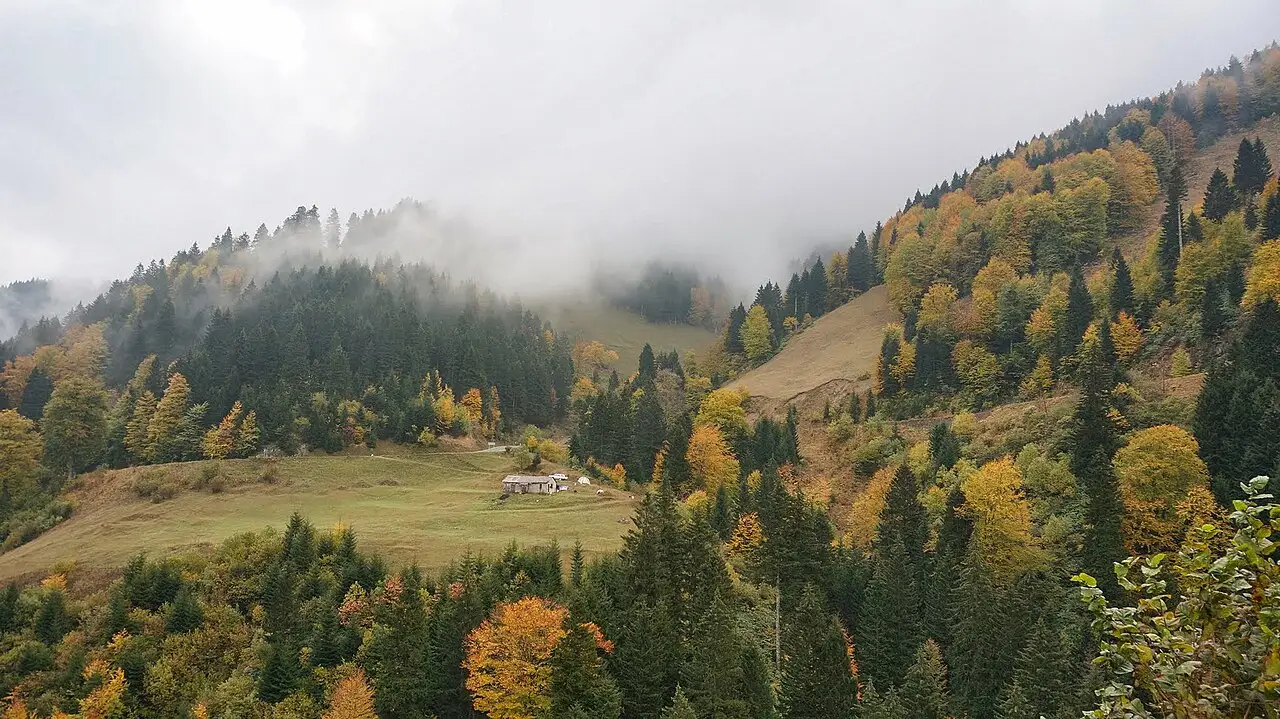
Sümela Monastery, 17 km from the district centre, is one of the most important historic monuments of Anatolia, dating from the Byzantine period. Maçka’s terrain is entirely made up of high mountains: forests cover the land up to 2,000 metres, and above that it is covered by pastures and mountain vegetation.
Geography
The famous Zigana Pass lies within Maçka’s borders. Şolma Plateau, one of the highest points in Trabzon province, has been declared a tourism centre. Located 22 km from the district centre, Şolma Plateau is surrounded by pine forests and is worth seeing for its cold spring water, flat grassy meadows and various fragrant flowers.
Plateaus
Maçka has many plateaus of tourist interest, and more than a third of the plateaus in Trabzon province lie within its borders. Kiraz Plateau, Labazen Plateau and Kulindağı Plateau are among them. The Mağura Plateau Festival is celebrated every year on the first Sunday of August. At Lişer Plateau, in Ocaklı-İspela, the Soğuksu Festivals are held every year on 7 July, with people coming from neighbouring plateaus and villages.
History and Culture
Maçka was taken by the Ottomans in 1461. It came under Russian rule in 1916 and regained its independence in 1918.
Highlights
Maçka was an important stop on the Silk Road from ancient times and served as the southern gateway to Trabzon. Sümela Monastery was built on a rocky outcrop overlooking Altındere Valley, within the borders of Altındere village in Maçka district.