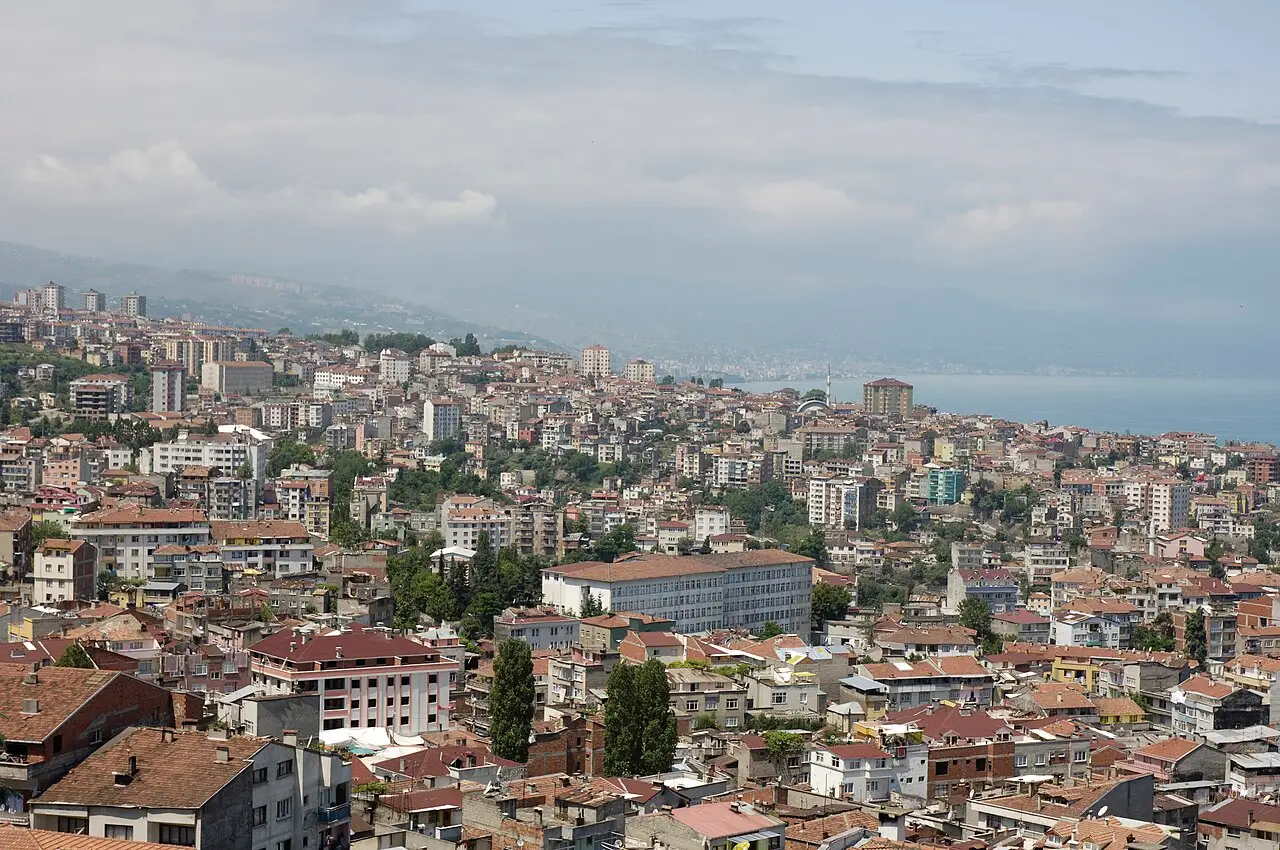
Ortahisar is a district of Trabzon province, bordered by Yomra to the east, Akçaabat to the west and Maçka to the south. It became a district through Law No. 6360, adopted by the Turkish Grand National Assembly on 12 November 2012, which abolished the central district of Trabzon. It is the most populous district of Trabzon and is effectively its centre. According to 2022 data, the district’s population is 335,628.
Administrative Structure
The rural area of Ortahisar once had 9 towns and 38 villages. Under the adopted law, all of them have been converted to neighbourhood (mahalle) status.
Archaeological Finds
In April 2021, excavations begun by Trabzon Metropolitan Municipality revealed archaeological remains from the Roman Empire and the Byzantine Empire. In the following months, tile, bowl and pottery remains from the Roman period were also found during the excavations. According to statements by Trabzon Metropolitan Municipality, the excavation site is planned to be converted into an open-air museum.
History and Culture
Ortahisar became a district in 2012, when the central district of Trabzon was abolished by Law No. 6360. Archaeological remains from the Roman and Byzantine periods were discovered in excavations in 2021.
History and Culture
Ortahisar is a district established in 2012 by Law No. 6360.
Highlights
Tabakhane Bridge spans the Kuzgun Stream to the east of Ortahisar. On a street where Suleiman the Magnificent is said to have been born and spent his childhood in Ortahisar, a historic Turkish house has been expropriated and turned into a History Museum.