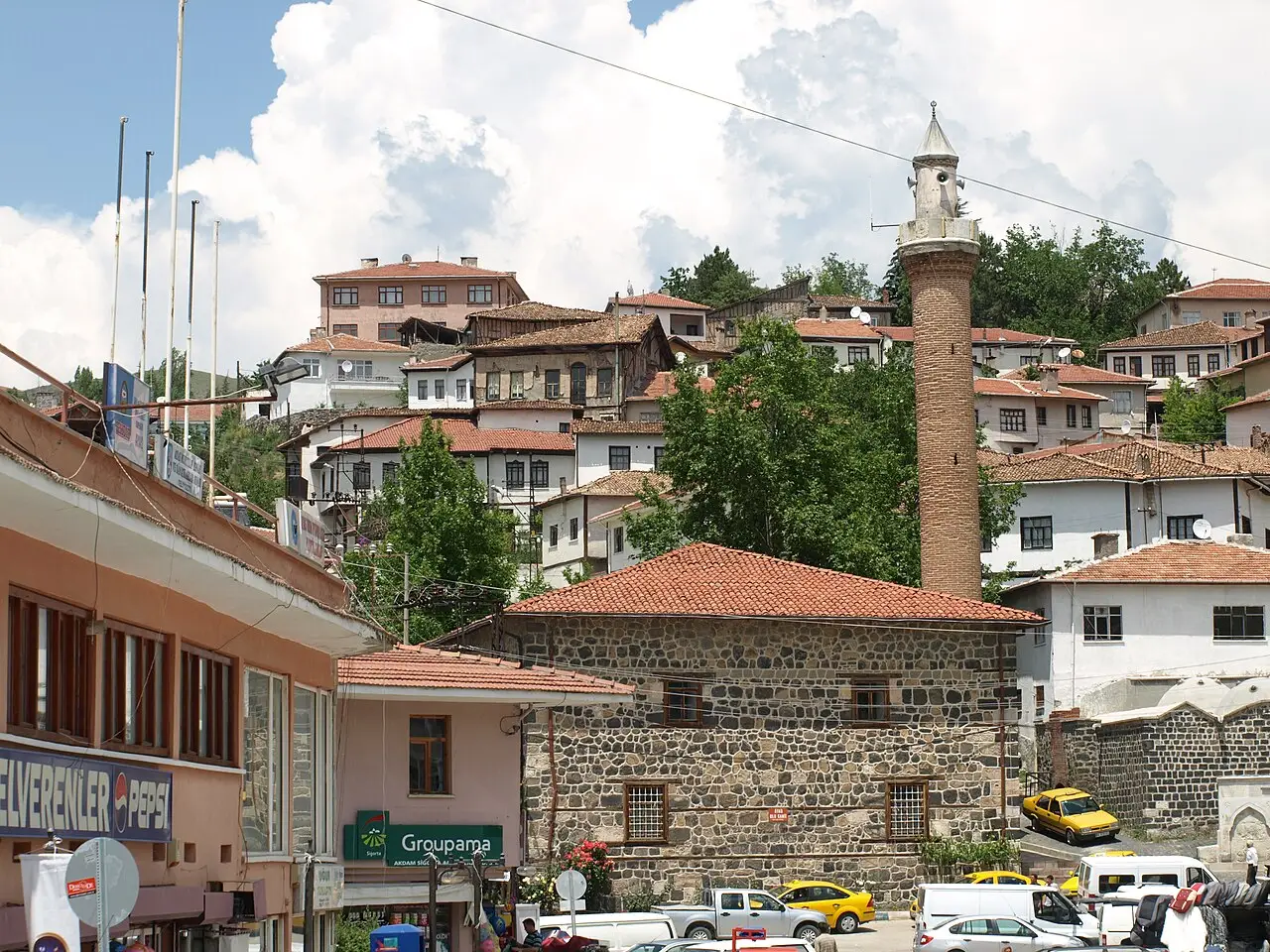
6 places to visit in the Ayaş district of Ankara: Ayaş Hot Springs, Ayaş Castle and Ayaş Grand Mosque (Ulu Cami). Plan your trip to Ayaş with local food, practical tips and transport information.

Share with friends

Ayaş is a district of Ankara province, located 55 km west of Ankara. The district covers an area of 1,041 km² and has an average elevation of 954 metres.

History

The settlers of Ayaş were Oghuz tribes, and village names in the district include the names Bayat, Afşar, Peçenek, Kıpçak and Kargın. In 1554 Ayaş became the seat of a sanjak, and in 1864 it was made a nahiye of Ankara. In 1900 Ayaş was advanced in education, with 8 madrasas, 2 primary schools and 1 secondary school.

Tourism

Ayaş is famous for its hot springs, thermal baths and mineral springs. Every year in the last week of June, the mulberry festival attracts thousands of visitors to the area. Ayaş tomatoes are among the district’s famous products. The historic Paşa Hammam, Asartepe Canyon and Yağmur Dede Tomb are places that visitors frequently go to.

History and Culture

Ayaş has a long history, and it is said that it is mentioned by Evliya Çelebi. Ayaş became a seat of a sanjak in 1554. In 1900 Ayaş had 8 madrasas, 2 primary schools and one secondary school.

Last updated:

Places to Visit in Ayaş

  • 2 Historic
  • 2 Religious
  • 1 Nature
  • 1 Attraction
Nature

Ayaş Hot Springs

The hot water springs and thermal facilities that make Ayaş famous.

View on map
Historic

Ayaş Castle

A castle on the hill in the district centre, built in the Roman and Byzantine periods and repaired in the Seljuk and Ottoman periods. The castle offers wide views over the district and the surrounding plains.

View on map
Religious

Ayaş Grand Mosque (Ulu Cami)

Built in the 13th century in the Seljuk period, the Grand Mosque is known for its stonework and wooden minbar. Repaired in the Ottoman period, it is the oldest place of worship in Ayaş.

View on map
Historic

Ayaş Historic Houses

Traditional stone and timber houses from the Ottoman period stand in the district centre. These houses, lined up along narrow streets, are important examples of Ankara's rural architectural heritage.

View on map
Attraction

Ayaş Hot Springs and Thermal Baths

A thermal area known for its hot springs, thermal baths and mineral springs, where construction of the facilities began in 2008.

View on map
Religious

Yağmur Dede Tomb

A tomb in Ayaş that visitors often stop to see.

View on map

Places to Visit Around Ankara Province

See all →

While you are in Ayaş, you can also see the highlights of Ankara province. These places are in other districts; Ayaş is about 80 km from the provincial centre.

  • Anıtkabir — The mausoleum of Mustafa Kemal Atatürk, designed by Emin Onat and Orhan Arda and built on Rasattepe between 1944 and 1953. The Lion Road leads to the ceremonial square; the Hall of Honour holds the symbolic sarcophagus, and Atatürk's body lies in the tomb chamber on the lower floor.
  • Museum of Anatolian Civilisations — Housed in the Mahmud Paşa Bedesten and Kurşunlu Han, the museum began at Atatürk's wish as a 'Hittite Museum' and today displays Anatolia's civilisations in chronological order.
  • Ankara Castle — The exact date the castle in Altındağ was built is unknown; it is known that the Roman emperor Caracalla had its walls repaired in AD 217. Repaired in the Roman, Byzantine, Seljuk and Ottoman periods, it is the historic core of Ankara, with narrow streets inside and views of the city from the walls.
  • Arslanhane (Ahi Şerafeddin) Mosque — A Seljuk mosque at the southern end of the castle, dating from the 13th century, with wooden columns and a wooden ceiling; it is one of the oldest and most important buildings in the city.
  • Hamamönü — This district takes its name from the Karacabey Hammam in the complex of Karaca Bey, the Beylerbey of Anatolia, in the 1430s.
  • Temple of Augustus — The temple beside the Hacı Bayram Mosque was built in the name of the emperor Augustus in about 25–20 BC. Its walls bear the Res Gestae inscription, known as the Monumentum Ancyranum, which recounts Augustus's deeds; it has been protected with the support of the World Monuments Fund.

Practical Information for Visiting Ayaş

Suggested time
1 day
Best time to visit
Spring and autumn
Places to visit
6 places

What to Eat in Ayaş

Food guide →
  • Ayaş Mantısı (baked Ayaş dumplings)

    Ayaş's own mantı, small pieces of dough filled with minced meat, sealed and baked in an oven. Garlic yoghurt and a butter sauce are drizzled on top.

  • Keşkek (wheat and meat dish)

    Keşkek is prepared by boiling and pounding cracked wheat and meat for hours. In Ayaş it is the traditional dish for weddings and special occasions.

  • Bazlama (griddle flatbread)

    Bazlama, a flatbread cooked on a griddle, is one of the basic elements of Ayaş's rural cuisine. It is served with fresh butter and cheese.

Culture, Local Products and Economy of Ayaş

  • Spa Culture

    The tradition of thermal bathing, which has continued since the Roman period, is an integral part of Ayaş's identity. Thermal tourism is one of the district's most important cultural and economic assets.

  • Traditional Village Weddings

    At traditional weddings held in Ayaş and the surrounding villages, people dance the halay to the accompaniment of drum and zurna, and keşkek is served. This tradition is passed down from generation to generation.

Local Products

  • Ayaş Domatesi (Ayaş tomatoes) — Ayaş Domatesi was registered as a protected designation of origin on 5 October 2022 (TÜRKPATENT registration no. 1236). Product group: processed and unprocessed fruit and vegetables and mushrooms. Registered by: Ayaş Chamber of Agriculture.
  • Ayaş Dutu (Ayaş mulberries) — Ayaş Dutu was registered as a protected designation of origin on 22 September 2021 (TÜRKPATENT registration no. 900). Product group: processed and unprocessed fruit and vegetables and mushrooms. Registered by: Ayaş Chamber of Agriculture.

Economy

Ayaş's economy consists of agriculture and thermal tourism. Tomatoes, peppers, melons and watermelons are the main agricultural products. The thermal facilities attract visitors throughout the year. Small livestock farming also contributes to the district's economy.

How to Get to Ayaş

Ayaş is 80 km from Ankara city centre. It is reached by the Ankara–Eskişehir road. There are regular minibus services from the Ankara Intercity Bus Terminal.

Get directions on Google Maps Getting to Ankara

Ayaş: Frequently Asked Questions

What are the top things to see in Ayaş?

The 6 highlights in Ayaş are Ayaş Hot Springs, Ayaş Castle, Ayaş Grand Mosque (Ulu Cami), Ayaş Historic Houses, Ayaş Hot Springs and Thermal Baths, and Yağmur Dede Tomb.

What should I eat in Ayaş?

Ayaş Mantısı, Keşkek and Bazlama are the standout dishes on Ayaş's tables.

What is Ayaş famous for?

Ayaş is known for Ayaş Tomatoes and its spa culture. Registered with TÜRKPATENT as a product with protected designation of origin.

How do I get to Ayaş?

Ayaş is 80 km from Ankara city centre. It is reached by the Ankara–Eskişehir road. There are regular minibus services from the Ankara Intercity Bus Terminal.

How much time should I set aside for a visit to Ayaş?

Suggested time for the visit: 1 day. Best time to visit: spring and autumn.

Continue Your Trip

Other Districts of Ankara

Search 81 province guides and 968 district guides.