8 places to visit in the Pamukkale district of Denizli: Pamukkale Travertenleri, Hierapolis Ancient City and Hierapolis Archaeology Museum. Plan your trip to Pamukkale with local food, practical tips and transport information.

Share with friends

Pamukkale, formerly known as Akköy, is the second most populous district of Denizli, with a population in 2024 of the second largest in the province. The district was renamed by Law no. 6360, adopted by the Grand National Assembly (TBMM) on 12 November 2012, and it has 61 neighbourhoods. The district’s area is 823 km². The Pamukkale (Hierapolis) travertines, a UNESCO World Heritage Site since 1988, are located in this district. Pamukkale University lies within the district boundaries.

History and Culture

Pamukkale, formerly named Akköy, is the second most populous district of Denizli. The Pamukkale travertines have been a UNESCO World Heritage Site since 1988. Laodicea Church was uncovered during excavations carried out in 2010. At the beginning of the 13th century the area came under Turkish control, and the city was named Lâdik.

Last updated:

Places to Visit in Pamukkale

  • 3 Historic
  • 1 Religious
  • 2 Nature
  • 2 Attraction

Historic Sites 3

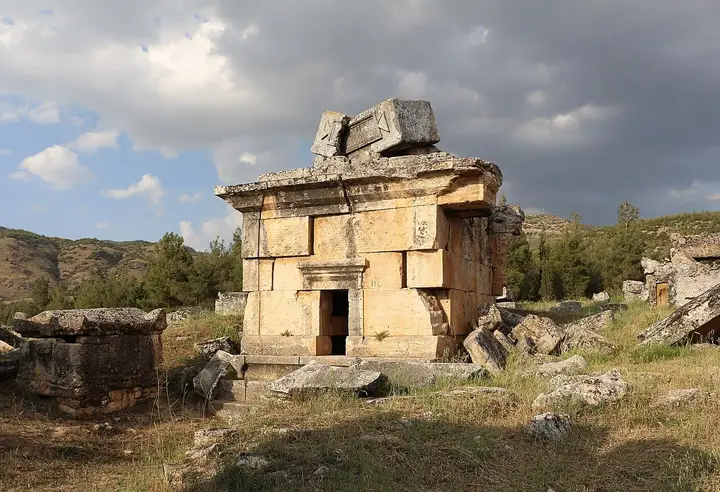
Hierapolis Ancient City - Pamukkale Photo: Bernard Gagnon (CC BY-SA 3.0) · Source
Historic

Hierapolis Ancient City

Hierapolis, founded on the travertines in the 2nd century BC during the Kingdom of Pergamon, has an ancient theatre, necropolis, agora and Roman bath ruins to visit. The ancient pool (Cleopatra's Pool) is famous for its thermal waters.

View on map
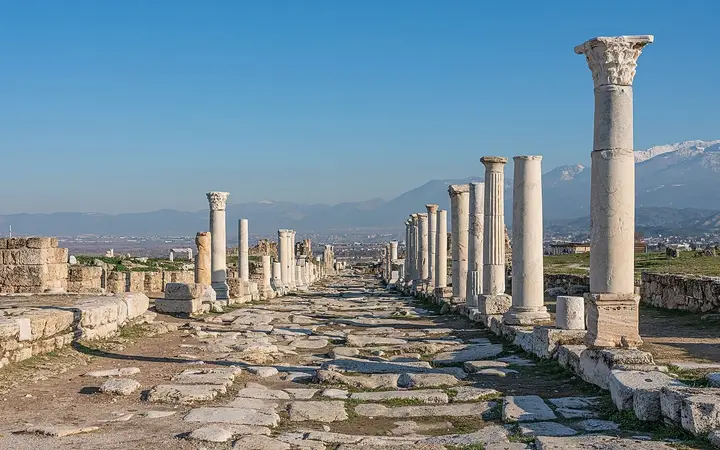
Laodicea Ancient City - Pamukkale Photo: A.Savin (FAL) · Source
Historic

Laodikeia Ancient City

Laodikeia, 6 km from Denizli, was one of the wealthiest cities of the Roman period. The city, home to one of the seven churches of Christianity, has a stadium, theatre and church ruins.

View on map
Historic

Aziz Philippus Bridge

A large bridge east of Hierapolis, located after the Saint Philip Gate.

View on map

Religious Buildings 1

Religious

Direkli Kilise

A three-aisled Byzantine church in the Pamukkale archaeological site.

View on map

Natural Wonders 2

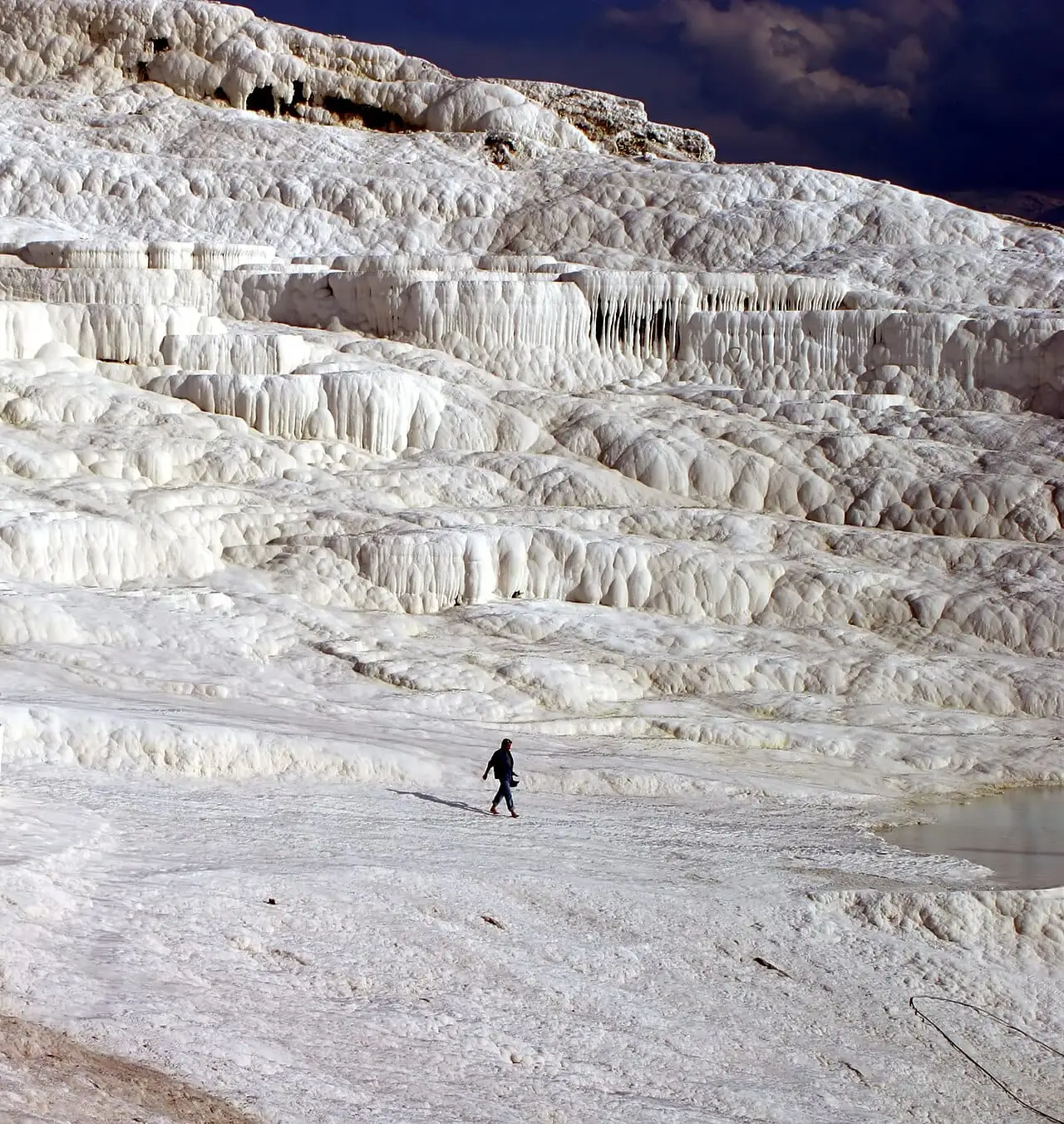
Pamukkale Travertines - Pamukkale Photo: Brocken Inaglory (CC BY-SA 3.0) · Source
Nature

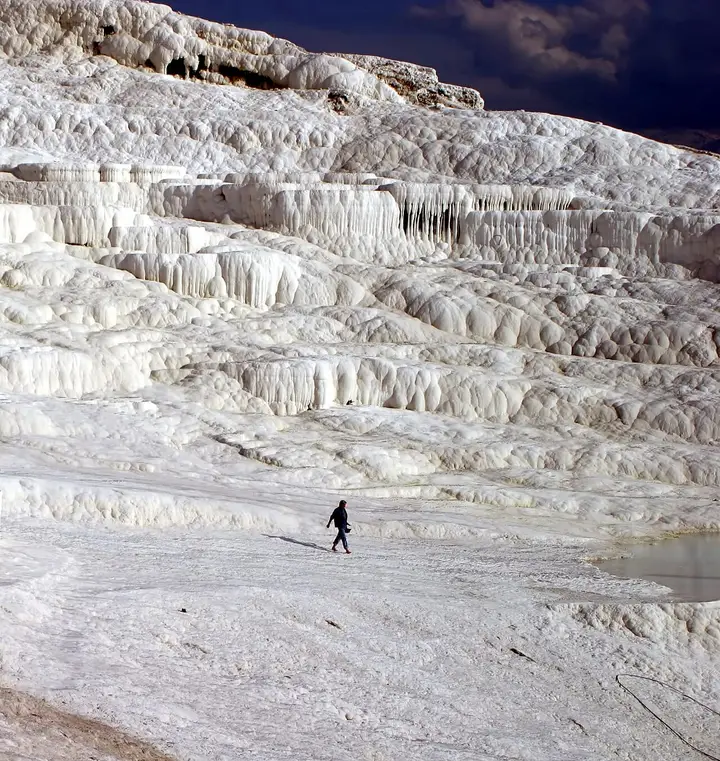
Pamukkale Travertenleri

Natural travertine formations protected as a UNESCO World Heritage Site since 1988, together with the ancient city of Hierapolis.

View on map
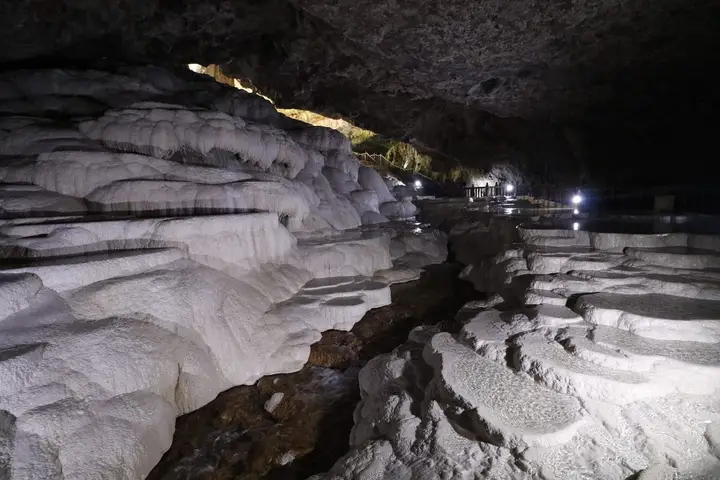
Kaklik Cave - Pamukkale Photo: Wikipedia (CC BY-SA) · Source
Nature

Kaklik Cave

Also known as Underground Pamukkale, Kaklık Cave is notable for its travertine-covered pools inside the cave. The stalactites and stalagmites inside were formed by the effect of thermal waters.

View on map

Attractions 2

Attraction

Hierapolis Archaeology Museum

Housed in the Roman bath building of the ancient city, the museum displays statues, sarcophagi, coins and architectural fragments from Hierapolis and excavations in the surrounding area.

View on map
Attraction

Akköy Gölemezli Termal Turizm Merkezi

A geothermal thermal tourism area adjoining the Pamukkale Special Environmental Protection Area.

View on map

Places to Visit Around Denizli Province

See all →

While you are in Pamukkale, you can also see the highlights of Denizli province. These places are in other districts.

  • Hierapolis Necropolis — One of the largest ancient cemeteries in Anatolia, north of the city, made up of sarcophagi, tumuli and house-shaped tombs.
  • Antique Pool — A thermal pool in Hierapolis where columns brought down by an earthquake lie under the water; you swim among fragments of ancient columns in water at about 35 °C.
  • Laodicea — A city 6 km north of Denizli, founded in the 3rd century BC by Antiochus II, who named it after his wife Laodice; it is one of the seven churches of Asia in the Book of Revelation.
  • Tripolis — An ancient city in Buldan's Yenicekent neighbourhood, 40 km from Denizli, enriched by trade at the junction of Lydia, Phrygia and Caria.
  • Colossae — An ancient Phrygian city near Honaz; the Apostle Paul's Epistle to the Colossians was addressed to the church here.
  • Beycesultan Mound — A mound 5 km south-west of Çivril, about 25 metres deep with some 40 layers stretching from the Late Chalcolithic to the Byzantine period; it is one of the most important prehistoric settlements in Western Anatolia.

Practical Information for Visiting Pamukkale

Suggested time
1–2 days
Best time to visit
Spring and autumn
Places to visit
8 places

What to Eat in Pamukkale

Food guide →
  • Denizli Kebabı (slow-cooked lamb kebab)

    Lamb marinated in special spices and slowly cooked over a wood fire. The most famous dish of Denizli, it is a flavour every Pamukkale visitor should try.

  • Tandır Çorbası (slow-cooked lamb soup)

    Prepared by simmering lamb with its bones for a long time. It is the best-known soup of Denizli cuisine and is often eaten in the winter months.

  • Höşmerim (cheese and flour dessert)

    A traditional dessert made by mixing cottage cheese with flour and sugar and cooking it in a pan. It is one of the distinctive flavours of the Denizli region.

  • Denizli Trileçesi

    Trileçe, a dessert that became popular in Denizli in modern times, is served as a sponge cake soaked in a mixture of three milks and topped with caramel sauce.

Culture, Local Products and Economy of Pamukkale

  • Antik Şifa Geleneği

    Pamukkale's thermal waters have been used for healing since ancient times. The purpose of founding Hierapolis was to create a health centre around these thermal springs.

  • Yedi Kilise Geleneği

    Laodikeia is one of the Seven Churches mentioned in the Bible. This shows the region's importance in the history of early Christianity and makes it valuable for religious tourism.

Local Products

  • Denizli Tekstili — Denizli is one of Türkiye's largest textile production centres. Towels, bathrobes and home textiles are exported worldwide.
  • Üzüm ve Şarap — Vineyards are widespread around Pamukkale. Wines made from local grapes, and pekmez (grape molasses), are among the region's important products.

Economy

Pamukkale district forms the eastern half of Denizli city, and its economy is based on tourism, textiles and agriculture. The Pamukkale travertines attract millions of tourists a year. The textile industry, especially towel and bathrobe production, is the district's most important industrial branch. Grape, cherry and vegetable growing are also carried out.

How to Get to Pamukkale

Pamukkale district centre is part of Denizli city centre. The travertines are 20 km from Denizli. Denizli Çardak Airport is 65 km away. There are direct flight connections from Istanbul, Ankara and Izmir. The intercity bus terminal connects to all major cities.

Get directions on Google Maps Getting to Denizli

Pamukkale: Frequently Asked Questions

What are the places to see in Pamukkale?

The highlights of Pamukkale are 8 places: Pamukkale Travertines, Hierapolis Ancient City, Hierapolis Archaeology Museum, Laodicea Ancient City, Kaklik Cave, Direkli Church, Akköy Geothermal Thermal Tourism Centre and Aziz Philippus Bridge.

What should I eat in Pamukkale?

Denizli Kebabı, Tandır Çorbası, Höşmerim and Denizli Trileçesi are the standout dishes on Pamukkale tables.

What is Pamukkale famous for?

Pamukkale is known for Denizli Textiles and its ancient healing tradition. Denizli is one of Türkiye's largest textile production centres. Towels, bathrobes and home textiles are exported worldwide.

How do I get to Pamukkale?

The Pamukkale district centre is part of Denizli city centre. The travertines are 20 km from Denizli. Denizli Çardak Airport is 65 km away. There are direct flight connections from Istanbul, Ankara and Izmir. The intercity bus terminal connects to all major cities.

How much time should I allow for a visit to Pamukkale?

Suggested visit length: 1–2 days. Best time to visit: spring and autumn.

Continue Your Trip

Other Districts of Denizli

Search 81 province guides and 968 district guides.