Mevlâna Museum and Tomb
The museum and tomb in Karatay district draw large numbers of domestic and foreign tourists.
View on map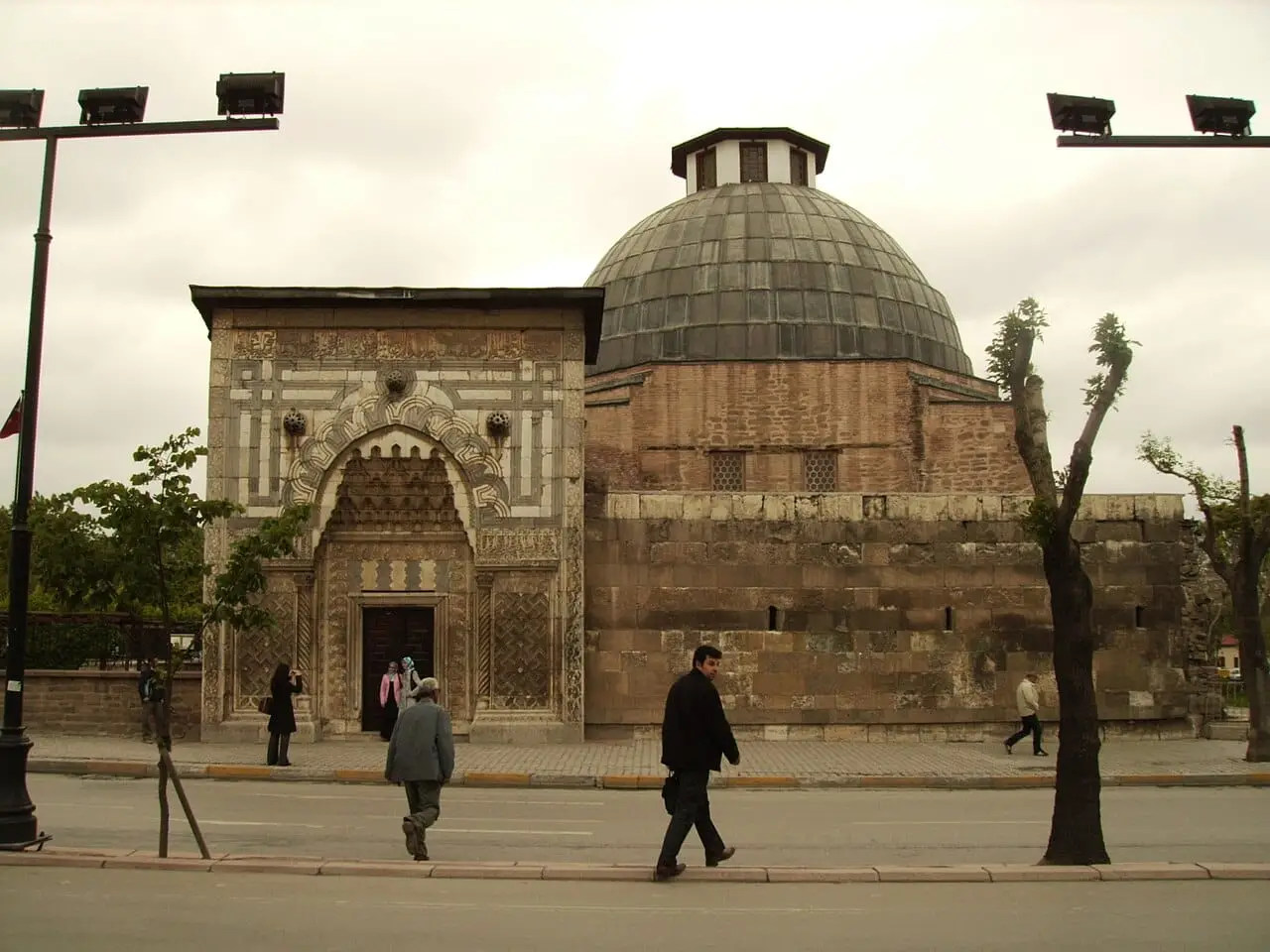 Photo: HALUK COMERTEL (CC BY 3.0) · Source
 5 places to visit in the Karatay district of Konya: Mevlâna Museum and Tomb, Karatay Madrasa (Museum of Tile Works) and İnce Minareli Madrasa (Museum of Stone and Wood Works). Plan your trip to Karatay with local food, practical tips and transport information.
Karatay is one of the three central districts of Konya Province. The district covers 2,832 km², and its centre lies at an altitude of 1,028 metres above sea level. The Mevlâna Museum in Karatay draws a very large number of domestic and foreign visitors to the district.
Karatay was established in 1987 under Law no. 3399, which provided for the creation of three districts. When Mevlâna died in 1273, his son Sultan Veled agreed to have a tomb built for him.
Last updated:
The museum and tomb in Karatay district draw large numbers of domestic and foreign tourists.
View on map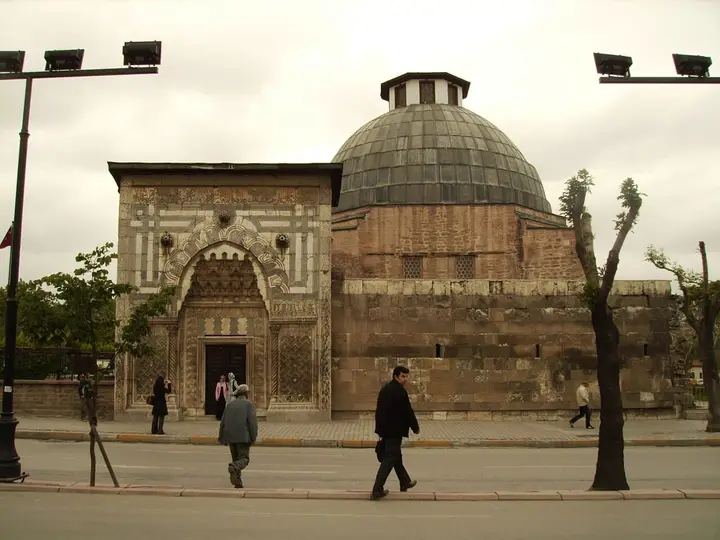 Photo: HALUK COMERTEL (CC BY 3.0) · Source
 Built in 1251 by the Seljuk vizier Celâleddin Karatay, the madrasa houses some of the finest examples of Seljuk tilework. Its dome is covered with star-shaped and geometric tiles.
View on map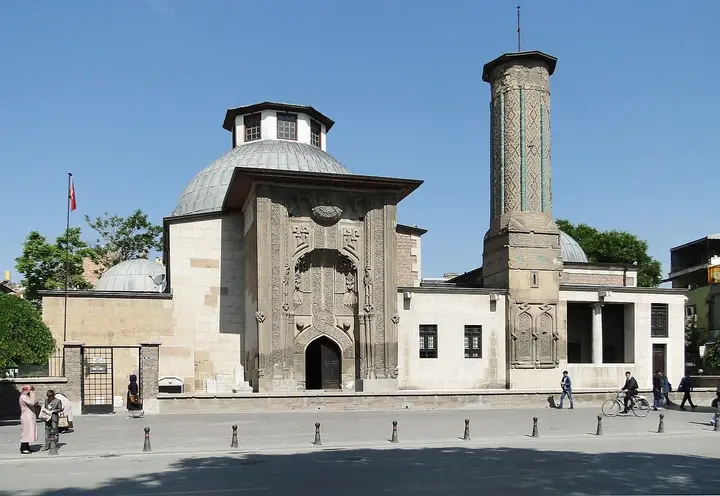 Photo: Bernard Gagnon (CC BY-SA 3.0) · Source
 Built in 1264 by the Seljuk vizier Sahip Ata Fahreddin Ali, the madrasa is one of the masterpieces of Seljuk architecture, with rich stone decoration on its portal. Its slender minaret was shortened after being struck by lightning.
View on map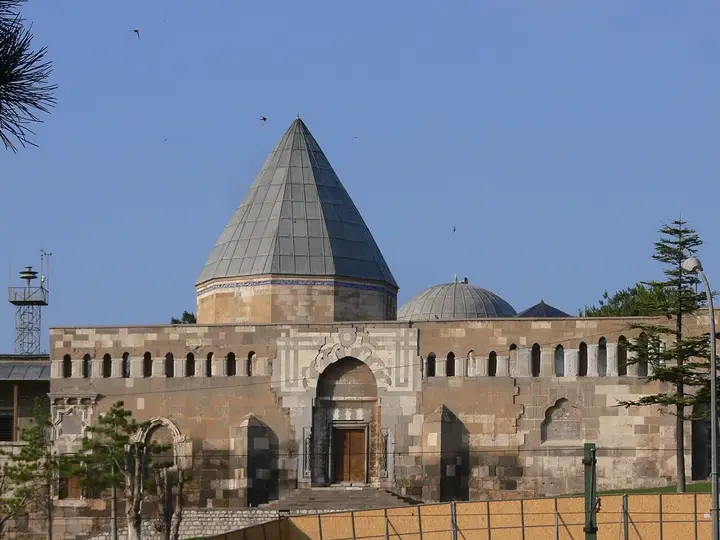 Photo: Christian Mathis (CC BY-SA 3.0) · Source
 The Alâeddin Mosque, on the mound at the centre of Konya, was completed in 1221 during the reign of the Seljuk Sultan Keykubad I. The tombs of Seljuk sultans are also located here.
View on mapThe museum, which operates within the Mevlâna Lodge (Dergâh), is located in the Karatay district of Konya.
View on mapWhile you are in Karatay, you can also see the highlights of Konya province. These places are in other districts.
Konya's etli ekmek, a thin dough spread with a mixture of minced meat, onion and pepper and baked in a stone oven, is famous for its length of nearly one metre. It is a protected geographical indication of Konya.
Prepared by slow-cooking lamb in a clay oven, fırın kebabı is one of Konya's most famous dishes. The meat is cooked until it falls apart in the mouth.
A traditional soup made with dried okra and meat stock, bamya çorbası is an essential part of Konya's cuisine.
A traditional dessert made with cheese, flour and sugar, roasted in butter and served warm. It is one of Konya's best-known desserts.
Karatay is where Mevlâna Celâleddin Rûmî lived and where the Mevlevi order was founded. Sema ceremonies and the Şeb-i Arus commemorations, held every December, keep the tradition alive.
Konya was the capital of the Anatolian Seljuk State and, in the 12th and 13th centuries, one of the most important cultural and scientific centres of the Islamic world. Karatay is the district where the architectural legacy of this period is most concentrated.
Karatay is the historic central district of Konya. Trade, services and tourism are its main sources of income. The Mevlâna Museum attracts more than 3 million visitors a year. The Karatay Organised Industrial Zone is home to machinery, automotive parts and food industries.
Karatay is the central district of Konya. Konya Airport is 15 km away. Ankara can be reached in 1 hour 45 minutes by high-speed train (YHT). The intercity bus terminal is within the district boundaries.
The top 5 places in Karatay are: Mevlâna Museum and Tomb, Karatay Madrasa (Museum of Tile Works), İnce Minareli Madrasa (Museum of Stone and Wood Works), Alâeddin Hill and Mosque, and the Mevlâna Museum.
Etli Ekmek, Fırın Kebabı, Bamya Çorbası and Höşmerim are the standout dishes on Karatay's tables.
Karatay is known for Konya Etli Ekmeği and for Mevlâna and the Mevlevi Order. Konya etli ekmeği, a protected geographical indication, is baked in traditional stone ovens and is known throughout Türkiye.
Karatay is the central district of Konya. Konya Airport is 15 km away. Ankara can be reached in 1 hour 45 minutes by high-speed train (YHT). The intercity bus terminal is within the district boundaries.
Suggested visit length: 2-3 days. Best time to visit: spring and autumn (April-June, September-December).