Taşkent Cave (İnönü Cave)
The cave, on the slopes of the Taurus Mountains, attracts nature lovers with its stalactites and stalagmites. The underground lake and fossil remains inside the cave are also scientifically important.
View on map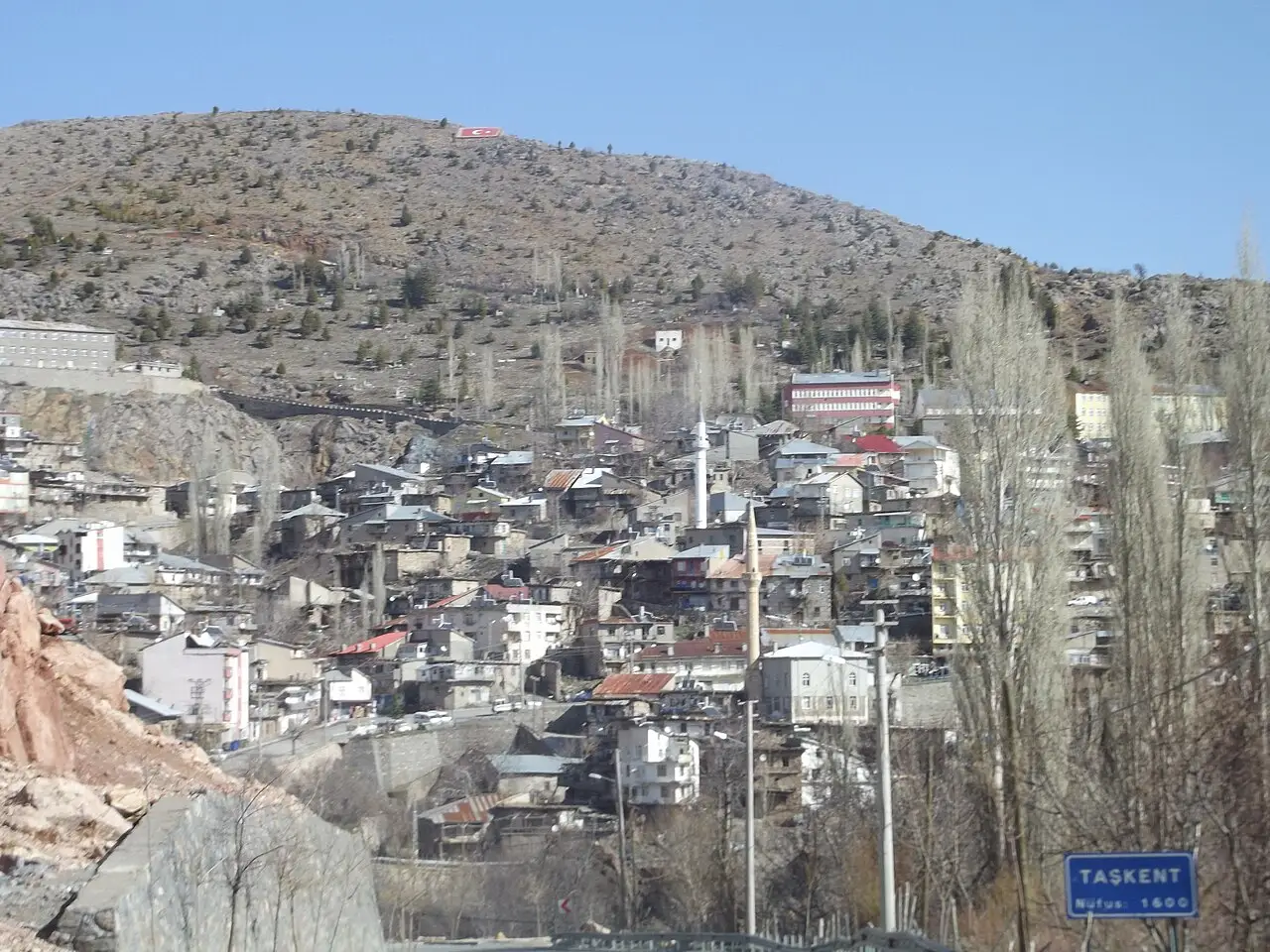 Photo: Hüseyin Öcal (CC BY 3.0) · Source
 3 places to visit in the Taşkent district of Konya: Taşkent Cave (İnönü Cave), Balcılar Canyon and Taşkent Grand Mosque. Plan your trip to Taşkent with local food, practical tips and transport information.
Taşkent is the southernmost district of Konya province, bordering the provinces of Karaman and Antalya. It separated from Hadim district and gained district status on 11 August 1988.
Turkmen from the Avşar tribe began settling in Taşkent and the surrounding area between 1225 and 1250. Taşkent became part of the Ottoman state when Fatih Sultan Mehmet ended the Karamanid principality. The Taşkent subdistrict, which was attached to Hadim district, was raised to district status by Law No. 3392 in 1987 and officially began operating from 1988.
Although it lies in the Mediterranean Region, the district has features of both the Mediterranean and continental climates because it is located in a high-altitude area of the Central Taurus Mountains. Winters in Taşkent are generally cold and snowy, and summers are hot and dry.
Taşkent district consists of 9 settlement units in total: the district centre, 5 towns and 3 villages. The district’s towns are Afşar, Balcılar, Bolay, Çetmi and Ilıcapınar, and its villages are Kecimen, Kongul and Sazak.
The name Taşkent was given in 1934, when the former name Pirlerkondu was changed. Taşkent lies in the south of Konya province at an elevation of 1,620 metres. It was built on the Göksu Valley canyons on the Taşeli Plateau in the Central Taurus Mountains. Taşkent lies on the caravan route between Alanya and Karaman.
Taşkent district lies 135 km south of Konya province, at an elevation of 1,620 metres. It gained district status on 11 August 1988, when it separated from Hadim. Taşkent has a fortified position on the caravan route between Alanya and Karaman.
Last updated:
The cave, on the slopes of the Taurus Mountains, attracts nature lovers with its stalactites and stalagmites. The underground lake and fossil remains inside the cave are also scientifically important.
View on mapThe canyon near Taşkent, with its deep valley and natural beauty, is an ideal spot for trekking and nature photography.
View on mapThe mosque, built in the Ottoman period, is notable for its stonework. This building, which bears traces of traditional construction techniques, reflects the spiritual heritage of the region. The calligraphic decoration on its mihrab and its wooden minbar are notable works of art.
View on mapWhile you are in Taşkent, you can also see the highlights of Konya province. These places are in other districts; Taşkent is about 140 km from the provincial centre.
Keşkek is prepared by cooking cracked wheat and meat for a long time and then pounding them together. It is the traditional dish of wedding feasts, prepared communally, and is an essential part of such celebrations.
Traditional bread baked in a clay tandır oven is still made in the villages of Taşkent.
Taşkent, located in the high reaches of the Taurus Mountains, maintains a mountain village way of life.
Taşkent's economy rests on farming and livestock. Walnuts, wheat and barley are the main agricultural products. Beekeeping is an important source of income.
Taşkent is 140 km from Konya city centre. Transport is by road.
The highlights of Taşkent are 3 places: Taşkent Cave (İnönü Cave), Balcılar Canyon and Taşkent Grand Mosque.
Keşkek and Tandır Ekmeği are the standout flavours on Taşkent's tables.
Taşkent is known for its Honey and its Taurus Mountains Way of Life. Honey obtained from the rich flora of the Taurus Mountains is a valuable natural product of Taşkent.
Taşkent is 140 km from Konya city centre. Transport is by road.
Suggested visit length: 1 day. Best time to visit: spring and summer (May to September).