8 places to visit in the Beyoğlu district of Istanbul: İstiklal Caddesi, Galata Tower (Galata Kulesi) and Taksim Square and Republic Monument. Plan your trip to Beyoğlu with local food, practical tips and transport information.

Share with friends

The district covers an area of 9 km².

History

Beyoğlu emerged as a European-style settlement with the arrival of Christians and foreigners from Galata.

History and Culture

The name Beyoğlu began to be used in 1925, when the name Pera was removed from official correspondence. In the first half of the 16th century, Beyoğlu was an area of vineyards and gardens. In the 19th century it became an international trading centre as the Ottoman Empire was linked to the world economy. Galata Mevlevihane was built in 1491.

Last updated:

Places to Visit in Beyoğlu

  • 3 Historic
  • 1 Religious
  • 2 Museum
  • 1 Attraction
  • 1 Cultural

Historic Sites 3

Historic

Galata Tower (Galata Kulesi)

Built by the Genoese in 1348, this 67-metre tower is one of Istanbul's most iconic landmarks. From its observation terrace you can enjoy a 360-degree panoramic view of the Historic Peninsula, the Bosphorus and the Golden Horn.

View on map
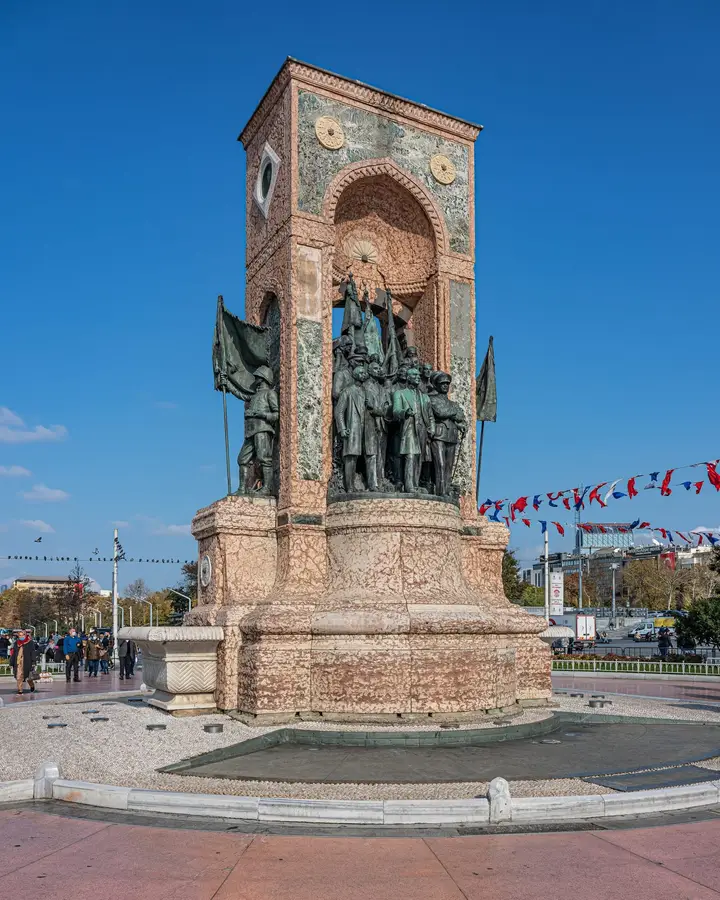
Taksim Meydanı ve Cumhuriyet Anıtı - Beyoğlu Photo: Wikipedia (CC BY-SA) · Source
Historic

Taksim Square and Republic Monument

Taksim, Istanbul's best-known square, is home to the Republic Monument, made in 1928 by the Italian sculptor Pietro Canonica. The square remains a centre for cultural events and social gatherings.

View on map
Historic

Pera Museum

Housed in the historic Bristol Hotel building in Tepebaşı, the museum displays an Orientalist painting collection, Anatolian weights and measures, and Kütahya tiles and ceramics. Osman Hamdi Bey's painting 'The Turtle Trainer' is the museum's most famous work.

View on map

Religious Buildings 1

Religious

Kılıç Ali Paşa Complex

A mosque and complex designed by Mimar Sinan and commissioned by Kaptan-ı Derya Kılıç Ali Paşa.

View on map

Museums 2

Museum

Galata Mevlevihane Museum

At the top of the Yüksekkaldırım slope, this is the oldest mevlevihane (Mevlevi lodge) in Istanbul.

View on map
Museum

Doğançay Museum

An art museum in a historic five-storey building in Beyoğlu that is 150 years old.

View on map

Attractions 1

Attraction

Galataport

A mixed-use complex stretching along the shore within the boundaries of the Kılıçali Paşa and Kemankeş neighbourhoods.

View on map

Cultural Venues 1

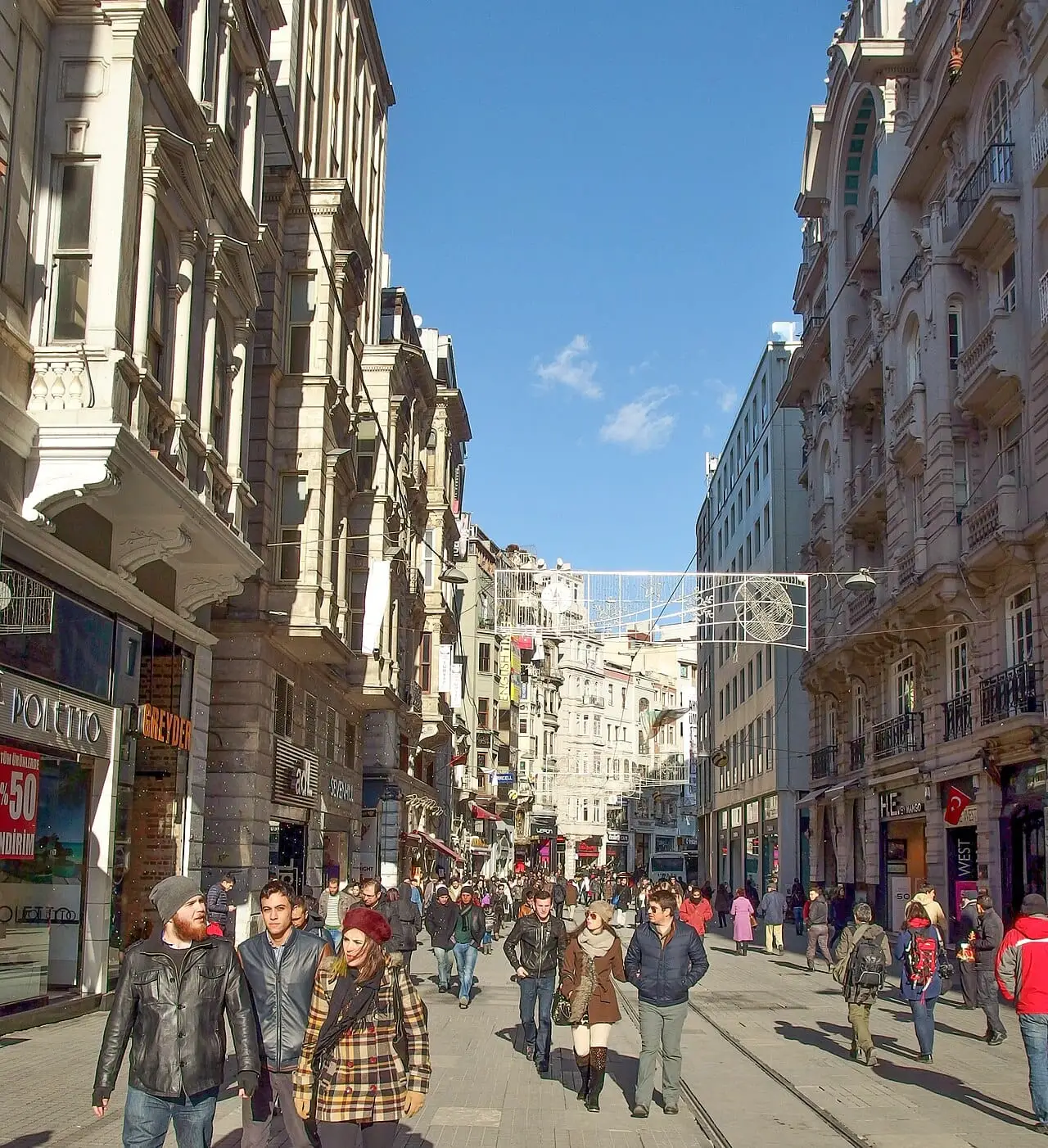
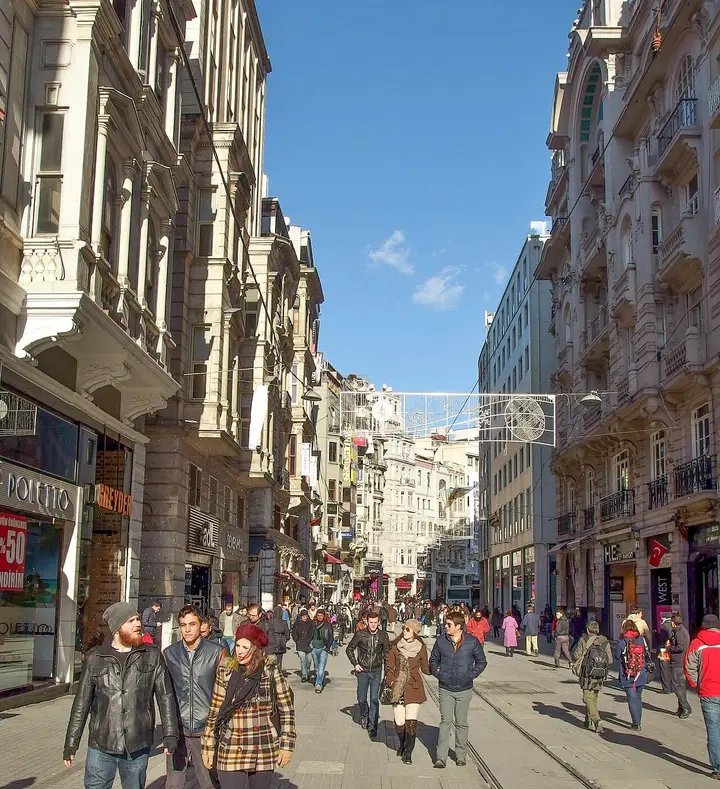
İstiklal Caddesi - Beyoğlu Photo: Mark Ahsmann (CC BY-SA 4.0) · Source
Cultural

İstiklal Caddesi

Beyoğlu's most famous street and a centre of commerce and culture.

View on map

Places to Visit Around Istanbul Province

See all →

While you are in Beyoğlu, you can also see the highlights of Istanbul province. These places are in other districts.

  • Hagia Sophia (Ayasofya-i Kebir Mosque) — Built by the Byzantine emperor Justinian between 532 and 537, this was the largest cathedral in the world for about a thousand years; it was converted into a mosque in 1453 and a museum in 1934, and reopened for worship as a mosque in 2020. With its dome 55 metres high and its Byzantine mosaics, it is one of the turning points in the history of architecture.
  • Topkapı Palace — Built by Mehmed the Conqueror at Sarayburnu in the 1460s, the palace was the seat of government and residence of the Ottoman sultans for about 400 years; with its Harem, Treasury, Holy Relics and courtyards, it is now a museum.
  • Sultan Ahmed Mosque (Blue Mosque) — A six-minaret mosque built for Ahmed I between 1609 and 1616 by the architect Sedefkâr Mehmed Ağa; it is also known as the Blue Mosque because of the more than 20,000 İznik tiles decorating its interior.
  • Basilica Cistern (Yerebatan Sarnıcı) — A vast underground cistern built in the 6th century under Justinian and carried on 336 columns; the Medusa heads under two of the columns are its most famous corner.
  • Süleymaniye Mosque — Built by Mimar Sinan for Suleiman the Magnificent between 1550 and 1557, the mosque stands at the centre of a large complex with madrasas, a hospital, a soup kitchen and tombs; its silhouette on the hill overlooking the Golden Horn is one of the symbols of the city.
  • Grand Bazaar (Kapalıçarşı) — One of the oldest and largest covered markets in the world, made up of more than 60 streets and thousands of shops that grew up around the bedestens built under Mehmed the Conqueror; carpets, jewellery, copperware and leather goods are sold.

Practical Information for Visiting Beyoğlu

Suggested time
2-3 days
Best time to visit
Spring and autumn (April-June, September-November)
Places to visit
8 places

What to Eat in Beyoğlu

Food guide →
  • Beyoğlu Muhallebisi

    Sütlaç, kazandibi and tavuk göğsü served at historic muhallebicis (milk pudding shops) on İstiklal Caddesi since the 1930s are emblems of Istanbul's dessert culture.

  • Çiçek Pasajı Mezeleri

    The meze served in the taverns of the 1876 Çiçek Pasajı (Flower Passage) are among the most authentic examples of Istanbul's meyhane culture. Seafood, olive oil dishes and hot mezes make up a rich spread.

  • Karaköy Güllüoğlu Baklavası

    Güllüoğlu baklava, made since 1871, is one of Istanbul's best-known sweet brands, with pistachios and butter syrup between thin layers of yufka.

Culture, Local Products and Economy of Beyoğlu

  • Istanbul Modern Art

    Beyoğlu is Istanbul's centre of art and culture. Istanbul Modern, SALT Galata, Arter and dozens of independent galleries keep contemporary art alive.

  • Cosmopolitan Cultural Heritage

    For centuries Beyoğlu has been a cosmopolitan district where Greek, Armenian, Jewish and Levantine communities lived side by side. Churches, synagogues and consulate buildings bear the traces of this multicultural past.

Local Products

  • Türk Kahvesi Kültürü — Historic coffee houses in Beyoğlu keep alive the Turkish coffee tradition, which is on UNESCO's Representative List of the Intangible Cultural Heritage of Humanity.
  • Antika ve Sanat Eserleri — Antique dealers on the streets of Çukurcuma and Galata offer a broad collection, from Ottoman-era pieces to modern art.

Economy

Beyoğlu is the centre of culture, art and entertainment in Istanbul. Tourism, gastronomy, retail trade and the arts are its main sources of income. İstiklal Caddesi and its surroundings form a commercial axis visited by hundreds of thousands of people every day.

How to Get to Beyoğlu

Beyoğlu lies in the heart of Istanbul and is connected to the whole city by the Tünel (one of the oldest underground funiculars in the world), the M2 metro, the nostalgic tram and bus lines.

Get directions on Google Maps Getting to Istanbul

Beyoğlu: Frequently Asked Questions

What are the things to see in Beyoğlu?

The top 8 sights in Beyoğlu are İstiklal Caddesi, Galata Tower, Taksim Square and Republic Monument, Pera Museum, Galata Mevlevihane Museum, Doğançay Museum, Galataport and Kılıç Ali Paşa Complex.

What to eat in Beyoğlu?

Beyoğlu Muhallebisi, Çiçek Pasajı Mezeleri and Karaköy Güllüoğlu Baklavası are standout dishes on Beyoğlu's tables.

What is Beyoğlu famous for?

Beyoğlu is known for its Türk Kahvesi Kültürü and Istanbul Modern Art. The historic coffee houses of Beyoğlu keep alive the Turkish coffee tradition, which is on UNESCO's Representative List of the Intangible Cultural Heritage of Humanity.

How do I get to Beyoğlu?

Beyoğlu lies in the heart of Istanbul and is connected to the whole city by the Tünel (one of the oldest underground funiculars in the world), the M2 metro, the nostalgic tram and bus lines.

How much time should I set aside for a visit to Beyoğlu?

Suggested visit length: 2-3 days. Best time to visit: spring and autumn (April-June, September-November).

Continue Your Trip

Other Districts of Istanbul

Search 81 province guides and 968 district guides.